


India Expands Nuclear Arsenal To 190 Warheads, Says SIPRI Report
The CSR Journal Magazine

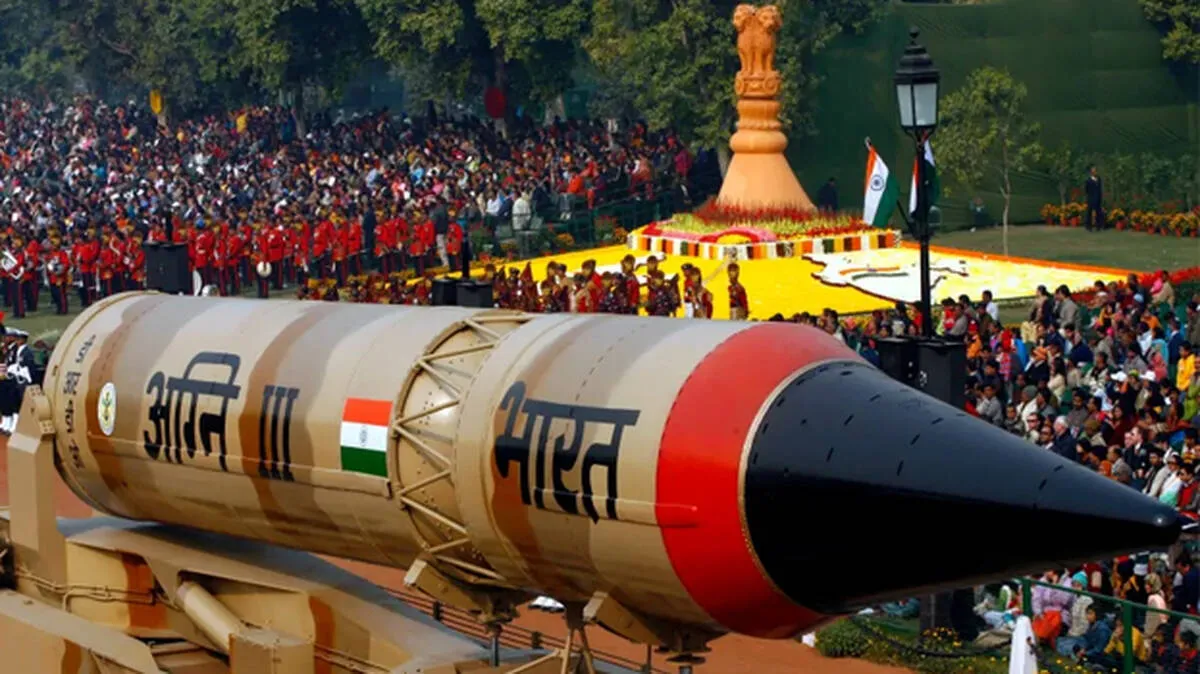
India modestly expanded its nuclear arsenal in 2025 while continuing to develop advanced delivery systems capable of striking targets across China, according to the Stockholm International Peace Research Institute’s (SIPRI) Yearbook 2026, released on Monday.

The report estimates that India’s nuclear stockpile has grown to around 190 warheads by early 2026, reflecting a gradual but steady modernisation of the country’s strategic deterrent. SIPRI said New Delhi’s nuclear programme is increasingly focused on long-range capabilities, although its security planning remains heavily influenced by its long-standing rivalry with Pakistan.

The findings come at a time when global nuclear powers are accelerating modernisation programmes and geopolitical tensions are driving renewed emphasis on strategic deterrence.

India’s Nuclear Modernisation Gains Pace

According to SIPRI, India slightly increased its nuclear arsenal during 2025 and continued developing new delivery systems designed to strengthen its deterrence posture.

The Stockholm-based think tank noted that India’s modernisation efforts are increasingly oriented towards developing weapons capable of reaching targets throughout China, reflecting changing regional security dynamics. At the same time, India’s strategic calculations continue to be shaped by its complex relationship with neighbouring Pakistan.

The report also highlighted growing investments in submarine-based nuclear delivery systems across the Indo-Pacific region. India is among the countries enhancing sea-based deterrence capabilities, which are considered critical for maintaining a credible second-strike capability.

SIPRI said India primarily relies on plutonium as the fissile material used in its nuclear weapons programme.

Operation Sindoor Highlighted As Major Crisis

The report described Operation Sindoor and the subsequent India-Pakistan military confrontation in May 2025 as an “unusually severe military crisis” between the two nuclear-armed neighbours.

According to SIPRI, Indian forces targeted Pakistani air and missile bases that were likely linked to nuclear-related roles. However, the institute noted that both countries took measures to prevent the conflict from escalating further.

One of the key observations in the report is that India and Pakistan incorporated cyber operations into active military conflict for the first time during the crisis. SIPRI said this development reflects the evolving nature of warfare and deterrence, where cyber capabilities are increasingly becoming part of military strategy alongside conventional and nuclear forces.

The report further stated that Pakistan continued to develop new delivery systems and accumulate fissile material during 2025, indicating that its nuclear arsenal could expand further in the coming decade.

Global Nuclear Competition Intensifies

SIPRI’s broader assessment paints a concerning picture of the global nuclear landscape. The institute estimates that the world’s nine nuclear-armed states — the United States, Russia, the United Kingdom, France, China, India, Pakistan, North Korea and Israel — collectively possessed around 12,187 nuclear weapons at the start of 2026.

Of these, approximately 9,745 warheads were held in military stockpiles for potential use, while an estimated 4,012 were deployed with operational forces. More than 2,100 warheads are believed to be maintained on high operational alert.

The report warned that decades of efforts aimed at reducing the role and number of nuclear weapons are being reversed as major powers increasingly view nuclear arsenals as essential instruments of national power.

China’s arsenal is estimated to have increased from 600 to around 620 warheads during the year, while the United States and Russia continue to possess nearly 86 per cent of the world’s nuclear weapons and are pursuing extensive modernisation programmes.

Beyond nuclear developments, SIPRI noted that India remained the world’s fifth-largest military spender in 2025, with defence expenditure rising 8.9 per cent year-on-year to USD 92.1 billion. India was also the world’s second-largest importer of major arms during the 2021-25 period, accounting for 8.2 per cent of global arms imports.

The report concluded that an increasingly fragmented international security environment, marked by great-power competition and rising interstate conflicts, is accelerating military modernisation efforts across the world and raising concerns about future strategic stability.

Long or Short, get news the way you like. No ads. No redirections. Download Newspin and Stay Alert, The CSR Journal Mobile app, for fast, crisp, clean updates!

App Store –  https://apps.apple.com/in/app/newspin/id6746449540 

Google Play Store – https://play.google.com/store/apps/details?id=com.inventifweb.newspin&pcampaignid=web_share

Latest News

Popular Videos
