


How A 1983 Theft Led To Government Control Of Kashi Vishwanath Temple
The CSR Journal Magazine

The alleged donation theft at the Ram Temple in Ayodhya has revived a decades-old debate over the administration of major Hindu temples, with the Vishwa Hindu Parishad (VHP) opposing any attempt to bring the Shri Ram Janmabhoomi Temple under government control.

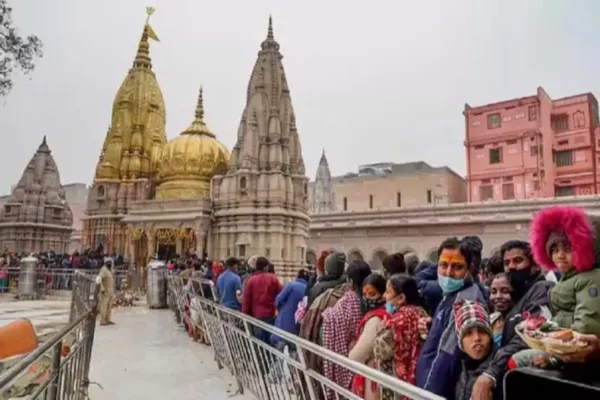
The controversy has drawn comparisons with the 1983 theft at the Kashi Vishwanath Temple in Varanasi, which exposed allegations of administrative failures and ultimately led the Uttar Pradesh government to transfer control of the shrine from hereditary mahants to a government-constituted temple trust.

VHP Opposes Government Control Of Ram Temple

The VHP, which played a prominent role in the Ram Janmabhoomi movement, has said it would oppose any attempt to place the Ram Temple under government administration.

The organisation has indicated that it supports professional management of the temple, including the appointment of a chief executive officer accountable to the Shri Ram Janmabhoomi Teerth Kshetra Trust.

However, the VHP has maintained that administrative authority must remain with the temple trust rather than the government.

The statement came on the same day that the Trust accepted the resignation of its general secretary, Champat Rai, amid an ongoing Special Investigation Team probe into the alleged theft of donations. A CEO has also been appointed.

1983 Theft At Kashi Vishwanath Temple Triggered Major Changes

The developments in Ayodhya have brought renewed attention to the theft at the Kashi Vishwanath Temple more than four decades ago.

On January 5, 1983, thieves stole around 2.55 kg of gold from the Jyotirlinga of Lord Shiva, along with between six and nine kilograms of silver ornaments and other valuables from the temple complex.

The incident triggered widespread protests in Varanasi and raised questions over security and administration at one of Hinduism’s most prominent places of worship.

An FIR was registered at Chauk police station by the then priest, Sardaru.

Police recovered the stolen ornaments within weeks and arrested 11 accused, including Markandey Singh of Chakia in Chandauli district.

On September 7, 2000, a local court convicted those found guilty of the theft and directed that the recovered ornaments be returned to the temple administration.

Investigators Suspected Insider Involvement In Temple Theft

The theft had consequences beyond the criminal investigation and intensified scrutiny of the temple’s administration.

According to an India Today Magazine report published in 1983, investigators suspected that the crime could not have been committed without assistance from someone familiar with the temple.

There were reportedly no signs of forced entry into the sanctum sanctorum, while the heavy grill doors had been found open.

Two priests who were on duty at the time claimed that they had slept through the incident.

Senior police officers quoted in the report described the theft as an “inside job”, while investigators examined possible connections between the accused and members of the temple establishment.

Theft Exposed Concerns Over Kashi Vishwanath Temple Administration

The investigation also brought attention to longstanding concerns over the management of the Kashi Vishwanath Temple.

According to the 1983 India Today Magazine report, the temple did not maintain proper financial records, a comprehensive inventory of its assets or a written register of employees.

Outsiders estimated that the shrine received more than Rs 60,000 every month in offerings, but there was limited documentation of income and expenditure.

The amount would be equivalent to around Rs 11 lakh per month in 2026.

Administrative disputes among four hereditary mahants had also resulted in prolonged litigation over control of the temple.

One of the disputes reached the Supreme Court, while a court order passed in the mid-1950s required daily collections to be divided equally among rival mahants until questions surrounding ownership and management were resolved.

Uttar Pradesh Government Took Over Temple Administration

Internal disputes and administrative concerns had already prompted government scrutiny under the Uttar Pradesh Public Religious Institutions (Prevention of Dissipation of Properties) Act, 1976.

The January 1983 theft became the immediate catalyst for a major change in the temple’s administration.

Within weeks, the Congress government in Uttar Pradesh led by Chief Minister Sripati Mishra promulgated an ordinance that was subsequently enacted as the Uttar Pradesh Kashi Vishwanath Temple Act, 1983.

The legislation transferred administration of the temple from hereditary mahants to a newly constituted trust.

The stated objective of the law was to provide better administration of the temple and its endowments.

The Kashi Vishwanath Temple is now administered by the Shri Kashi Vishwanath Temple Trust through a government-appointed chief executive officer and a board of trustees.

Former Mahant’s Family Continued Legal Battle Over Temple Control

For former mahant Rajendra Tiwari and his family, the transfer of the temple’s administration remained a subject of dispute for more than four decades.

Tiwari was involved in a legal battle with the Uttar Pradesh government over ownership and management of the shrine.

His family had managed the temple’s affairs for more than four centuries before losing administrative control on January 28, 1983, under the Uttar Pradesh Kashi Vishwanath Temple Act.

“When Aurangzeb’s soldiers came to demolish the temple, our family took only the original Shivling and protected it in our house. We continued worshipping it four times a day, exactly as it had been worshipped inside the temple,” Tiwari said in a 2023 interview while opposing the Kashi Vishwanath Corridor project.

“When Aurangzeb died, people came to know that the original Shivling had survived because our family had preserved it,” he added.

Tiwari maintained that his family’s historical association with the temple gave it a legitimate claim to participate in its traditional administration.

Despite losing administrative control, Tiwari continues to be a respected figure in Varanasi’s old city.

Ayodhya Row Revives Wider Debate Over Temple Administration

Several prominent temples across India are administered through state-backed bodies or legislation, including the Shri Jagannath Temple in Puri, Badrinath Temple in Uttarakhand and Mahakaleshwar Temple in Ujjain.

Governments have intervened in temple administration for various reasons, including allegations of mismanagement and efforts to introduce stronger governance mechanisms.

The VHP has consistently opposed government control of Hindu temples while supporting professional administration that remains accountable to temple trusts.

The circumstances surrounding the Ram Temple and the Kashi Vishwanath Temple are different, with the alleged donation theft in Ayodhya still under investigation.

However, the controversy has renewed attention on the events of 1983, when a major theft and concerns over administration led to fundamental changes in the governance of the Kashi Vishwanath Temple.

Long or Short, get news the way you like. No ads. No redirections. Download Newspin and Stay Alert, The CSR Journal Mobile app, for fast, crisp, clean updates!

App Store –  https://apps.apple.com/in/app/newspin/id6746449540 

Google Play Store – https://play.google.com/store/apps/details?id=com.inventifweb.newspin&pcampaignid=web_share

Latest News

Popular Videos
