


Fossil Of A 160-Million-Year-Old ‘Technicolour’ Dinosaur Found In China
The CSR Journal Magazine

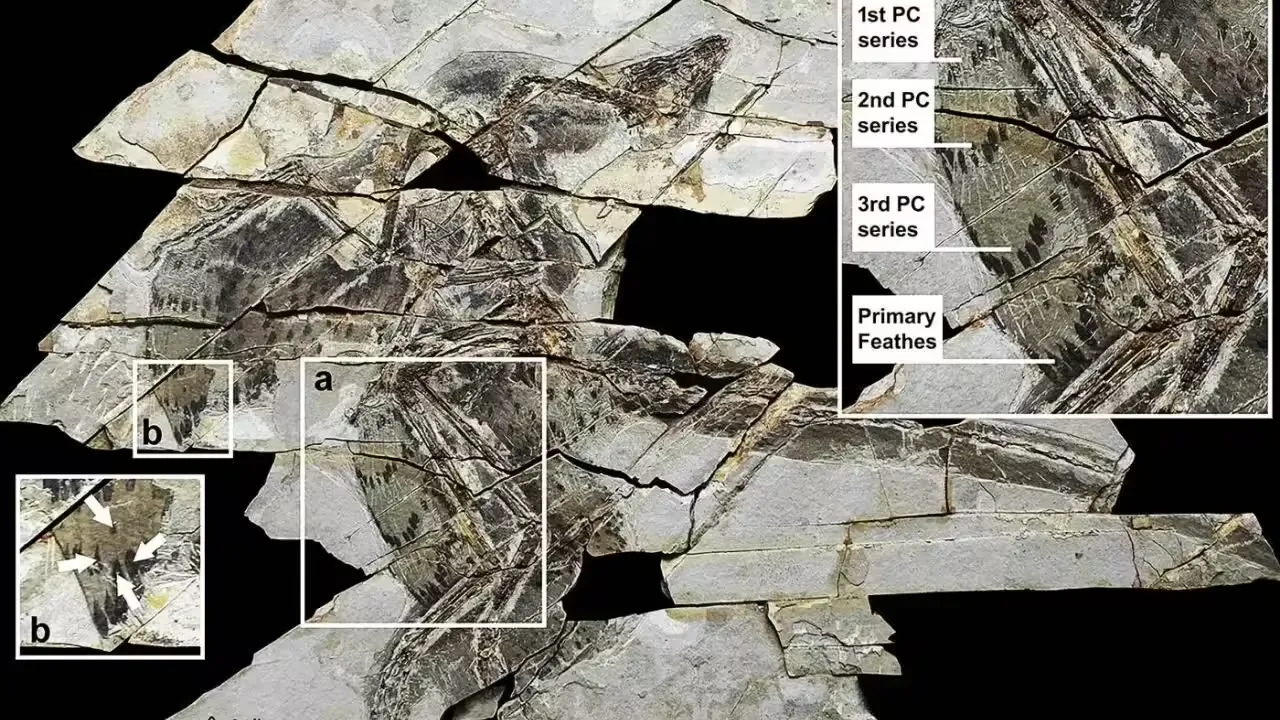
A remarkable discovery has revealed a fossil of a dinosaur that lived approximately 160 million years ago in what is now China. This ancient reptile is notable for its four wings and plumage resembling that of modern birds, showcasing features that suggest a complex evolutionary history. The fossil has been described as ‘technicolour’ due to the high preservation of its pigments, providing insights into the dinosaur’s appearance.

The fossil is said to belong to the group of species known as theropods, which are closely related to the ancestors of contemporary birds. The preserved feathers exhibit a variety of colours, indicating that these dinosaurs may have used them for purposes beyond mere insulation, potentially including display and mating rituals.

Additionally, the positioning of four wings raises intriguing questions about the creature’s capability for flight or gliding. Researchers suggest that this unique configuration could have provided advantages in mobility and predator evasion. Such features contribute to the ongoing debate regarding the evolution of flight in dinosaurs.

Significance Of The Discovery

This discovery is significant as it adds to the existing knowledge about the diversity and complexity of theropod dinosaurs. The fossil highlights the evolutionary link between dinosaurs and birds, reinforcing the view that these two groups are inherently connected. The advanced state of feather preservation allows scientists to study the colours and patterns that were present during the dinosaur’s lifetime.

Furthermore, the find underscores the importance of fossil discoveries in understanding the late Jurassic period’s ecosystem. The intricate structures of these feathers suggest that the uses of plumage in dinosaurs were more varied than previously recognised, indicating behaviours that might have mirrored those of modern birds.

Researchers have stated that the fossil represents a pivotal moment in the evolution of avian characteristics. Insights gained from this specimen could lead to revelations about how certain traits evolved and adapted over millions of years. The significance of these findings extends beyond mere curiosity, impacting the broader understanding of vertebrate evolution.

Implications For Future Research

The existence of this dinosaur fossil opens avenues for further research in the field of palaeontology. Scientists aim to explore the ecological roles of such species and how their unique adaptations played a part in survival and reproduction during the Jurassic era. The unique adaptations displayed in this fossil could manipulate existing theories regarding the evolutionary pressures that shaped early bird-like reptiles.

Moreover, the implications of the findings inspire renewed interest in digging deeper into fossil sites in China and other parts of the world. The potential for uncovering additional specimens with similar or even more advanced features is an exciting prospect for palaeontologists. Understanding the evolutionary dynamics during this period could enrich the comprehension of how life on Earth progressed through the ages.

In conclusion, this extraordinary discovery sheds light on a previously obscure chapter in the history of dinosaur evolution. The fossil’s intriguing characteristics are likely to drive new hypotheses and research methodologies, contributing to the broader narrative of how modern birds might have emerged from their dinosaur ancestors.

Long or Short, get news the way you like. No ads. No redirections. Download Newspin and Stay Alert, The CSR Journal Mobile app, for fast, crisp, clean updates!

App Store –  https://apps.apple.com/in/app/newspin/id6746449540 

Google Play Store – https://play.google.com/store/apps/details?id=com.inventifweb.newspin&pcampaignid=web_share

Latest News

Popular Videos
