


Ministry of Culture Highlights 4,500-Year-Old Indus Dice, Sparking Online Interest
The CSR Journal Magazine

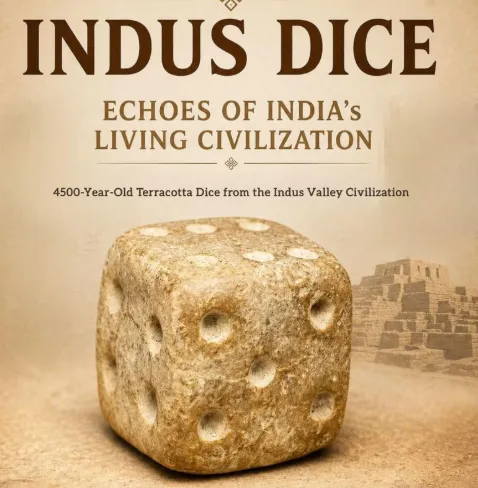
The Ministry of Culture has shared a social media post featuring a terracotta dice from the Indus-Saraswati Civilisation, which is reportedly 4,500 years old. This post has gained considerable traction online, resonating with users who appreciate its emphasis on India’s rich heritage. The ministry’s message underscores the cultural significance of the dice, linking it to the historical importance of gaming, as dicing is mentioned in ancient texts such as the Rig and Atharva Vedas.

Response from Social Media Users

The online community has responded positively to the ministry’s post, with numerous users expressing admiration for this focus on India’s ancient past. Comments have included encouragement for the ministry to share more content related to the nation’s heritage. One user remarked on the importance of such posts, stating, “Wonderful! Please keep going.” Another user suggested a thread that summarises key findings about the Indus-Saraswati Civilisation, reflecting a desire for more credible information on India’s historical continuity.

Engagement from Cultural Enthusiasts

Many commenters have articulated a keen interest in learning more about India’s cultural roots, with mentions of the need for the ministry to delve deeper into topics that illustrate civilisational continuity. One user expressed a desire for “credible and authentic information” on the Indus-Saraswati Civilisation, highlighting a substantial appetite for educational content that connects modern India to its ancient traditions. This could indicate that the public values a deep understanding of historical narratives and their relevance today.

Context of the Post and Ongoing Debates

This recent post concerning the dice follows another significant announcement by the Ministry of Culture, which unveiled what it described as the “Pashupati-Shiva Seal,” a Harappan artifact that is around 4,300 years old. The ministry claimed that this seal is a robust symbol of India’s enduring civilisational legacy. However, this declaration has not been without controversy, as it attracted scrutiny from scholars, including American historian Audrey Truschke.

Truschke challenged the government’s characterisation of the seal, asserting that the imagery could be linked to proto-Elamite iconography and suggested that it depicts a Eurasian deity rather than the Hindu god Shiva. Her remarks ignited discussions regarding archaeological interpretations and the broader implications of civilisational continuity in India.

The debate highlights the complexities involved in understanding and interpreting ancient artefacts, as different perspectives often emerge regarding their significance and meaning. As scholars and enthusiasts alike engage in these discussions, the ministry’s efforts to promote awareness of India’s heritage continue to stimulate interest and dialogue about the nation’s historical narrative.

Long or Short, get news the way you like. No ads. No redirections. Download Newspin and Stay Alert, The CSR Journal Mobile app, for fast, crisp, clean updates!

App Store –  https://apps.apple.com/in/app/newspin/id6746449540 

Google Play Store – https://play.google.com/store/apps/details?id=com.inventifweb.newspin&pcampaignid=web_share

Latest News

Popular Videos
