


Delhi High Court Backs Hospital Transfer of Activist Sonam Wangchuk
The CSR Journal Magazine

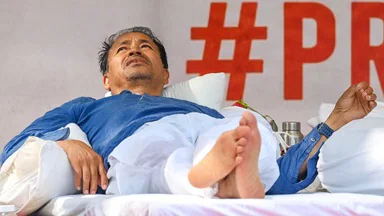
The Delhi High Court has endorsed the government’s choice to transfer climate activist Sonam Wangchuk to Safdarjung Hospital, determining that the action was justified in light of his declining health following an extensive hunger strike. The court’s ruling dismissed allegations that Wangchuk was subject to detention or that his autonomy was infringed, affirming that he remains a free individual and that his medical treatment has proceeded only with his agreement.

This order followed a petition from Wangchuk’s wife, Gitanjali Angmo, who requested that he be moved from Safdarjung Hospital to Medanta, asserting his right to receive care at a facility of his choosing. The High Court has issued notices to relevant government, police, and hospital authorities, mandating them to provide a status report within three days. The case is set for a subsequent hearing on Thursday, with no interim orders currently in effect.

The court evaluated submissions from both legal representatives, as well as medical personnel from Safdarjung Hospital and the emergency medicine department of AIIMS.

Government Action Deemed Justified by Court

The court recognised that Wangchuk had been on hunger strike for approximately 17 to 18 days and acknowledged a Division Bench’s earlier order dated July 16, which addressed his serious medical condition. The government’s explanation for Wangchuk’s transfer to Safdarjung Hospital centred on his deteriorating health, particularly concerning his low blood sugar and potassium levels.

In its remarks, the court concluded that the government’s decision to move Wangchuk to a medical facility was appropriately justified due to the urgency of his health condition. “Given the necessity of addressing his medical condition, this court does not find the action to be arbitrary,” stated the court. Additionally, the government expressed its commitment to preserving and protecting every life.

Concerns related to the impact of prolonged fasting, alongside the humid climate, were brought to the court’s attention. The government articulated that these factors posed increased risks, including the potential onset of ketosis due to dehydration.

No Evidence of Detention Asserted by Court

A significant point raised in court was whether Wangchuk was being held against his will within the hospital. His lawyer, Kapil Sibal, argued that without a detention order or any criminal charges, it would be inappropriate for the government to insist on his hospitalisation. Sibal questioned the legality of such a requirement, asserting that a citizen should retain the right to select their medical providers and treatment settings.

Despite these claims, the court maintained that Wangchuk was not detained and that he is a free citizen. The judges also noted that Wangchuk had not voluntarily admitted himself to any healthcare facility and affirmed that the government acted within its prerogatives to bring him to hospital care.

The court further affirmed that Wangchuk’s bodily autonomy was not being undermined, recognising that his treatment at Safdarjung Hospital was conducted with his informed consent. Notably, it was also recorded that Wangchuk enjoyed unprecedented visitation rights from family members, including those outside standard visiting hours.

Concerns Over Medical Trust Raised in Court

Angmo expressed her concerns before the court regarding conflicting medical reports, particularly those about her husband’s potassium levels, which had raised alarm. She highlighted her request for a second medical opinion, questioning the credibility of reports showing drastically varying potassium levels.

Moreover, she indicated her intention to have Wangchuk discharged from Safdarjung Hospital to transfer him to Medanta, asserting that the latter facility was prepared to admit him. Allegations arose regarding police surveillance during her visits, prompting worries about his privacy and wellbeing.

The Additional Solicitor General maintained that the government needed to exercise heightened caution due to Wangchuk’s critical health condition. A doctor from Safdarjung Hospital acknowledged the activist’s expressed distrust in the medical staff, indicating a complicated relationship between Wangchuk and the healthcare providers overseeing his treatment.

The court’s directive included the expectation that Wangchuk would cooperate with the medical team in addressing his health needs. Although objections were raised, it was clarified that the court was not mandating specific treatments, but rather emphasised the importance of cooperation for his medical care. The case is expected to continue with further discussions on the issues pertaining to his health and treatment options.

Long or Short, get news the way you like. No ads. No redirections. Download Newspin and Stay Alert, The CSR Journal Mobile app, for fast, crisp, clean updates!

App Store –  https://apps.apple.com/in/app/newspin/id6746449540 

Google Play Store – https://play.google.com/store/apps/details?id=com.inventifweb.newspin&pcampaignid=web_share

Latest News

Popular Videos
