


Dal Cheela or Besan Cheela for Weight Loss? Protein and Calorie Difference Explained
The CSR Journal Magazine

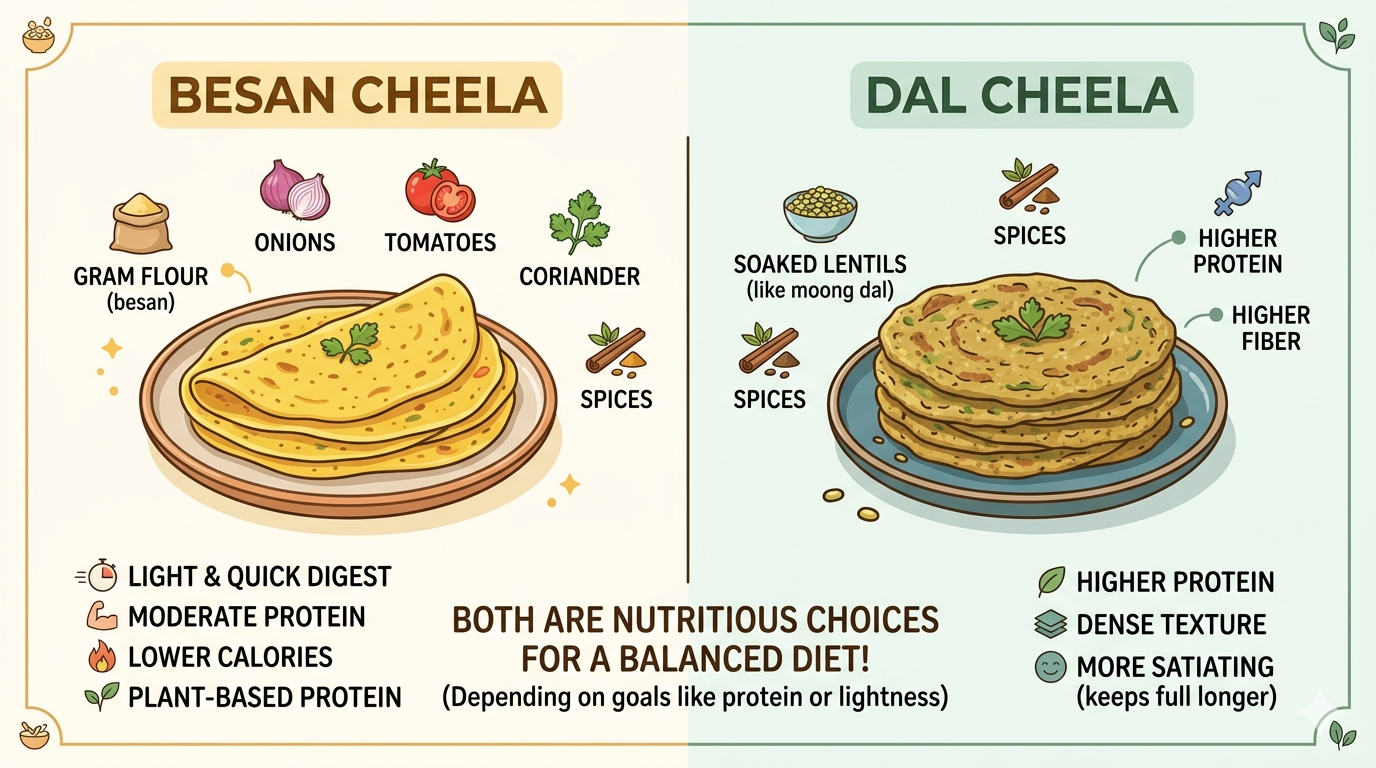
Besan Cheela, a popular breakfast dish in India, is primarily made from gram flour, mixed with various spices and vegetables. This dish is known for its quick preparation and protein content, making it a staple choice for those aiming for a healthier diet. Common ingredients added to Besan Cheela include onions, tomatoes, coriander, and occasionally paneer, which enhance both flavour and nutritional value.

Overview of Dal Cheela

Dal Cheela is another nutritious breakfast option, prepared by soaking lentils such as moong dal, chana dal, or mixed dals. The soaked lentils are then blended into a smooth batter and cooked like a pancake. This variety stands out due to its high protein content and fibre, contributing to a filling meal that can sustain individuals for longer periods. Dal Cheela’s denser texture is particularly valued for its ability to promote satiety.

When comparing both types of cheela, Dal Cheela generally provides a higher protein content due to the inclusion of whole lentils. This increased protein can assist in improving feelings of fullness, reducing cravings, and supporting an effective weight loss regimen.

Comparative Nutritional Analysis

In the context of weight loss, understanding the protein content is essential. Besan Cheela typically contains moderate protein levels, while Dal Cheela is characterised by a higher protein concentration. As per the nutritional information, the protein content in Dal Cheela is advantageous for those looking to manage their appetite and encourage fat loss through increased dietary protein.

The digestibility of these dishes also plays a crucial role in their effectiveness as weight loss foods. Besan Cheela is known for being light and relatively quick to digest, whereas Dal Cheela, while more filling, may be perceived as slightly heavier on the stomach. The denser texture of Dal Cheela, combined with its higher fibre content, means it can help stave off hunger longer, thereby potentially preventing unnecessary snacking between meals.

Caloric comparisons reveal that Besan Cheela is typically lower in calories than Dal Cheela. However, overall caloric intake is influenced by factors such as the amount of oil used, portion sizes, and additional fillings. Those seeking to optimise their diet for weight loss may find Besan Cheela suitable for lighter breakfasts, while Dal Cheela may be a better choice for individuals requiring a more substantial meal.

Expert Recommendations for Healthier Preparations

Fitness experts often advocate for the inclusion of both cheelas in a balanced diet. Besan offers valuable plant-based protein, while lentils provide a wealth of nutrients and fibre. The choice between these two options hinges on individual activity levels, specific dietary goals, digestive comfort, and portion control preferences. Both dishes can support weight loss when prepared healthily and integrated as part of an active lifestyle.

Ultimately, integrating both Besan Cheela and Dal Cheela into one’s diet can create a versatile and nutritious breakfast routine. While Besan Cheela is higher in carbohydrates and lower in calories, Dal Cheela provides greater protein and longer-lasting fullness—catering to diverse nutritional needs.

Long or Short, get news the way you like. No ads. No redirections. Download Newspin and Stay Alert, The CSR Journal Mobile app, for fast, crisp, clean updates!

App Store –  https://apps.apple.com/in/app/newspin/id6746449540 

Google Play Store – https://play.google.com/store/apps/details?id=com.inventifweb.newspin&pcampaignid=web_share

Latest News

Popular Videos
