


Court Rules Sikh Turban Exemption from Helmet Law Is Justified
The CSR Journal Magazine

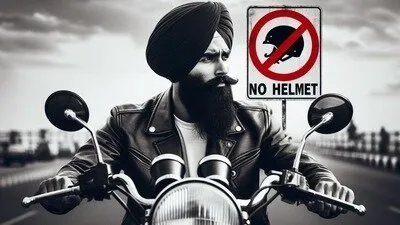
The Bombay High Court has upheld the exemption for Sikh men wearing turbans from the requirement of wearing helmets while riding two-wheelers. This ruling came in response to a petition that questioned the legal validity of this exemption. The court determined that the concession is based on “reasonable classification” rather than religious grounds, thereby dismissing the petition as misconceived.

Details of the Court’s Decision

The ruling was pronounced on Monday by a division bench comprising Justices Urmila Joshi-Phalke and Nivedita Mehta at the Nagpur bench. The petitioner, a 23-year-old student named Kirtesh Chaudhari, had argued that the exemption violates the right to equality guaranteed by the Constitution. He specifically targeted a proviso to Section 129 of the Motor Vehicles Act, which mandates helmet use for all individuals riding two-wheelers.

Under the stipulations of Section 129, every two-wheeler rider is required to wear a helmet. However, the law includes a specific exemption for Sikhs wearing turbans. The student asserted that allowing this exemption grants special privileges to a particular group, undermining the principle of equality before the law.

In response, the Union government defended the exemption as a form of reasonable classification. The court concurred with this viewpoint, illustrating that Article 14 of the Constitution allows for reasonable classification, which is distinct from class legislation that is prohibited. The judges noted that if there is a valid basis and a public purpose, the government is permitted to create distinct classifications.

Arguments Presented

The Bombay High Court recognised that the law requiring helmets aims to enhance safety and protect lives. The justices emphasised that the exemption for Sikh turban wearers does not infringe upon fundamental rights, as it is not based on caste, creed, or religion. Thus, they clarified that the provision serves a legitimate purpose without discriminating against others.

The court further elucidated that exemptions like this one are not tantamount to violating the right to equality or other fundamental rights enshrined in the Constitution. The judges made it clear that the need for protective measures must be balanced with cultural considerations, and in this case, the exemption is well-founded.

After weighing all arguments, the high court decided to dismiss the petition challenging the legality of the helmet exemption for Sikh individuals. This ruling is expected to influence discussions around lawmaking and cultural practices, underscoring the need for a balanced approach in safeguarding both rights and traditions.

Implications of the Ruling

This judgment has significant implications for ongoing debates regarding personal freedoms, safety regulations, and religious practices in India. As the country navigates complex cultural dynamics, the decision reflects an effort to acknowledge diverse customs while maintaining public safety standards.

The ruling also highlights the judiciary’s role in adjudicating cases that involve the intersection of tradition and modern legislative frameworks. As society continues to evolve, such decisions will likely become increasingly pertinent in gauging how laws accommodate various community needs.

Overall, the Bombay High Court’s decision affirms the legality of the existing provision, allowing Sikh individuals wearing turbans to ride without helmets, thereby defining the contours of reasonable classification within Indian law.

Long or Short, get news the way you like. No ads. No redirections. Download Newspin and Stay Alert, The CSR Journal Mobile app, for fast, crisp, clean updates!

App Store –  https://apps.apple.com/in/app/newspin/id6746449540 

Google Play Store – https://play.google.com/store/apps/details?id=com.inventifweb.newspin&pcampaignid=web_share

Latest News

Popular Videos
