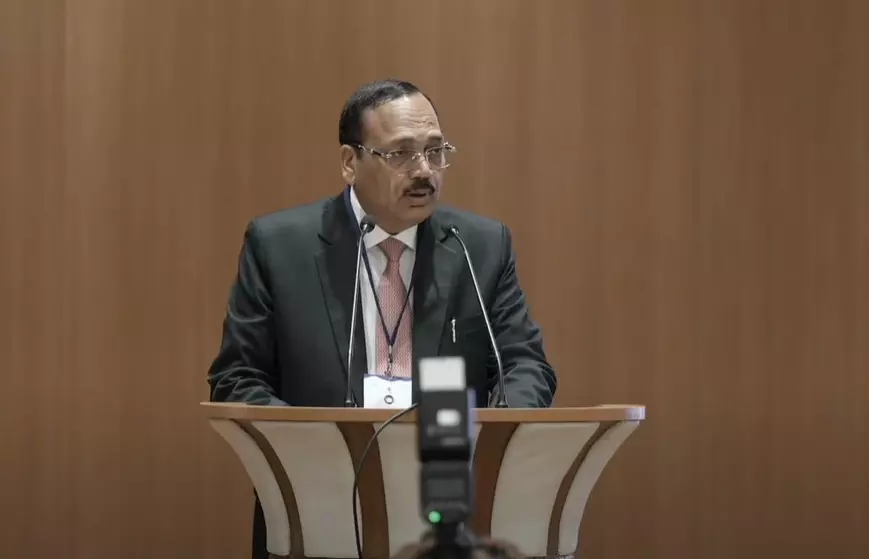
Chief Justice of India, Surya Kant, emphasised that achieving equality necessitates ensuring equal access to the law. He stated that this access should transcend mere procedural formalities and must result in the effective bestowal of rights rather than mere hollow legal declarations. During his address at the XIV St Petersburg International Legal Forum on June 25, 2026, he stressed the importance of translating constitutional guarantees into tangible realities for all individuals.
Challenges to Implementing Legal Equality
CJI Kant identified that the primary challenge lies not in the articulation of constitutional rights but in their actual delivery. He noted barriers such as geographical differences, socio-economic disadvantages, language discrepancies, and cultural variances that hinder the realisation of equality before the law. According to him, recognising these hurdles is crucial for any legal system to genuinely uphold principles of justice.
He further articulated that equal justice is not merely a ceremonial notion but a foundational condition essential for any legal system to be deemed credible. The Chief Justice posed the question of what genuine equality before the law requires and concluded that access to legal instruments must be equitable across all segments of society.
Exploring historical perspectives, he argued that the roots of equality extend beyond the well-known Magna Carta of 1215. His belief is that earlier concepts of equality can be traced to Kautilya’s Arthashastra, a fourth-century text originating in the Indian subcontinent. This reference underscores the long-standing recognition of equality in the region.
Constitutional Guarantees in India
The Indian Constitution, according to CJI Kant, marked a significant turning point that promised fundamental rights to its citizens, including equality before the law and the right to a life of dignity. He highlighted that the true test of these promises lies not in their mere recitation but in their practical enforcement across diverse demographics.
He specifically pointed out that while legal and statutory frameworks are present, the primary obstacle to equality stems from ongoing disparities in geography, social structure, and economic conditions. Hence, Indian constitutional courts have adopted expansive interpretations of these guarantees to dismantle barriers to justice.
The Chief Justice articulates that access to justice must not simply be a procedural convenience. Instead, it must serve as a foundational principle of governance, ensuring non-discrimination across all societal strata.
Global Perspectives on Legal Equality
In his address, Chief Justice Kant also touched upon the broader international context, noting that many nations in the global east and south are in the process of building their legal institutions while grappling with the lingering effects of colonial history and economic challenges. He remarked that these countries often face scrutiny that is disproportionately levied compared to wealthier nations, which also grapple with their compliance regarding legal standards.
By highlighting these disparities, he reinforced his stance that true equality requires a commitment to fair and equitable access to law and justice worldwide. This is an essential step toward fostering an environment where legal rights are genuinely accessible to all, thus making equality a practical reality rather than an aspirational concept.
Long or Short, get news the way you like. No ads. No redirections. Download Newspin and Stay Alert, The CSR Journal Mobile app, for fast, crisp, clean updates!