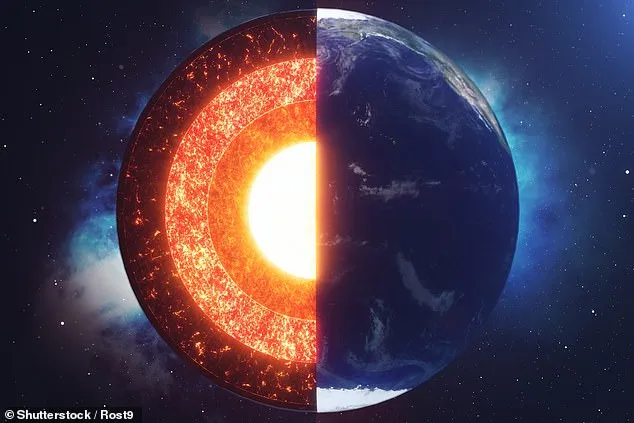
A recent study reveals that water played a significant role in influencing Earth’s interior and volcanic activity over three billion years ago, predating the establishment of modern plate tectonics. The research, conducted by a team led by Dr Eric Vandenburg from the University of Adelaide, focuses on the analysis of some of the planet’s oldest volcanic rocks located in the Pilbara Craton in Western Australia. This discovery offers important insights into the early geological processes that shaped the Earth.
New Insights Into Water’s Role in Volcanic Activity
Published in the journal Nature Communications, the study suggests that water traversed deep beneath the Earth’s surface, contributing to the formation of magma much earlier than previously understood. Historically, it has been assumed that the Earth’s early interior was somewhat isolated due to the high temperatures of our planet’s youth, which hindered the development of modern plate tectonics. Dr Vandenburg pointed out that the presence of substantial quantities of water deep within the Earth was unexpected and indicates a more complex geological history.
The findings challenge existing beliefs about the Earth’s surface-to-interior connections during its early formation. Current knowledge of Earth’s water cycle involves seawater being drawn deep into the mantle at subduction zones, where tectonic plates converge. This water contributes to magma generation, feeding volcanic systems such as those found along the Pacific “Ring of Fire.” The study raises questions about how water could reach such depths before the widespread occurrence of plate tectonics.
The researchers introduced a novel concept named “dripduction,” which contrasts with the traditional understanding of rigid tectonic plates. Instead of these plates descending into the mantle, cooler, denser regions of Earth’s crust would periodically sag and drip downwards. As these crustal portions descended, they released water into the mantle, which in turn contributed to volcanic activity.
Implications for Early Earth Processes
Evidence of ancient volcanic eruptions, which solidified into rocks retaining chemical signatures from approximately 3.1 billion years ago, allows scientists to reconstruct the conditions of the young Earth. According to Dr Vandenburg, the fundamental processes that govern Earth today were arguably in place earlier than assumed, even if the planet did not function exactly as it does in the present.
The implications of this research indicate a closer connection between Earth’s surface and its deep interior than previously thought. Water recycling has been identified as a critical factor in not only continental growth but also in volcanic activity and the overall chemical evolution of the planet. Understanding this interplay may grant further insights into Earth’s geological history and development.
Given the rarity of rocks of such antiquity, the Pilbara Craton serves as one of the few accessible sites for direct examination of Earth’s formative years. This research underscores the importance of studying these ancient formations to unravel mysteries pertaining to our planet’s early conditions and geological processes.
Long or Short, get news the way you like. No ads. No redirections. Download Newspin and Stay Alert, The CSR Journal Mobile app, for fast, crisp, clean updates!