


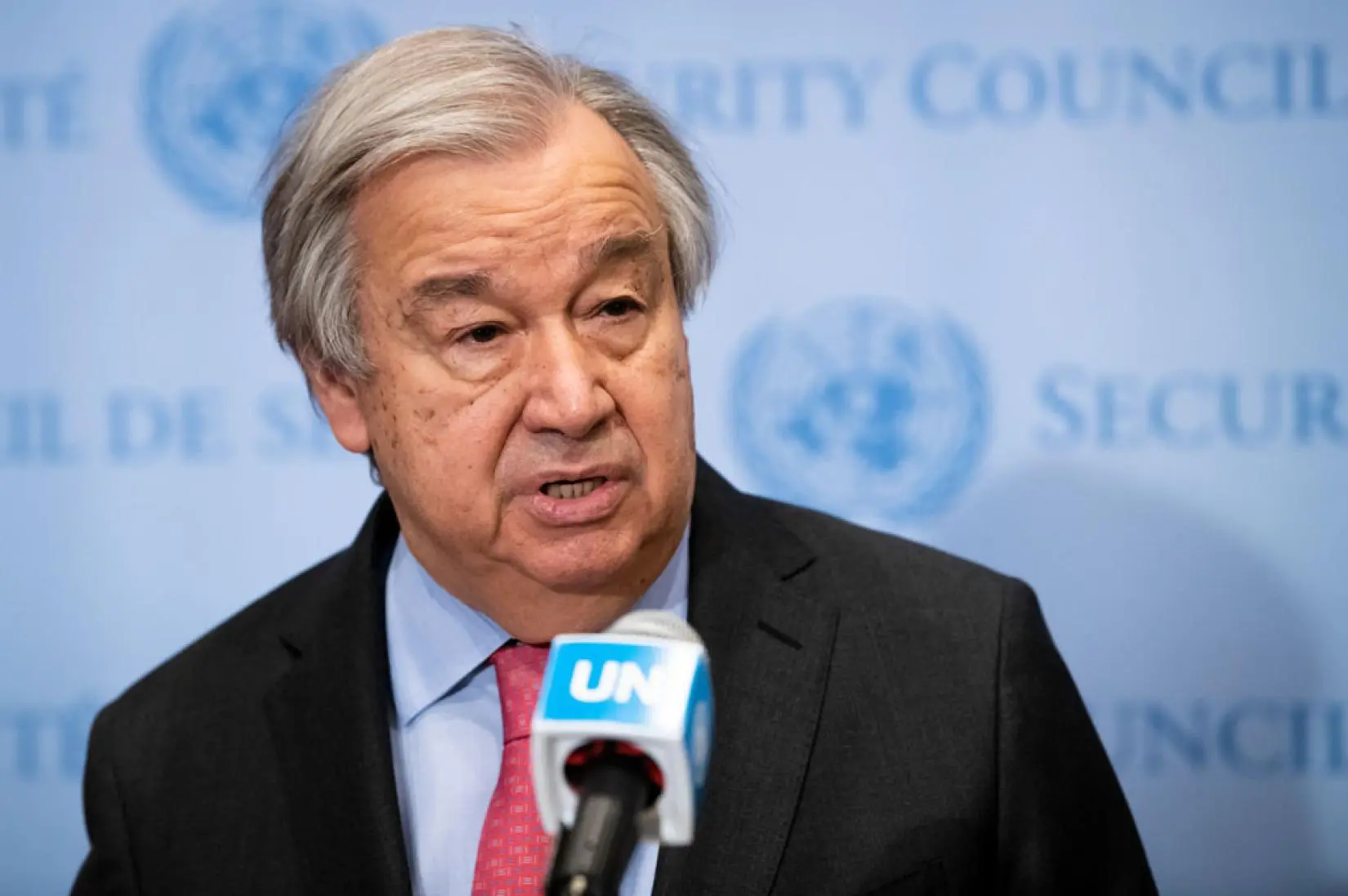

‘No More Attacks’: Antonio Guterres Warns Against Escalation In West Asia

The CSR Journal Magazine

United Nations Secretary-General Antonio Guterres on Thursday appealed for urgent diplomatic efforts to prevent the escalating crisis in West Asia from spiralling into a wider conflict, warning that the region was being pulled deeper into instability.

In a post on X, Guterres said recent developments had further weakened an already fragile ceasefire and cautioned against allowing the current “lesser-fire” to become a “full fire”.

“The Middle East is being pulled deeper into crisis and the consequences reach far beyond the region,” he said, urging all parties to work towards a diplomatic settlement.

“No more attacks. No more excuses,” the UN chief added.

His appeal came amid a rapidly evolving security situation in the Gulf region following fresh US military strikes and retaliatory threats from Iran.

Gulf Nations Issue Alerts As Tensions Rise

Several countries in the region, including Kuwait, Jordan and Bahrain, issued alerts as air defence systems intercepted aerial targets amid growing fears of a broader conflict.

The developments followed an announcement by the US Central Command (CENTCOM) that American forces had carried out additional “self-defence strikes” against multiple targets in Iran on Wednesday at the direction of the Commander in Chief.

According to CENTCOM, the strikes targeted Iranian military surveillance assets, communication systems and air defence sites across the country.

The latest military action marked another escalation in the confrontation between Washington and Tehran, which has intensified in recent days.

Strait Of Hormuz Claims Spark Concerns

The heightened tensions were accompanied by reports from Iranian officials claiming that the Strait of Hormuz had been closed in response to the US strikes.

However, CENTCOM issued a clarification rejecting the claim and stated that commercial shipping traffic through the strategic waterway remained uninterrupted.

The Strait of Hormuz is one of the world’s most important oil transit routes, and any disruption to maritime traffic there has the potential to affect global energy markets.

Meanwhile, Al Jazeera, citing Iran’s Islamic Revolutionary Guard Corps (IRGC), reported that 18 military-related targets linked to the United States had been struck as part of Iran’s response.

Among the sites mentioned were the Ali Al-Salem and Ahmed Al-Jaber bases in Kuwait and the Sheikh Isa Air Base in Bahrain.

Iranian Commander Issues Fresh Warning

Iranian media outlet Press TV reported that IRGC Commander General Sayed Majid Mousavi warned the United States against threatening the security of the Strait of Hormuz.

According to the report, Mousavi vowed to turn the region into “hell” if Washington continued its actions.

The exchange of strikes and threats has heightened concerns about the possibility of a wider conflict that could draw in multiple countries across the Gulf region.

With tensions continuing to mount, international calls for restraint and a return to diplomacy have grown louder, amid fears that further escalation could have serious consequences for regional stability and the global economy.

Long or Short, get news the way you like. No ads. No redirections. Download Newspin and Stay Alert, The CSR Journal Mobile app, for fast, crisp, clean updates!

App Store –  https://apps.apple.com/in/app/newspin/id6746449540 

Google Play Store – https://play.google.com/store/apps/details?id=com.inventifweb.newspin&pcampaignid=web_share

Latest News

Popular Videos