


Solar Storm Approaching Earth: Auroras Expected in Select Indian Cities Tonight
The CSR Journal Magazine

Following days of solar buildup, a powerful eruption occurred on June 6, 2026, releasing a massive cloud of magnetized plasma into space. Traveling at 1,400 kilometers per second, this billion-ton discharge is now approaching Earth. Today, the Space Weather Prediction Centre has issued a G3 geomagnetic storm watch, with the potential for brief G4 storm conditions. The event is expected to peak between 11:30 PM IST and 2:30 AM IST on June 9.

Auroras: A Visual Treat from India’s Sky

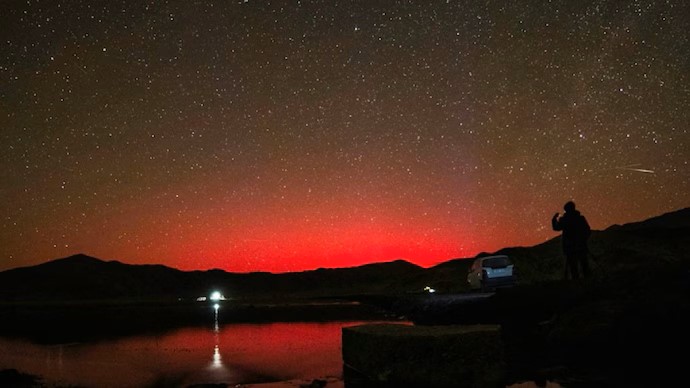
Auroras, often referred to as the northern lights, typically grace the skies near the polar regions. However, due to the current geomagnetic storm’s intensity, India may witness this atmospheric phenomenon. These dazzling displays occur when charged solar particles collide with gases in the upper atmosphere, creating curtains of vibrant green, purple, and red light. Although auroras are not common in India due to its geographical location, historical occurrences suggest that tonight may be a unique experience.

Potential Locations for Aurora Sightings in India

The Indian regions with a chance to witness auroras include Hanle in Ladakh, where such displays have occurred before. Situated at an altitude of 4,500 meters, the Indian Astronomical Observatory in Hanle experienced a similar event on January 19, 2026, producing breathtaking visuals as confirmed by scientists from the Indian Institute of Astrophysics. This evening, Hanle will be observing the northern sky with hopes of another spectacular display. Other elevated areas, such as Nubra Valley, Pangong Tso, parts of Kashmir, and some regions in Uttarakhand, may also provide faint glimpses of the aurora.

Urban Areas Lacking Visibility

Major cities in India, including Delhi, Mumbai, and Chennai, are expected to miss out on tonight’s potential auroras. Urban light pollution and weather conditions hinder visibility, leaving cities like these devoid of the celestial spectacle that may occur in higher altitudes. Individuals located in urban settings in India are unlikely to have the opportunity to see the aurora due to their bright surroundings and cloud cover.

Optimal Weather Conditions for Aurora Viewing

Clear skies are essential for aurora visibility. Ladakh offers the most favorable weather tonight, with temperatures dropping between 5 and 10 degrees Celsius and mostly clear conditions, making it an ideal location. In contrast, cities like Delhi are facing hot weather, with daytime temperatures between 43 and 46 degrees Celsius, while monsoon rains in Mumbai, Bengaluru, and other metropolitan areas will obstruct visibility.

What to Expect During the Aurora Viewing

Successful observation of auroras hinges on the behavior of the incoming solar plasma. The specific orientation of the magnetic field component known as Bz will determine whether conditions are right for the auroras to reach southern latitudes. This information becomes available shortly before the plasma arrives, offering minimal warning. Observers are advised to monitor real-time updates and to prepare for the viewing experience by allowing their eyes to adjust to the darkness and using long-exposure cameras to capture the event.

A Unique Night in Ladakh

Tonight’s occurrence may provide individuals in Ladakh with an exceptional opportunity to witness one of nature’s most extraordinary displays. As the moment draws near, anticipation builds, and locals are encouraged to prepare for the possibility of vibrant auroras lighting up the night sky.

Long or Short, get news the way you like. No ads. No redirections. Download Newspin and Stay Alert, The CSR Journal Mobile app, for fast, crisp, clean updates!

App Store –  https://apps.apple.com/in/app/newspin/id6746449540 

Google Play Store – https://play.google.com/store/apps/details?id=com.inventifweb.newspin&pcampaignid=web_share

Latest News

Popular Videos
