


Padma Shri Scientist Highlights India’s Role as Carrier of Ancient DNA
The CSR Journal Magazine

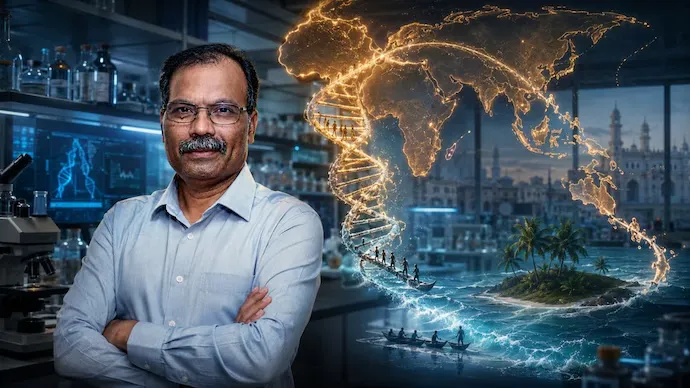
Dr Kumarasamy Thangaraj has become a prominent figure in genetic research, showcasing India’s integral role in understanding human history. Awarded the Padma Shri in 2023, his work from the Centre for DNA Fingerprinting and Diagnostics in Hyderabad emphasises the importance of Indian genetic diversity, which has often been overlooked in global databases. His accomplishments signal that cutting-edge scientific inquiry can emerge from within India itself, highlighting a local commitment to international standards of research.

Educated at the University of Madras and honing his skills in Indian research institutes, Thangaraj’s career trajectory contradicts the notion that exceptional science must stem from Western institutions. He has spent over two decades illuminating the complexities of human genetics, particularly regarding migration and diversity, a journey that began with a pivotal study in 2005.

Through this research, Thangaraj’s team revealed that Indigenous communities in the Andaman Islands possess genetic lineages dating back approximately 65,000 years, likely linked to some of the first humans to leave Africa. This groundbreaking finding has shifted scientific perspectives on the patterns of human migration and the genetic characteristics of contemporary populations.

Impact of the 2005 Research and Its Global Significance

The groundbreaking study conducted by Dr Thangaraj in 2005 focused on the mitochondrial DNA of Indigenous tribes such as the Onge and Jarawa. By connecting these groups to ancient populations that migrated from Africa, the research provided crucial evidence for the theory that early humans followed coastal routes from Africa to Asia. This discovery has reshaped discussions surrounding the origin and movement of human populations globally.

Furthermore, the research does not categorise these tribes as “primitive” but rather indicates their ancient lineage has maintained relative isolation, preserving one of humanity’s oldest genetic lineages discovered outside Africa. Such insights have significant implications for understanding humanity’s shared history and the remarkable diversity found within India itself.

The research from the Andaman Islands has supported the “southern coastal migration” theory, positioning India as a critical landmark in humanity’s migration history, thereby serving as a foundation for further genetic studies in the region.

Advancements Through the GenomeIndia Project

In 2020, the GenomeIndia Project was initiated, designed to catalogue the genetic diversity of the Indian population comprehensively. This groundbreaking endeavour aims to develop a reference database that accurately resonates with India’s multifaceted population, which historically has been underrepresented in global genomic studies. This project succeeded in sequencing the genomes of nearly 10,000 individuals from various Indian communities, contributing substantial new data to the scientific community.

The findings, revealing close to 130 million genetic variants, with 44 million previously absent from major global datasets, demonstrate the unique biological traits linked to Indian populations. These variants have vast implications for medical research, including drug responses and disease risks, thereby enhancing personalised medicine approaches tailored specifically for the Indian populace.

Dr Thangaraj has consistently emphasised the importance of including diverse genetic data in medical models. The remarkable genetic variety found in India necessitates a re-evaluation of healthcare strategies to ensure they cater accurately to the population’s needs, thereby paving the way for improved health outcomes.

Preservation Concerns and Future Trajectories

While Dr Thangaraj’s work continues to advance the understanding of genetic diversity, challenges loom over the cultural and ecological integrity of the Andaman and Nicobar Islands. The Great Nicobar mega infrastructure project, intended to spur development, poses significant risks to the local ecosystems and Indigenous communities essential to preserving historical genetic legacies.

Environmentalists have raised alarms regarding extensive tree felling and the impact on delicate ecosystems, as traditional lifestyles may be disrupted. A careful balance between development and ecological preservation remains vital, as irreversible damage may occur if ecological and cultural lineages are not safeguarded.

Ultimately, Thangaraj’s achievements serve not only as a celebration of scientific excellence but also as a reminder of the need to recognise and maintain diversity in both heritage and science. As India navigates its position in global research, it encourages exploration into its rich genetic history while advocating for sustainable practices that honour its past and future.

Long or Short, get news the way you like. No ads. No redirections. Download Newspin and Stay Alert, The CSR Journal Mobile app, for fast, crisp, clean updates!

App Store –  https://apps.apple.com/in/app/newspin/id6746449540 

Google Play Store – https://play.google.com/store/apps/details?id=com.inventifweb.newspin&pcampaignid=web_share

Latest News

Popular Videos
