


Nepal PM Proposes Four-Nation Talks With India, China and the United Kingdom Over Border Disputes
The CSR Journal Magazine

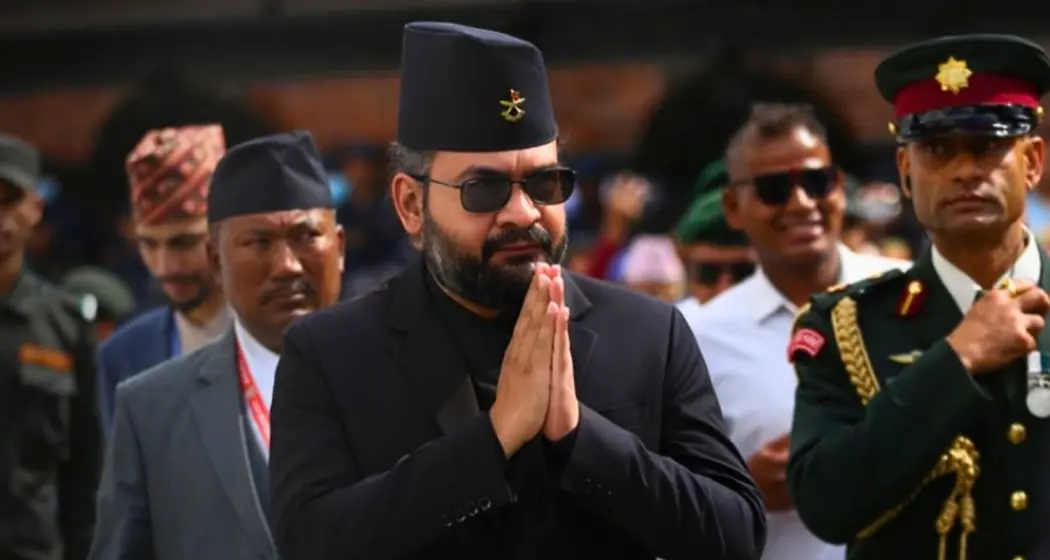
Nepal’s newly appointed Prime Minister, Balendra Shah, has expressed intentions to broaden discussions regarding the country’s border issues with its neighbouring countries. In a parliamentary address on May 31, Shah advocated for including the United Kingdom in these dialogues, focusing on historical accountability and archival resources related to territorial disputes.

This announcement marks Shah’s initial address to the House of Representatives since taking office in late March. During his remarks, he highlighted the need for a historical and collaborative approach toward managing the country’s borders, responding to inquiries posed by opposition members.

Shah underscored the belief that the UK’s involvement is crucial, noting its historical ties to the region during the colonial period. “As they were departing from British India, the issues surrounding borders transitioned into a legacy carried down through generations,” he stated, emphasising the necessity of diplomatic engagement to address these challenges.

India’s Response to Nepal’s Territorial Claims

The Government of Nepal has already initiated diplomatic communications with India concerning boundary issues. Prime Minister Shah stated that the plan involves historians, expert surveyors, and territorial scholars collaborating to assess the geographical context through discussions.

Earlier this month, the Indian government indicated its openness to constructive dialogue with Nepal on all bilateral matters, including boundary-related disputes. Randeep Jaiswal, the Ministry of External Affairs spokesperson, reiterated India’s long-standing position on border claims, particularly in relation to the Kailash Manasarovar Yatra, which has historically used the Lipulekh Pass.

Jaiswal clarified that India’s stance on territorial claims from Nepal is firmly rooted in historical evidence, asserting that any unilateral expansion of claims is untenable. He reiterated that Lipulekh has been a traditional route utilised by pilgrims since 1954, countering recent claims made by the Nepalese government regarding boundary disputes.

Complex Geopolitical Landscape

The border disputes between India and Nepal intensified in 2020 when Nepal’s then-Prime Minister KP Sharma Oli approved an updated map that included areas like Limpiyadhura, Lipulekh, and Kalapani, asserting Nepal’s rights over these regions. This move faced outright rejection from India, which claimed that the revised map unilaterally altered the territorial status quo.

In addition to the tensions between India and Nepal, the geopolitical dynamics became more intricate in 2023, when China released a map highlighting disputed areas within Indian territory, despite prior agreements with New Delhi aimed at enhancing trade through these passes. Nepal’s assertion over the Kalapani-Lipulekh-Limpiyadhura region puts it at the intersection of India-China relations, as all three nations engage in ongoing negotiations.

Despite the competing territorial claims, there remains a mutual desire among all parties to maintain cordial bilateral relations through diplomatic channels. Nepal hopes to facilitate a peaceful resolution to these disputes via a forthcoming multilateral review of historical maps and documents, demonstrating a commitment to dialogue.

Long or Short, get news the way you like. No ads. No redirections. Download Newspin and Stay Alert, The CSR Journal Mobile app, for fast, crisp, clean updates!

App Store –  https://apps.apple.com/in/app/newspin/id6746449540 

Google Play Store – https://play.google.com/store/apps/details?id=com.inventifweb.newspin&pcampaignid=web_share

Latest News

Popular Videos
