


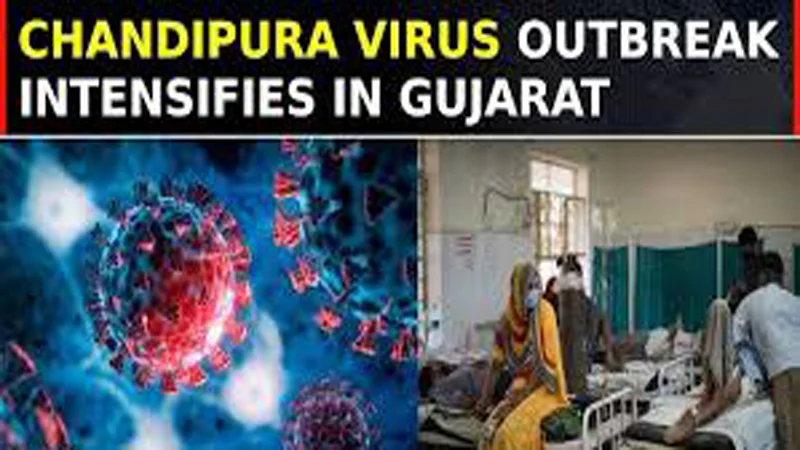

National Team Deployed In Gujarat To Investigate Chandipura Virus Outbreak

The CSR Journal Magazine

A national team of specialists from the Indian Council of Medical Research (ICMR) has been dispatched to Gujarat to examine the ongoing Chandipura virus outbreak. This dedicated team aims to enhance the response efforts and control the spread of the disease.

Dr. Rajiv Bahl, Director General of the ICMR, stated that the team is collaborating with state authorities and other experts to better understand and mitigate the disease. Notably, Chandipura virus outbreaks have occurred previously, with the most recent incident reported about two years ago.

The current outbreak is a significant concern, and a Special Task Force is operational in Gujarat to manage the situation. Dr. Bahl emphasized the continuous efforts of ICMR teams in the region over the past two years to investigate the underlying factors contributing to these outbreaks.

Strengthening Response Through Collaborative Efforts

According to Dr. Bahl, the ICMR has been working in conjunction with various stakeholders to delve into the origins and triggers of the Chandipura virus. The team is already active in the areas most impacted by the virus. The deployment of a national team is intended to fortify the existing response mechanisms.

Various innovative strategies are being implemented to comprehend, control, and ultimately treat the disease. This includes an enhanced coordination between health authorities to ensure public safety and effective management of the outbreak.

In addition, the Union Ministry of Health and Family Welfare has reinforced its efforts by sending the National Joint Outbreak Response Team (NJORT) to both Gujarat and Rajasthan. This further aims to amplify the resources available for tackling the Chandipura virus outbreak.

About Chandipura Virus and Its Effects

The World Health Organisation classifies Chandipura virus (CHPV) as part of the Rhabdoviridae family, associated with acute encephalitis syndrome (AES), particularly affecting children. The virus is reportedly transmitted by vectors such as sandflies, mosquitoes, and ticks.

In Gujarat specifically, the sandfly species Phlebotomus papatasi has been identified as a vector for the virus. The disease often commences with fever, which can escalate to convulsions, coma, or even death in severe instances.

The World Health Organisation has previously reported a concerning case-fatality ratio of 56 to 75 per cent during earlier outbreaks of the Chandipura virus in India. This alarming statistic underscores the urgent need for robust response measures and extensive public health interventions.

As the ongoing efforts unfold, health authorities remain vigilant in their pursuit to control the outbreak and safeguard public health in the affected regions. Continued support and surveillance are vital for effectively managing the situation.

Long or Short, get news the way you like. No ads. No redirections. Download Newspin and Stay Alert, The CSR Journal Mobile app, for fast, crisp, clean updates!

App Store –  https://apps.apple.com/in/app/newspin/id6746449540 

Google Play Store – https://play.google.com/store/apps/details?id=com.inventifweb.newspin&pcampaignid=web_share

Latest News

Popular Videos