


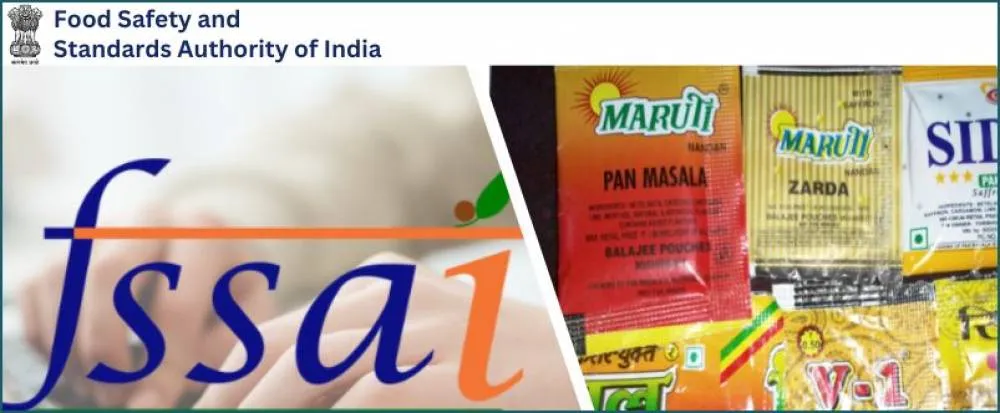

New FSSAI Guidelines Prohibit Plastic Packaging for Pan Masala Products

The CSR Journal Magazine

The Food Safety and Standards Authority of India (FSSAI) has issued new guidelines regarding the packaging of pan masala products, formally banning the use of plastic-based and plastic-laminated materials. This change results from an amendment to the existing Food Safety and Standards (Packaging) Regulations, 2018, aiming to enhance food safety and environmental protection.

Details of the Amendment

On August 11, 2026, FSSAI announced that under the powers granted by section 92 of the Food Safety and Standards Act, 2006, the latest regulations have been approved by the Central Government. Officially called the Food Safety and Standards (Packaging) Amendment Regulations, 2026, these new rules will be effective from the date they are published in the Official Gazette.

The FSSAI specifies that pan masala products are prohibited from using any type of plastic, including but not limited to polyethylene, polypropylene, polyester, and polyvinyl chloride (PVC). This move is part of a broader commitment to reducing plastic waste and is aligned with the Plastic Waste Management Rules, 2016, pursuant to the Environment Protection Act, 1986.

The amendment expands Schedule IV of the 2018 packaging regulations by including a detailed list of permitted materials for pan masala. Acceptable packaging materials now encompass paper, paper board, and cellulose or other naturally derived substances. Additionally, the packaging must be completely free from synthetic polymers or laminates, as well as aluminium foil or metallised layers.

Implications for the Industry

These new guidelines are expected to have substantial implications for manufacturers of pan masala. As the regulations come into effect, companies will need to review their existing packaging strategies to comply with the FSSAI’s stringent standards. This may lead to increased production costs and necessitate adjustments in supply chain practices.

In addition to the immediate necessity for compliance, producers may also explore alternative packaging options that align with sustainable practices. This transition not only addresses regulatory demands but may also cater to evolving consumer preferences for eco-friendly products.

The FSSAI has emphasised the importance of ensuring that the newly permitted materials maintain the safety and quality of pan masala. This could lead to more rigorous testing and evaluation processes for products entering the market, as firms seek to assure consumers of product integrity while adhering to environmental guidelines.

Future Outlook

As the industry adapts to these changes, the FSSAI’s latest guidelines on pan masala packaging signal a growing trend towards greater regulation of food products in India. The implications of these regulations extend beyond the immediate effects on manufacturers, influencing consumer behaviour and market dynamics.

Continued awareness and enforcement of such regulations by the FSSAI will potentially catalyse further shifts in packaging practices across various segments of the food and beverage industry. This might foster a more comprehensive approach to sustainability and food safety in India’s food supply chain.

Ultimately, these new regulations reflect a commitment to public health and environmental responsibility, aiming to create a safer and more sustainable food market in the country. As these policies unfold, stakeholders will need to remain vigilant in their compliance efforts to ensure alignment with evolving standards and consumer expectations.

Long or Short, get news the way you like. No ads. No redirections. Download Newspin and Stay Alert, The CSR Journal Mobile app, for fast, crisp, clean updates!

App Store –  https://apps.apple.com/in/app/newspin/id6746449540 

Google Play Store – https://play.google.com/store/apps/details?id=com.inventifweb.newspin&pcampaignid=web_share

Latest News

Popular Videos