


Nasa’s X-59 Jet Prepares For First Supersonic Flight Without Sonic Boom
The CSR Journal Magazine

Nasa’s X-59 jet is set to undertake its inaugural supersonic flight, aiming to revolutionise air travel by eliminating the disruptive sonic boom. Traditionally, surpassing the speed of sound, approximately 1,235 km/h, generates a loud shockwave, resulting in a thunderous boom that disturbs those on the ground. This phenomenon has historically limited the feasibility of commercial supersonic flights over land, leading to regulatory bans that have hindered advancements in the sector.

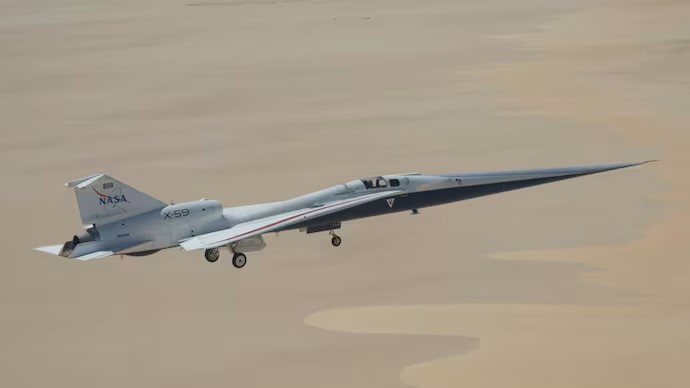
With the X-59’s development, Nasa intends to challenge these restrictions. The aircraft’s design incorporates features specifically targeted at mitigating the sonic boom, renewing hopes for the future of high-speed travel. This represents a significant step forward, potentially opening routes for rapid transport over populated areas without the amenity disruptions that previously curtailed supersonic travel.

Design and Testing of the X-59

The X-59 is a cutting-edge experimental aircraft built by Lockheed Martin measuring approximately 30 metres from tip to tail. A prominent attribute of its design is the elongated, narrow nose, essential for dispersing shockwaves gradually. Nasa anticipates that this engineering marvel will produce a soft thump, akin to the sound of a car door closing, rather than a loud boom.

The aircraft successfully completed its first flight in October 2025 and has proceeded to undertake 15 additional test flights, progressively pushing its capabilities. In its latest operations, the X-59 reached altitudes of 43,000 feet and speeds nearing 1,009 km/h, just below the threshold for supersonic speed. The upcoming flights this summer aim for even greater performance, focusing on reaching Mach 1.4, equivalent to about 1,489 km/h at an altitude of 55,000 feet.

Future plans include testing the aircraft at a maximum design speed of Mach 1.6, or roughly 1,960 km/h, at 60,000 feet, which is essential to fully realise its potential and capabilities.

Implications of Successful Supersonic Flights

Should the X-59 successfully demonstrate noise-free supersonic travel, a significant shift in air travel dynamics may occur. Nasa intends to conduct flights over populated regions in the United States, collecting feedback from residents regarding their auditory experiences. This research is paramount in determining whether supersonic flights can coexist with residential living conditions without causing disruptions.

The data gathered from these tests will be essential for presenting to aviation regulators globally. If the results validate the noise reduction claims of the X-59, this could usher in a new era of commercial travel. Passengers might experience flights from major cities, including a journey from Mumbai to London, in less than five hours, without the inconvenience of sonic booms disrupting their environment.

As the aviation industry faces growing demand for faster travel solutions, advancements such as those brought forward by Nasa’s X-59 could redefine how commercial routes are operated in the future. The successful realisation of these capabilities hinges on the outcomes of the upcoming supersonic flights, with potential benefits extending far beyond mere speed enhancements.

Long or Short, get news the way you like. No ads. No redirections. Download Newspin and Stay Alert, The CSR Journal Mobile app, for fast, crisp, clean updates!

App Store –  https://apps.apple.com/in/app/newspin/id6746449540 

Google Play Store – https://play.google.com/store/apps/details?id=com.inventifweb.newspin&pcampaignid=web_share

Latest News

Popular Videos
