


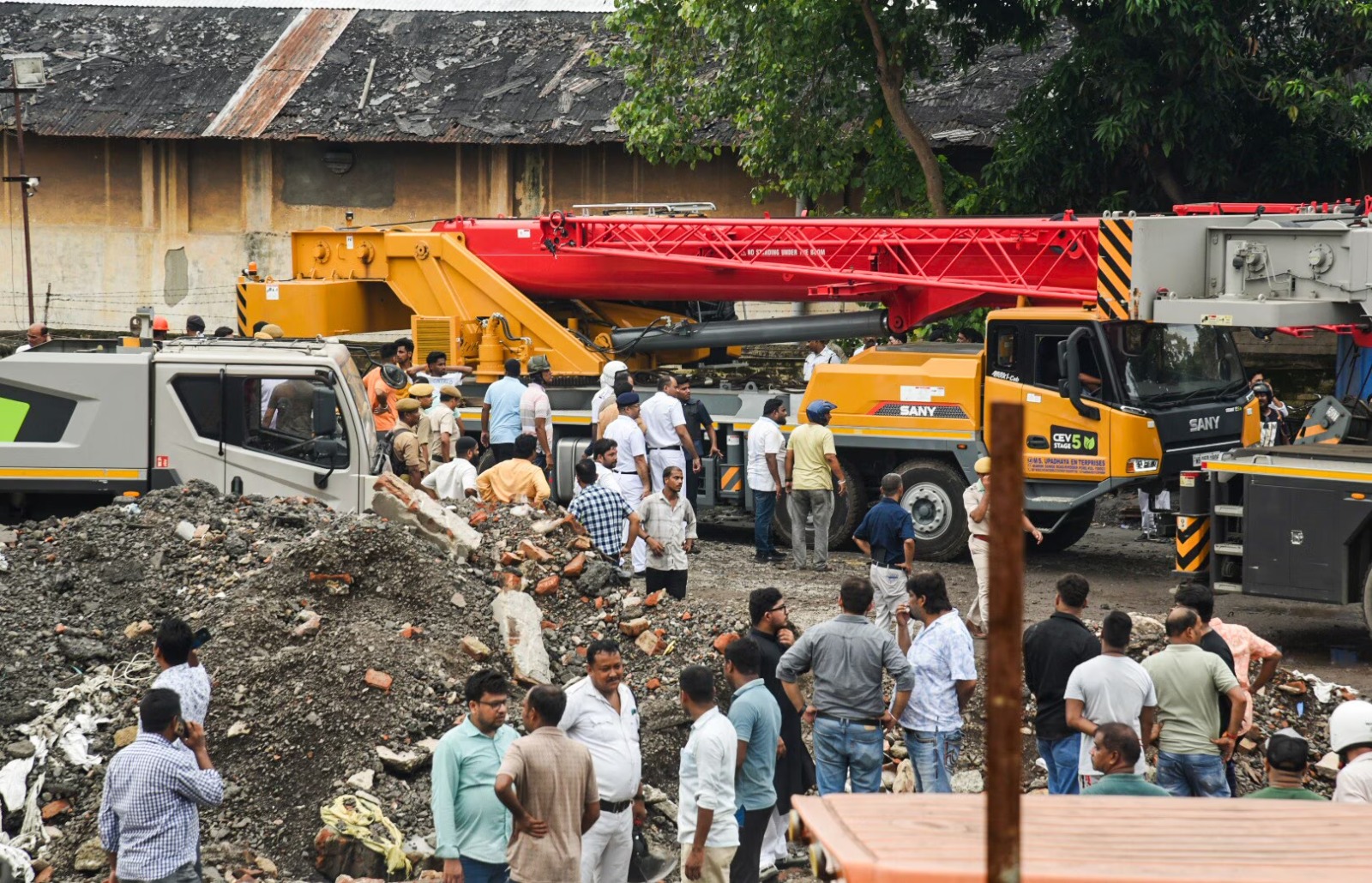

In a bid to locate survivors trapped under the debris of the collapsed warehouse in Taratala, the Indian Army has deployed a cutting-edge scanning device known as a “Rescue Radar.” The disaster, which occurred on Wednesday when the roof of an under-construction warehouse caved in, has so far resulted in 11 fatalities, with 23 others currently hospitalized.
A joint rescue operation involving the Indian Army, National Disaster Response Force (NDRF), fire services, and local police has been underway since Wednesday. However, severe darkness and structural instability inside the wreckage have heavily obstructed manual search efforts.
To overcome these challenges, the Army’s Fort William headquarters authorized the use of the specialized radar system. According to military sources, this advanced technology is typically reserved for major disasters where conventional rescue paths are completely blocked. A similar system was successfully utilized during the high-profile Uttarkashi tunnel rescue operation.
How the Rescue Radar Works
The technology allows rescue teams to map out what lies beneath the heavy concrete slabs without shifting the debris blindly.
Debris Scanning: Engineers place the radar directly on top of the wreckage in areas where workers are suspected to be trapped.
Live Feed Imagery: The machine scans the interior and transmits real-time structural images onto a connected display board, cutting through the pitch-black darkness.
Targeted Extraction: Once the precise locations of survivors or pockets of space are identified via the display, personnel use hammers and crowbars to breach the concrete and extract individuals safely.
Investigation Reveals Flawed Construction Methods
An official report submitted to the Kolkata Municipal Corporation (KMC) has highlighted severe structural and procedural lapses as the root cause of the collapse.
The building plan for the 54-katha plot was originally approved in February 2025. According to the investigation report, a three-story warehouse structure had already been erected. Standard engineering protocols dictate that concrete casting must be done sequentially, starting from the ground floor upward. However, due to flawed planning, the contractors initiated casting from the third floor instead. The lower structure was unable to sustain the massive downward load, leading to the catastrophic collapse.
Long or Short, get news the way you like. No ads. No redirections. Download Newspin and Stay Alert, The CSR Journal Mobile app, for fast, crisp, clean updates!
App Store – https://apps.apple.com/in/app/newspin/id6746449540
Google Play Store – https://play.google.com/store/apps/details?id=com.inventifweb.newspin&pcampaignid=web_share