Climate Change Is No Longer Tomorrow’s Problem. For decades, climate change was treated as a distant warning—a problem for future generations, future governments, and future economies. It was discussed in conferences, debated in television studios, and buried inside scientific reports. But the summer of 2026 has delivered a brutal message to India: the future has arrived.
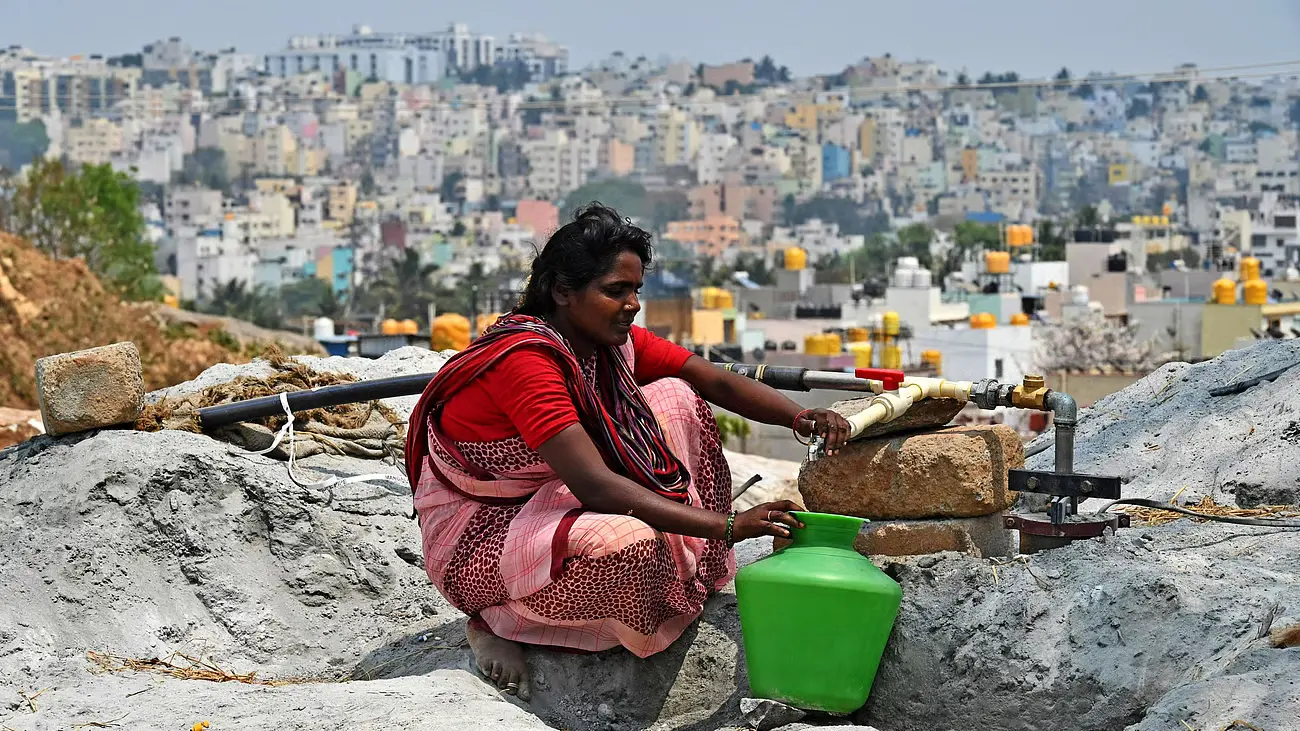
Across the country, millions of Indians are experiencing a reality that previous generations could hardly imagine. Temperatures are reaching dangerous levels, reservoirs are shrinking, rivers are under stress, and cities are struggling to provide one of the most basic necessities of life—water. The question is no longer whether climate change is real. The question is whether India is prepared for what comes next.
This year’s heat has not merely been uncomfortable. It has been relentless. It has entered homes, schools, factories, farms, and hospitals. It has forced workers off construction sites, exhausted farmers in their fields, and trapped elderly citizens indoors. For the poor, who often lack air conditioning, reliable electricity, and adequate shelter, the heat is not an inconvenience. It is a threat to survival.
Perhaps the greatest tragedy is that climate change is becoming an amplifier of inequality. The wealthy can buy generators, air conditioners, water tankers, and safer homes. The poor cannot. When temperatures soar, it is the daily wage worker, the street vendor, the farmer, and the migrant labourer who pay the highest price. Climate change is no longer just an environmental issue. It is a social justice issue.
India’s farmers stand on the frontlines of this crisis. The uncertainty surrounding monsoons has become one of the biggest challenges facing rural India. A delayed monsoon, an erratic rainfall pattern, or a sudden extreme weather event can destroy months of hard work within hours. For a nation where millions still depend directly or indirectly on agriculture, the consequences extend far beyond farms. Food security, inflation, employment, and economic stability are all linked to the skies above.
Meanwhile, India’s cities are discovering that rapid urbanisation without adequate planning carries a heavy cost. Roads melt under extreme heat. Water shortages become common. Electricity demand surges. Drainage systems collapse during intense rainfall. Every year, the headlines repeat themselves. Every year, the disasters become slightly worse.
The most frightening aspect of this crisis is not what we see today. It is what experts warn may come tomorrow. If current trends continue, future generations may inherit a country where extreme heat becomes routine, water conflicts intensify, coastal communities face rising sea levels, and natural disasters become more frequent and more destructive.
Yet this story is not only about fear. It is also about responsibility. India cannot afford to view climate change as someone else’s problem. Governments must invest aggressively in water conservation, climate-resilient infrastructure, renewable energy, and sustainable urban planning. Businesses must recognize that environmental responsibility is no longer a public relations exercise—it is an economic necessity. Citizens must understand that every drop of water saved, every tree protected, and every sustainable choice matters.
History may remember the summer of 2026 as a turning point. A moment when India finally realised that climate change was not waiting at the door. It had already entered the house. The heatwaves, the water shortages, the failing reservoirs, and the uncertain monsoons are not isolated events. They are warning signs. Nature is sending a message louder than any political speech, economic report, or election slogan.
The real question is whether we are willing to listen before the next summer becomes even harder to survive than the last.