


Handwritten Postcard by PM Modi Set for Space Launch with Vikram-1
The CSR Journal Magazine

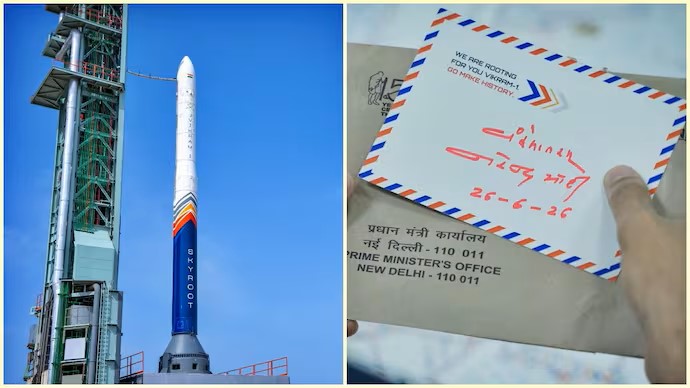
The launch of Skyroot Aerospace’s Vikram-1 rocket, scheduled for July 18 from Sriharikota, will carry a handwritten postcard by Prime Minister Narendra Modi into space. This postcard, which features the words “Vande Mataram,” represents a significant moment for India’s space exploration efforts. The mission, named Mission Aagaman, is Skyroot’s inaugural orbital launch and marks the first attempt by a privately developed Indian rocket to achieve orbit from Indian soil.

Alongside the Prime Minister’s note, the rocket will also transport numerous handwritten postcards from members of the Skyroot team, investors, policymakers, scientists, and supporters from across the globe. This initiative transforms the mission into a celebration of India’s expanding space ecosystem, showcasing the collaborative efforts of various individuals in this field.

The mission holds additional importance as it includes postcards from both current and former chairpersons of the Indian Space Research Organisation (ISRO) and Indian astronauts. These contributions reflect India’s extensive and storied journey in space exploration over the decades.

Details of the Payload and Technology Demonstration

Skyroot has designed the payload collection not only to honour those who have played integral roles in establishing India as a global spacefaring entity but also to highlight the technological advancements associated with Mission Aagaman. The mission will feature several technology demonstration payloads, one of which is the SCOPE payload developed by Skyroot.

It is worth noting that Vikram-1 will also carry “Cosmic Bloom,” an artwork created by Cosmos Diamonds, along with a micro-art payload. This diverse set of payloads reflects the innovative spirit driving India’s private space sector and further underscores the mission’s focus on both technological and cultural achievements.

Before the launch, Vikram-1 is reported to stand nearly seven stories tall and is designed to carry payloads weighing up to 350 kilograms into Low Earth Orbit. Skyroot has utilised advanced materials in the construction of the rocket and developed unique propulsion systems in-house, including 3D-printed rocket engines and high-thrust solid rocket motors.

The Role of Public-Private Partnerships in Space Exploration

For Skyroot, the inclusion of handwritten postcards extends beyond being mere collectibles; they represent a unity between India’s public and private sectors at a pivotal time in the nation’s commercial space ambitions. The collaboration exemplifies the potential of these sectors working together to advance India’s position in global space ventures.

If Vikram-1 successfully completes its mission, it will not only showcase the capabilities of India’s first privately developed orbital rocket but also carry into space the hopes and aspirations of various leaders, scientists, and citizens who have contributed to India’s journey beyond Earth. The move indicates significant progress in the nation’s space technology and commercial capabilities.

Ultimately, the success of Mission Aagaman could pave the way for future private and public collaborations, enabling India to strengthen its foothold in the international space arena. As various stakeholders come together for this historic launch, the mission reflects a collective ambition to propel India’s achievements in space exploration to new heights.

Long or Short, get news the way you like. No ads. No redirections. Download Newspin and Stay Alert, The CSR Journal Mobile app, for fast, crisp, clean updates!

App Store –  https://apps.apple.com/in/app/newspin/id6746449540 

Google Play Store – https://play.google.com/store/apps/details?id=com.inventifweb.newspin&pcampaignid=web_share

Latest News

Popular Videos
