


Skyroot Aerospace Prepares for Historic Vikram-1 Rocket Launch
The CSR Journal Magazine

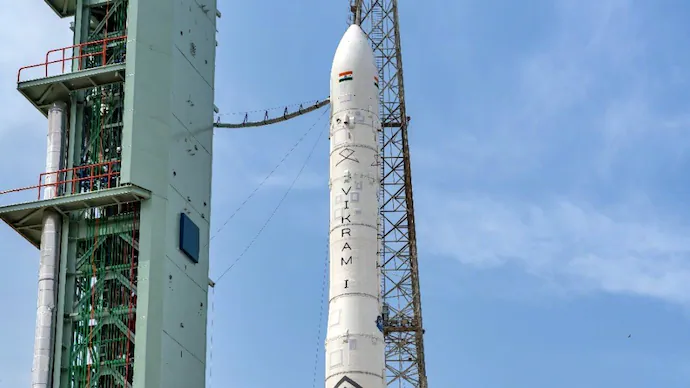
The Vikram-1 rocket launch, a significant milestone for India’s private space sector, is set to take place on Saturday, July 18, 2026, at 11:30 am IST. This historic event marks the first attempt by a fully private Indian company to launch a payload into Earth’s orbit from Indian soil. The rocket, developed by the Hyderabad-based startup Skyroot Aerospace, will lift off from the First Launch Pad at the Satish Dhawan Space Centre operated by the Indian Space Research Organisation (Isro) in Sriharikota, Andhra Pradesh.

The Vikram-1 rocket stands impressively at seven stories tall and represents a substantial advancement for India’s burgeoning private space capabilities. Following the successful suborbital test flight of the Vikram-S rocket in 2022, this launch signifies the next critical step in the development of space technology by private enterprises in India.

Skyroot has confirmed that all necessary vehicle integrations, safety checks, and clearances for the flight path have been completed, ensuring that the launch day operations are on track. Individuals interested in witnessing the launch can view it live through Skyroot Aerospace’s official social media channels and YouTube page, with streaming expected to commence approximately 30 minutes prior to liftoff.

Significance of Vikram-1 Launch

The significance of the Vikram-1 launch extends beyond a mere milestone. Unlike its predecessor, the Vikram-S, which conducted a brief suborbital flight, Vikram-1 is an orbital-class rocket designed to deploy satellites into a stable orbit around the Earth. Specifically, the mission aims for a target altitude of 450 km in Low Earth Orbit (LEO), which is critical for various satellite applications.

Onboard the Vikram-1 are several important technology demonstration payloads from both Indian and global space firms, including Grahaa Space, DCubed, and Cosmoserve. A notable payload from Cosmoserve is designed to test a specialised robotic capture system that can safely capture space debris and defunct satellites, addressing a pressing challenge in contemporary space exploration.

The Vikram-1 rocket is engineered with a lightweight, all-carbon-composite structure and incorporates advanced 3D-printed liquid engines. This innovative design makes the rocket easier to manufacture and more cost-effective. Should the launch be successful, Mission Aagaman will be the first time these cutting-edge technologies are validated under actual conditions in space.

Future Implications for India’s Private Space Sector

A successful launch of the Vikram-1 will open up avenues for more reliable, on-demand commercial satellite launches from India. This advancement could position India as a significant player in the global private space economy, especially as private enterprises continue to emerge in the field of space technology. The implications of such success could resonate throughout the sector, encouraging further investments and innovations.

Mission Aagaman is not only a crucial developmental step for Skyroot Aerospace but also for the larger landscape of India’s private space industry. It represents a collective aspiration to enhance India’s capabilities in satellite launches and contributes to the global pursuit of advancements in space science.

With increasing worldwide interest in satellite technology and space exploration, the outcome of the Vikram-1 flight may inspire further collaboration between private entities and governmental organisations in India. The anticipation surrounding this mission is a testament to the evolving dynamics of the country’s space programme.

Long or Short, get news the way you like. No ads. No redirections. Download Newspin and Stay Alert, The CSR Journal Mobile app, for fast, crisp, clean updates!

App Store –  https://apps.apple.com/in/app/newspin/id6746449540 

Google Play Store – https://play.google.com/store/apps/details?id=com.inventifweb.newspin&pcampaignid=web_share

Latest News

Popular Videos
