


Air India Flight Encounters Severe Turbulence with Injuries Reported
The CSR Journal Magazine

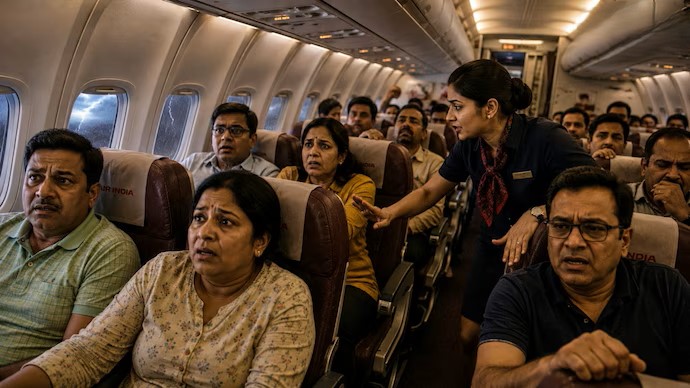
An Air India flight travelling from Phuket to Delhi experienced severe turbulence on Tuesday, resulting in a sudden drop of approximately 300 feet. This incident led to injuries for at least fourteen individuals, including both passengers and cabin crew members. Reports indicate that the injuries were not life-threatening, but the event has once again raised concerns regarding the frequency and intensity of turbulence associated with climate change.

Turbulence, which is the irregular motion of air during flight, can cause an aircraft to shake or make abrupt altitude changes. Such phenomena are commonly triggered by factors like thunderstorms, strong winds, and jet streams. While modern aircraft are designed to withstand various turbulence levels, serious bouts of turbulence can pose risks to unrestrained passengers and crew.

Among the adverse types of turbulence, clear-air turbulence is particularly perilous as it takes place in cloudless skies and is difficult to detect with weather radar. This makes avoidance challenging for pilots, as they may have little to no warning before encountering such conditions.

Understanding Clear-Air Turbulence

Clear-air turbulence (CAT) presents significant challenges, occurring above 15,000 feet when the skies are clear. Unlike storm-associated turbulence, CAT is nearly invisible and cannot be detected using standard weather radar. This characteristic adds a layer of danger, as pilots are often unaware of its presence until it impacts the aircraft.

The sudden onset of CAT means airlines have limited opportunities to prepare passengers and crew for potential jolts, increasing the likelihood of injuries among those not securely fastened in their seats. Reports indicate that while mild turbulence is common, severe episodes can lead to abrupt altitude changes that may endanger the well-being of individuals aboard.

Research indicates that the risks associated with clear-air turbulence are intensifying due to climate change. A 2023 study by scientists from the University of Reading and the UK Met Office revealed that instances of severe clear-air turbulence over the North Atlantic rose by more than 55 per cent from 1979 to 2020. This data prompts concerns about future turbulence patterns as the climate continues to warm.

Impact of Climate Change on Flight Safety

The increasing severity of turbulence is attributed to the effects of climate change, particularly as it enhances the jet streams, which are fast-moving air currents crucial in generating turbulence. In light of these findings, experts suggest that airlines may need to adopt new technologies to detect turbulence in advance, allowing for better safety measures to protect passengers.

Professor Paul Williams, co-author of the study published in the Journal of the Atmospheric Sciences, noted that pilots might have to keep seatbelt signs illuminated longer and halt cabin service more frequently as turbulence becomes more common. Additionally, a study by researchers from Seoul National University has suggested that climate change may also be intensifying other forms of turbulence related to mountain waves and near-cloud conditions.

In response to the increasing challenges posed by turbulence, modern aircraft are engineered for resilience, with continuous advancements in weather forecasting and pilot training enhancing aviation safety. Authorities recommend that passengers keep their seatbelts fastened during the flight, even when the seatbelt sign is off, in order to minimise the risk of injury during unexpected turbulence events.

Long or Short, get news the way you like. No ads. No redirections. Download Newspin and Stay Alert, The CSR Journal Mobile app, for fast, crisp, clean updates!

App Store –  https://apps.apple.com/in/app/newspin/id6746449540 

Google Play Store – https://play.google.com/store/apps/details?id=com.inventifweb.newspin&pcampaignid=web_share

Latest News

Popular Videos
