


Elon Musk’s Starship Experiences Explosion Following Indian Ocean Water Landing
The CSR Journal Magazine

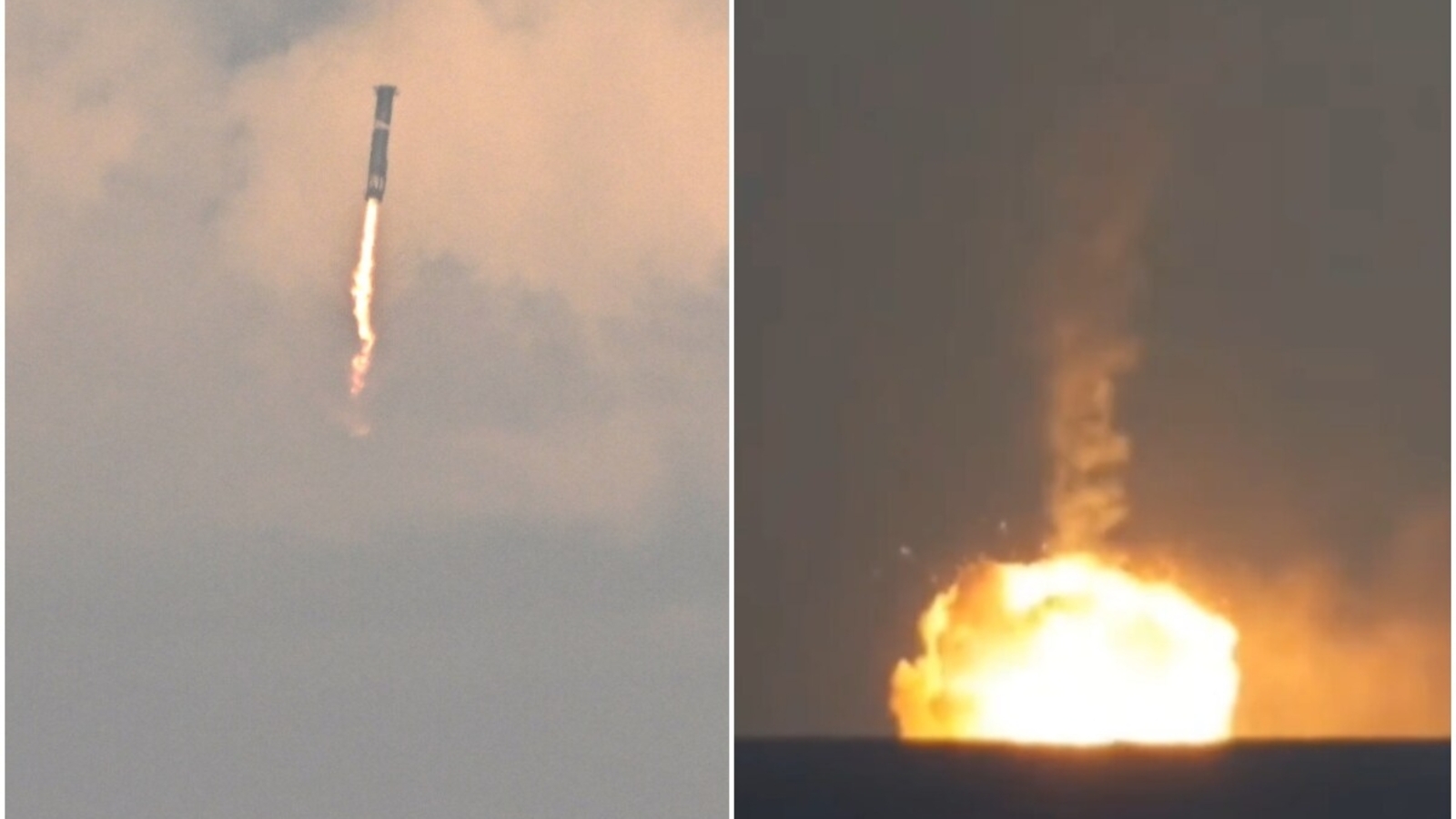
Elon Musk’s SpaceX executed a significant milestone by successfully guiding its extensive Starship spacecraft to a splashdown in the Indian Ocean on Saturday, concluding a nearly hour-long mission. The mission culminated in a controlled sequence, ending with an explosion as intended by mission planners.

The spacecraft launched from SpaceX’s Starbase facility located in Texas, employing the Super Heavy booster for its ascent. This test forms part of the ongoing evaluation of Musk’s advanced rocket system, which is aimed at future lunar and Martian missions.

After detaching from the Super Heavy booster, Starship proceeded through its designated trajectory in space, circumnavigating the globe before initiating a controlled descent toward Earth. The craft targeted a specific, remote section of the Indian Ocean for its landing, with recovery teams and tracking vessels observing the operation closely.

Descent and Impact of Starship

As Starship re-entered the Earth’s atmosphere, it executed a landing burn intended to decelerate the spacecraft just prior to impact. In the crucial final moments of descent, the rocket transitioned into its landing position above the ocean, a vital manoeuvre that SpaceX has been refining through numerous test flights.

The spacecraft collided with the water, described by SpaceX as a “hard splashdown,” resulting in a significant explosion observable across the surrounding maritime area. This dramatic conclusion took place precisely within the defined landing zone, marking another successful controlled end to an experimental mission.

Despite the explosive termination of the journey, the flight represented a notable achievement for SpaceX. The organisation continues to utilise rapid test launches to source data related to Starship’s performance during various phases including ascent, orbital travel, re-entry, and landing operations.

Significance of Starship in Future Space Missions

Starship stands as the largest and most powerful spacecraft ever constructed, serving as the foundation of SpaceX’s overarching goals for deep-space exploration. NASA is poised to employ a modified variant of Starship for forthcoming Artemis missions, which aim to reintroduce astronauts to the Moon.

The mission underscored SpaceX’s progress in achieving precise manoeuvres, showcasing its ability to effectively navigate global trajectories and strike an exact splashdown target. This accomplishment highlights the increasing sophistication of SpaceX’s flight systems and recovery operations, which are pivotal for the future of space travel.

In conclusion, while the mission ended with a significant explosion in the ocean, the successful navigation and targeted landing demonstrated advancements in the technology and operational capacities of SpaceX. The organisation’s ongoing commitment to iterative testing will likely continue to enhance the safety and efficacy of its spacecraft in the quest for interplanetary exploration.

Long or Short, get news the way you like. No ads. No redirections. Download Newspin and Stay Alert, The CSR Journal Mobile app, for fast, crisp, clean updates!

App Store –  https://apps.apple.com/in/app/newspin/id6746449540 

Google Play Store – https://play.google.com/store/apps/details?id=com.inventifweb.newspin&pcampaignid=web_share

Latest News

Popular Videos
