


Drop “Second-Class Passenger” Tag to Ensure Equality, Supreme Court Tells Railways
The CSR Journal Magazine

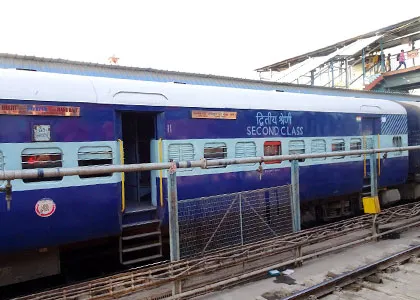
The Supreme Court has proposed that Indian Railways cease the use of the term “second-class passenger” in its official documentation and manuals. This recommendation comes in light of the need to align with the constitutional values of equality and dignity, arguing that the classification should pertain to the coach rather than the individual. The bench, consisting of Justices Sanjay Karol and Nongmeikapam Kotiswar Singh, made this observation while addressing a compensation case related to a passenger’s death.

The court’s ruling emphasised that the expression “second class” ought to denote the type of coach rather than reflect on the person travelling within it. The justices pointed out that the historical context of class divides in India necessitates a shift in terminology to uphold the spirit of the Constitution. They indicated that while the term may appear connected to travel costs, its use could inadvertently perpetuate classist implications.

Case Overview and Compensation Details

The judgement stemmed from a tragic incident involving Chandrakant Thakkar, who lost his life after falling from the Ahmedabad-Howrah Mail in November 2015. His family sought compensation following his death, but both the Railway Claims Tribunal and the Madhya Pradesh High Court had refused their claim, citing a lack of recovered ticket after the accident. The Supreme Court’s decision overturned these previous rulings, awarding Rs 8 lakh to Thakkar’s widow as compensation.

The Supreme Court underscored that, as a state entity, the Railways must adhere to the constitutional guideline of being a welfare state, as stated in Article 38. This principle implies that the organisation should not adopt a strict or technical viewpoint when assessing compensation claims. The court argued that technical failures should not impede the overarching welfare aim of legislative provisions aimed at protecting citizens.

In their judgment, the justices further highlighted the significance of the Indian Railways in the nation’s infrastructure. They noted that despite its colonial legacy, the organisation has grown into a critical public institution in India, employing approximately 12.3 lakh individuals, managing around 13,940 passenger trains, covering over 69,000 km of railway tracks, and accommodating more than 7.2 billion passengers in the fiscal year 2024-25.

Implications for Railway Policy

The Supreme Court’s remarks regarding the terminology used by Indian Railways could influence future policy decisions and operational guidelines. The suggested change is aimed at fostering inclusivity and acknowledging the need to rid official language of terms that reflect outdated social hierarchies. It is anticipated that these adjustments may lead to a broader reassessment of how transportation services classify and engage with passengers.

Furthermore, the court’s observations may compel the Railways to rethink its approach, ensuring that its administrative procedures align with contemporary values of equality and respect for all passengers. This re-evaluation could signal a significant shift in the Railways’ operational principles, ultimately enhancing passenger experience and reinforcing constitutional ethos.

As Indian Railways continues to serve millions across the country, the implications of this judgement could pave the way for more equitable practices within one of the largest transport networks globally. The need for transformation in terminology aligns with a broader societal push towards recognising the inherent dignity of individual passengers, irrespective of the services they utilise.

Long or Short, get news the way you like. No ads. No redirections. Download Newspin and Stay Alert, The CSR Journal Mobile app, for fast, crisp, clean updates!

App Store –  https://apps.apple.com/in/app/newspin/id6746449540 

Google Play Store – https://play.google.com/store/apps/details?id=com.inventifweb.newspin&pcampaignid=web_share

Latest News

Popular Videos
