


Delhi Government Trials New Air-Cleaning Technologies to Combat Pollution
The CSR Journal Magazine

The Delhi government has commenced field trials of various air-cleaning technologies throughout the national capital to address pollution through innovation. This initiative was launched on Saturday as part of an ongoing effort to mitigate the effects of air pollution through year-round interventions.

Chief Minister Rekha Gupta inspected the newly installed pollution-control devices under the government’s ‘Innovation Challenge’. She was accompanied by Environment Minister Manjinder Singh Sirsa and MLA Harish Khurana during her review of the systems.

Among the technologies being trialled is the STR 101 Filterless Air Purifier, with 21 units activated along Satguru Ram Singh Marg in west Delhi. As reported by officials, this self-cleaning system can process nearly 300,000 litres of air every hour, targeting and reducing pollutants such as smoke, dust, PM2.5, and PM10.

Deployment of Advanced Air-Cleaning Technologies in the City

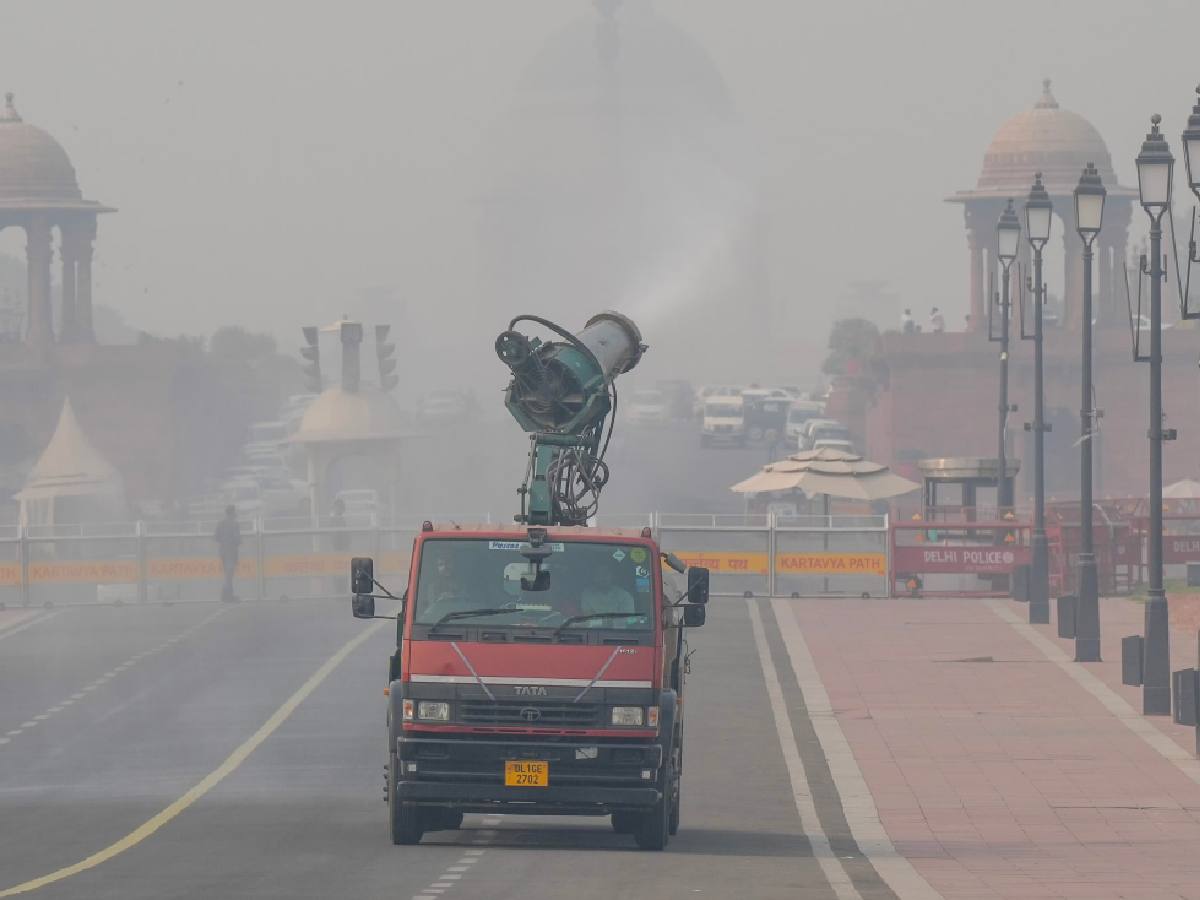
During the visit, the delegation also assessed India’s first electric vehicle (EV)-mounted anti-smog gun that has been deployed in Kirti Nagar and Mayapuri. This zero-emission mobile system aims to suppress road dust and improve air quality by creating cleaner corridors.

Another technology currently in the testing phase is the PAWAN III pollution control device, which has been installed near the Kirti Nagar Fire Station. Officials indicated that this system focuses on reducing vehicular emissions directly at the source, with preliminary tests showing a reduction of nearly 29 per cent in particulate pollution.

In addition, Gupta reviewed pole-mounted dust catchers and central verge air purifiers situated within the Kirti Nagar industrial zone. These technologies are a part of the governmental initiative to maintain continuous efforts in pollution control, rather than treating it as a seasonal issue.

Ongoing Efforts to Address Air Quality Through Innovation

The Chief Minister emphasised that these Made-in-India technologies are pivotal in reducing particulate pollution and enhancing public health. Environment Minister Sirsa elaborated on the functionality of these devices, stating they automatically collect dust and generate alerts when their storage capacity reaches 15-20 days.

Each unit has a coverage area of approximately 400 square metres and is designed with protective iron enclosures. These innovations are part of the 22 shortlisted projects currently undergoing evaluation in the subsequent phase of the Delhi Innovation Challenge. This initiative was launched in October to attract solutions from startups, research institutions, and individuals aimed at decreasing PM2.5 and PM10 emissions.

According to Sirsa, 15 to 16 pilot projects have already been deployed in various locations across Delhi. He noted that technologies deemed effective after assessments by Indian Institutes of Technology (IITs) and other accredited laboratories may be expanded for broader application throughout the city.

Long or Short, get news the way you like. No ads. No redirections. Download Newspin and Stay Alert, The CSR Journal Mobile app, for fast, crisp, clean updates!

App Store –  https://apps.apple.com/in/app/newspin/id6746449540 

Google Play Store – https://play.google.com/store/apps/details?id=com.inventifweb.newspin&pcampaignid=web_share

Latest News

Popular Videos
