


Climate Change Disrupts Bee and Flower Synchrony
The CSR Journal Magazine

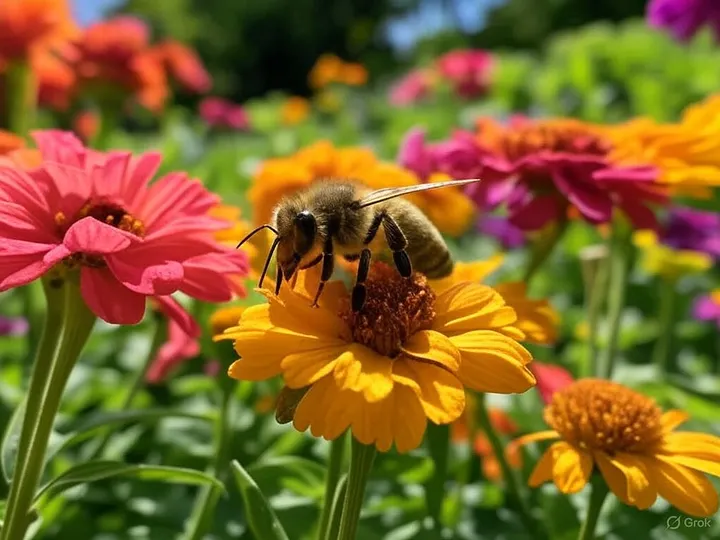
The delicate balance between bee activity and flowering cycles is increasingly disrupted due to climate change. In fields of mustard, the flowers bloom prematurely, leading to a mismatch between flower availability and the hive’s readiness. This phenomenon occurs when the seasonal temperatures shift in ways that flowers open earlier than anticipated, resulting in nectar becoming scarce.

This misalignment presents a complex issue that goes beyond mere declines in bee populations. It highlights the core relationship between bees and their food sources, which has followed a predictable rhythm for centuries but now faces significant upheaval. The decline in honey production is just one indication of this larger problem.

In warmer months, the synchronisation that allowed flowers and bees to thrive together is increasingly faltering. This discrepancy in timing has profound implications for honey production and agricultural yields that hinge on successful pollination.

The Role of Phenology in Flowering and Bee Activity

Phenology is the study of how climatic conditions influence seasonal natural events, and it plays a crucial role in the lifecycle of both flowers and bees. Each flower acts as a biological calendar, opening only when temperature, rainfall, and light coincide perfectly. This precise timing is essential for both flower survival and bee foraging.

Traditionally, various plants and pollinators have adapted their cycles in tandem, with flowering times and pollinator activity occurring in harmony. However, recent studies illustrate a concerning trend: while individual species are advancing their flowering or foraging, the overall synchrony at the community level is diminishing. The loss of species diversity compounds this problem, reducing the natural buffers that have historically protected the ecosystem.

In India, where the indigenous Apis cerana indica bee species is responsible for a substantial proportion of honey production, disrupted floral timings pose challenges that extend beyond local hives to impact national agricultural output. With these bees contributing around 20 per cent to the country’s crop yield, the implications of their declining efficiency are far-reaching.

Consequences of Climate Change on Nectar Production

Nectar serves as an essential resource for bees, comprising a sugary liquid produced by flowers to attract pollinators. The relationship between bees and flowers is mutually beneficial: flowers rely on bees for pollination, while bees collect nectar to produce honey. As climate change alters the environment, the quality and quantity of nectar are also affected.

Research indicates that as temperatures rise, the volume of nectar produced by flowers can decline significantly. A notable study revealed that an increase of just 6°C can reduce nectar output by as much as sixty per cent. Furthermore, subsequent impacts on pollen production mean that even healthy-looking flowers may be less capable of supporting bees, jeopardising both their survival and honey yields.

Additionally, extreme weather events disrupt the microbial communities within nectar, which play a vital role in flavour and quality of honey. The change in microbial composition, influenced by temperature spikes, could lead to alterations in taste and chemistry, further impacting the relationship between bees and flowers.

In summary, the challenges that bees face today—from mismatches in timing to reduced nectar quality—reflect profound changes in the ecosystems that sustain them. This silent unraveling is reshaping the natural framework essential for both biodiversity and agricultural productivity.

Long or Short, get news the way you like. No ads. No redirections. Download Newspin and Stay Alert, The CSR Journal Mobile app, for fast, crisp, clean updates!

App Store –  https://apps.apple.com/in/app/newspin/id6746449540 

Google Play Store – https://play.google.com/store/apps/details?id=com.inventifweb.newspin&pcampaignid=web_share

Latest News

Popular Videos
