


Chinese Coast Guard Uses Water Cannons Against Philippine Vessels in South China Sea
The CSR Journal Magazine

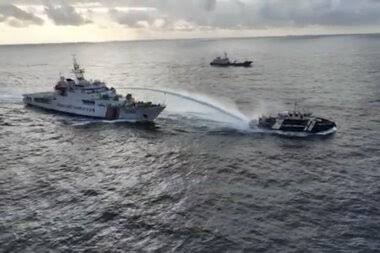
The recent tensions between the Philippines and China in the South China Sea intensified as the Chinese Coast Guard (CCG) employed water cannons against Philippine vessels around Bajo de Masinloc (BDM). This escalation followed a meeting of the Quad Foreign Ministers in Manila, where they reaffirmed their commitment to a free and open Indo-Pacific.

According to Rear Admiral Jay Tarriela, spokesperson for the Philippine Coast Guard (PCG) in the West Philippine Sea, incidents unfolded on July 24, 2026, when CCG ships carried out several dangerous manoeuvres and water cannon attacks on PCG and Bureau of Fisheries and Aquatic Resources (BFAR) vessels performing maritime operations.

Filipino vessels were reportedly conducting operations as part of the Kadiwa ng Bagong Bayaning Mangingisda (KBBM) initiative, aimed at providing vital support to local fishermen. The programme intends to supply fuel subsidies and essential resources while ensuring their safety in traditional fishing grounds.

Details of the Confrontations

The incidents began at approximately 6:26 am local time when a CCG vessel fired a water cannon at the BRP Cape San Agustin from around 400 metres away, while it was patrolling approximately 15 nautical miles northeast of BDM. The Philippine vessel was allegedly being tracked by multiple Chinese vessels.

Shortly after, at about 7:35 am, another CCG boat directed a water cannon at the BFAR vessel BRP Datu Paduhinog, which was undertaking routine maritime surveillance. The Philippine Coast Guard indicated that the Chinese vessel approached as close as seven metres to the Philippine ship’s port side, heightening the risk of a collision.

Further, around 7:53 am, the BRP Datu Paduhinog endured direct water cannon fire, with additional incidents reported shortly thereafter. Reports indicated that communications were temporarily disrupted, reinstating at 8:36 am.

Philippine Coast Guard Response

In response to the situation, the Philippine Coast Guard strongly condemned the actions of the CCG. They described these manoeuvres as dangerous and unprofessional, emphasizing that Bajo de Masinloc is a significant part of Philippine territory, and its surrounding waters are within the country’s exclusive economic zone.

The spokesperson for the PCG asserted that the 2016 Arbitral Award acknowledges BDM as a traditional fishing area for Filipino fishermen, whose rights should not be impeded by foreign entities. The Coast Guard has committed to safeguarding Filipino fisherfolk and upholding the nation’s sovereignty in accordance with international law.

This latest confrontation comes on the heels of the Quad Foreign Ministers’ meeting, which focused on regional cooperation and assurances of support for ASEAN unity and centrality. The ministers expressed their intention to enhance mutual cooperation and mitigate regional challenges while discussing maritime security and other pressing issues.

The PCG reported monitoring a total of 26 vessels in the vicinity of Bajo de Masinloc at 9:30 am, comprising three to six Philippine vessels alongside numerous Chinese maritime entities. Despite the aggressive actions recorded, the PCG confirmed that all personnel remained safe, and their missions persisted to ensure the protection of Filipino fishing rights.

Long or Short, get news the way you like. No ads. No redirections. Download Newspin and Stay Alert, The CSR Journal Mobile app, for fast, crisp, clean updates!

App Store –  https://apps.apple.com/in/app/newspin/id6746449540 

Google Play Store – https://play.google.com/store/apps/details?id=com.inventifweb.newspin&pcampaignid=web_share

Latest News

Popular Videos
