


Andy Burnham Set to Become UK Prime Minister on Monday Following Keir Starmer’s Resignation
The CSR Journal Magazine

Andy Burnham is poised to assume the role of Britain’s prime minister on Monday, taking over from Keir Starmer, who announced his resignation last month. Burnham was the sole candidate to gather the requisite backing from Labour lawmakers to succeed Starmer as the head of the governing party. His leadership was formally confirmed at a special party conference held on Friday.

As Labour commands a majority in Parliament, the party leader automatically becomes the prime minister. Burnham secured the support of 349 out of Labour’s 401 lawmakers, although he will officially take office on Monday, set to meet King Charles III at Buckingham Palace for the ceremonial process. Until then, Starmer will continue as caretaker prime minister.

The United Kingdom’s parliamentary system allows a governing party to replace its leader without a general election. The next national election is scheduled for 2029, five years after the last election held in 2024, making immediate elections unnecessary in this transition.

Keir Starmer’s Tenure and Resignation

Starmer announced his resignation on June 22, after less than two years in leadership of the Labour Party. His period in office was characterised by several political challenges, particularly a controversial decision to appoint an individual with connections to the late sex offender Jeffrey Epstein as Britain’s ambassador to the United States. Labour also experienced significant losses in local elections in May, intensifying calls for his resignation.

Burnham’s recent victory in a special election for a parliamentary seat prompted more pressure on Starmer to resign, leading to his eventual decision. Within Labour’s regulations, any lawmaker can challenge the leader if they receive support from at least 20 per cent of the party’s House of Commons members. Burnham surpassed this threshold comfortably, with no other contenders entering the race.

With Burnham’s ascension, he will become the seventh prime minister of the UK in the past decade. It is not uncommon within the UK political framework for a new prime minister to ascend through internal party elections rather than a nationwide vote. Previous leaders, including Theresa May and Boris Johnson, similarly came to power following leadership contests after their predecessors resigned.

Ceremonial Transfer of Power on Monday

The transfer of power on Monday will follow a well-established sequence of events. Starmer is expected to deliver a farewell speech before proceeding to Buckingham Palace to formally resign during a brief meeting with the king. Following this, Burnham will arrive at the palace, where King Charles III will invite him to form a new government.

The private ceremony, referred to as the “Kissing of Hands,” involves no hands being kissed; instead, it is likely to conclude with a handshake between the two leaders. This custom represents a significant tradition in UK politics.

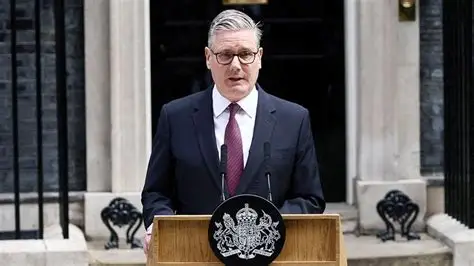
Once he departs from Buckingham Palace, Burnham will become the 59th individual to occupy the office of British prime minister. He is anticipated to travel to Number 10 Downing Street, where he is expected to issue his first statement as prime minister. The entire transition is typically broadcast live on television and is expected to occur within hours, marking another significant shift in the leadership of British politics without a general election.

Long or Short, get news the way you like. No ads. No redirections. Download Newspin and Stay Alert, The CSR Journal Mobile app, for fast, crisp, clean updates!

App Store –  https://apps.apple.com/in/app/newspin/id6746449540 

Google Play Store – https://play.google.com/store/apps/details?id=com.inventifweb.newspin&pcampaignid=web_share

Latest News

Popular Videos
