


India’s Food Adulteration Crisis Threatens Public Health and Global Trade Reputation
The CSR Journal Magazine

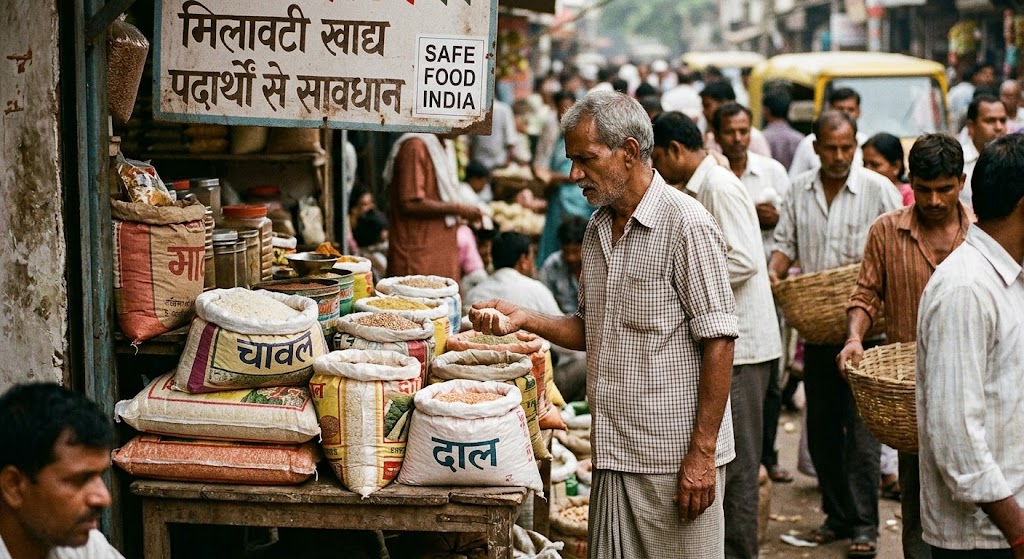
The issue of food safety in India has emerged as a significant concern, particularly in contrast to more visible threats such as terrorism or pollution. The routine act of eating is generally perceived as safe, yet incidents of food adulteration raise alarms about public health. Unlike the dramatic impacts of an attack or an environmental crisis, food adulteration often goes unnoticed until a serious health incident occurs.

Food adulteration can take many forms, from the addition of harmful additives to the dilution of essential ingredients. The market often sees practices such as substituting expensive materials with cheaper alternatives, leading to a compromised product without immediate detection. As consumers, individuals typically only engage with the end product, remaining unaware of the processes that may have jeopardised their health.

Take, for example, the reported findings from a study conducted by the Centre for Science and Environment in 2016, which revealed that numerous samples of bread in Delhi contained unauthorized additives. This incident served as a wake-up call, demonstrating how consumers often only react to food safety issues when they are made explicitly visible.

The Complexity of Food Supply Chains

Food travels through an extensive network before reaching consumers, covering multiple stages including farming, processing, and retail. Each point in this chain presents a potential failure in quality and safety. Unbranded or loose food products, in particular, pose challenges for tracing and ensuring their safety across city and state lines.

When a food safety issue is identified, tracing its origin often proves complicated. Questions arise regarding the source of the problem, the journey it took, and other areas potentially affected. This complexity highlights vulnerabilities in the food system, suggesting that many risks remain undetected.

The ramifications of food adulteration escalate quickly, developing into significant public health challenges. While certain foodborne illnesses present immediate symptoms, others may take time to manifest, making it difficult to connect specific foods with health problems. The World Bank has estimated that food-borne diseases cost India approximately $15 billion annually, encompassing lost productivity, healthcare expenses, and other economic impacts.

Implications for International Trade and Consumer Confidence

Food safety extends beyond domestic concerns; it bears implications for India’s reputation in international markets. With agricultural exports valued at approximately $51.91 billion for the 2024-25 period, maintaining high standards is crucial for global competitiveness. Any incidents linked to food safety can lead to significant setbacks, including recalls, heightened scrutiny, and negative perceptions abroad.

The regulatory framework in India, which includes the Food Safety and Standards Act of 2006 and the Consumer Protection Act of 2019, aims to address food safety issues. However, the challenge lies not in the laws themselves but in ensuring compliance and visibility across the fragmented food economy. The time it takes for violations to be detected and acted upon diminishes the effectiveness of existing regulations.

To effectively safeguard food safety, India must enhance its systems to ensure traceability, preventive measures, and strict enforcement. Learning from global best practices, such as those in the European Union and the United States, would be beneficial. Establishing a robust framework can significantly improve confidence in food systems and prevent issues before they escalate.

Creating an environment where consumers can trust that their food is safe necessitates comprehensive monitoring and proactive measures. The objective is to cultivate a level of trust so that every meal consumed is not a gamble, but a guarantee of safety and quality, achievable through an effective food safety system.

Long or Short, get news the way you like. No ads. No redirections. Download Newspin and Stay Alert, The CSR Journal Mobile app, for fast, crisp, clean updates!

App Store –  https://apps.apple.com/in/app/newspin/id6746449540 

Google Play Store – https://play.google.com/store/apps/details?id=com.inventifweb.newspin&pcampaignid=web_share

Latest News

Popular Videos
