


Abhijeet Dipke Didn’t Mention Sonam Wangchuk During Protesters’ Victory Speech
The CSR Journal Magazine

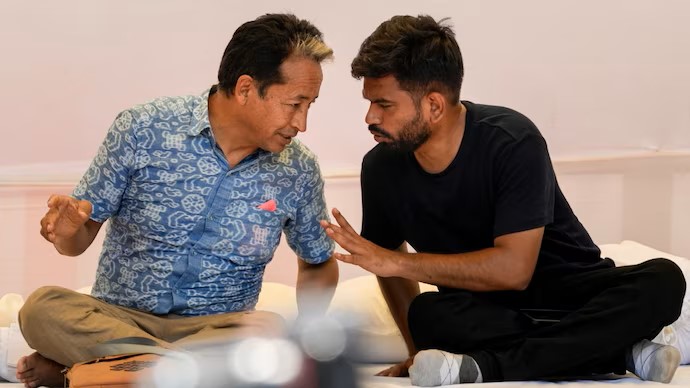
Abhijeet Dipke, founder of the Citizens for Justice and Peace (CJP), declared victory on Saturday from the protest stage at New Delhi’s Jantar Mantar, following the resignation of Education Minister Dharmendra Pradhan. This announcement coincided with Pradhan’s resignation, which occurred mere moments before Dipke addressed the gathered crowd. The atmosphere among the protesters was one of celebration, marking a significant moment in their ongoing efforts.

Omission of Sonam Wangchuk

Notably absent from Dipke’s speech was any acknowledgment of Sonam Wangchuk, the activist whose recent 26-day hunger strike had invigorated the protests. He refrained from highlighting Wangchuk’s pivotal contribution, which has been viewed as a turning point for the movement. Dipke underscored that attributing the success to any individual could undermine the democratic essence of the protest. He urged the crowd not to elevate him or anyone else to hero status, cautioning that such tendencies could lead to detrimental outcomes for the country.

In his remarks, Dipke expressed the sentiment that true progress arises when citizens stand firm against governmental pressures, asserting, “If you people are not afraid, if you do not bow before this government, then we can make anyone resign.” His emphasis on collective action resonated with the protesters, as he reinforced the value of democracy and civic engagement in effecting change.

Wangchuk was hospitalised in the Intensive Care Unit (ICU) at Medanta Hospital in Gurgaon after ending his fast on Thursday night. The cessation of his hunger strike occurred following discussions with Union ministers JP Nadda and Jitendra Singh, who reportedly provided assurances that resonated with his concerns. Wangchuk’s absence from Dipke’s celebration was significant, given the critical role he played during the protests.

Reflections on Leadership and Activism

Dipke’s comments reflected a broader sentiment within the protest movement regarding the relationship between leadership and collective efforts. He remarked on the dangers of creating a singular hero figure, suggesting that it could detract from the solidarity and determination exhibited by the larger group. His focus appeared to be on nurturing a democratic spirit and inviting more individuals to engage actively in social advocacy.

Moreover, this emphasis on collective strength highlights a shift towards communal recognition rather than individual acclaim. In a time where social movements can often centre around singular personalities, Dipke’s address aimed to encourage a more inclusive approach. He reiterated that the focus should remain on collective achievements rather than individual accolades.

As the protest continues to evolve, the dynamic interplay between activism and leadership remains a crucial aspect to watch. The decisions and actions of figures like Dipke and Wangchuk will likely shape the future course of the movement and its dialogue with governmental authorities. Observers will be keen to see how these developments unfold in the coming days.

Long or Short, get news the way you like. No ads. No redirections. Download Newspin and Stay Alert, The CSR Journal Mobile app, for fast, crisp, clean updates!

App Store –  https://apps.apple.com/in/app/newspin/id6746449540 

Google Play Store – https://play.google.com/store/apps/details?id=com.inventifweb.newspin&pcampaignid=web_share

Latest News

Popular Videos
