




42.6%; Employability Number India Doesn’t Want to Talk About

Sanskrit shlokas and samosas at convocation will not fix what is broken.

India worships Saraswati, the goddess of knowledge, with genuine devotion every Vasant Panchami, garlanding her idol, placing books at her feet, asking children to touch pens to her image before exams. It is a beautiful tradition.

But somewhere between the ritual and the reality, the system meant to honour her has become a machine optimised for everything except learning. It is time to walk through that machine, stage by stage, and ask the uncomfortable questions out loud.

Where is the competence?

Start with the most basic fact: India now has more colleges and universities than at any point in its history, over 1,100 universities and roughly 45,000 colleges by the latest All India Survey on Higher Education counts.

On paper this looks like a civilisational achievement, a young nation building capacity at scale. In practice, capacity has outrun competence.

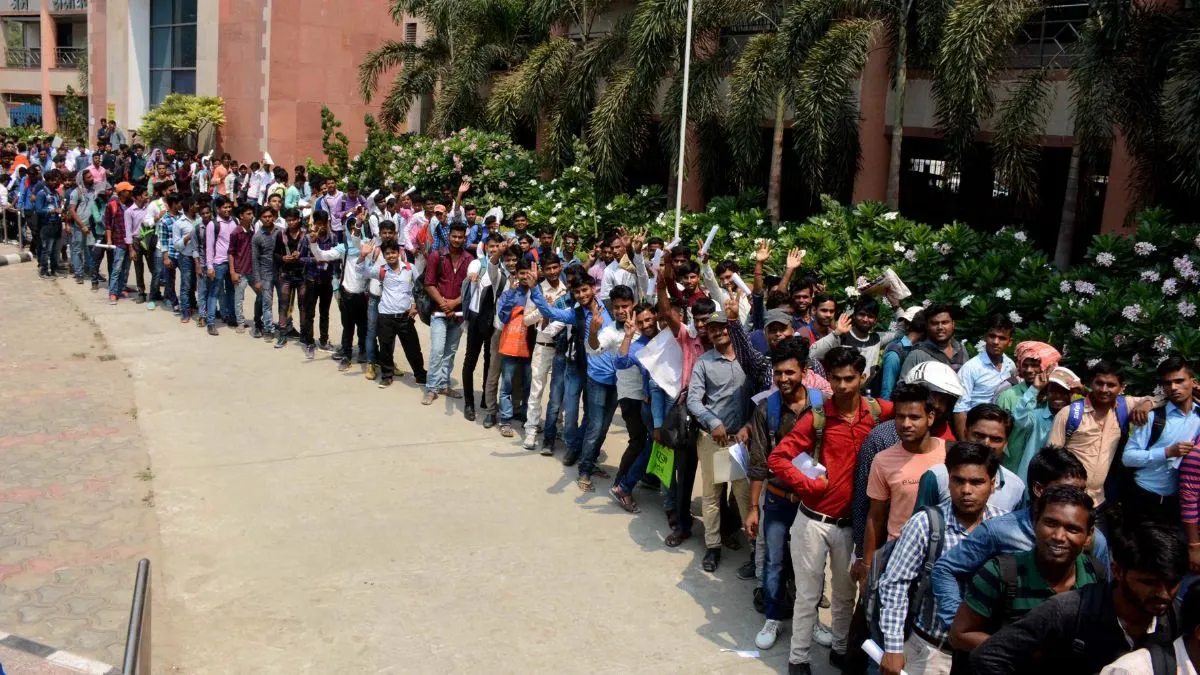
A new report on India’s Graduate Skill Index 2025 by Mercer-Mettl found that only 42.6% of Indian graduates are employable, a decline from 44.3% in 2023.

Even the more optimistic India Skills Report, produced with industry bodies, projects employability hovering only around 55% in 2025, which still means nearly half the graduating workforce is not job-ready.

Graduates from Tier-I institutions reach 48.4% employability, Tier-II institutions 46.1%, and Tier-III institutions only 43.4%, while in fields like sales, marketing, HR and business development employability has actually fallen to 43.5% from 48.3% in 2023.

The Chief Economic Advisor’s own assessment, cited in the same body of research, suggests that barely half of those who pass out of Indian institutions are in a position to secure a job. More colleges did not mean more capability. It meant more degrees chasing fewer real skills, and a generation discovering, often too late, that a transcript is not a passport to employment.

Move beyond brochures!

This brings us to stage two of the same story: the brochure versus the placement cell. Walk into almost any private engineering or management college during admission season and you will be shown glossy photographs of corporate logos, testimonials from a handful of toppers who landed offers from recognisable firms, and statistics that, on closer inspection, rarely specify what percentage of the batch they actually represent. The brochure speaks in absolutes.

The placement office, when pressed, speaks in qualifiers. This is not a new complaint, but the scale has grown with the number of institutions.

A Periodic Labour Force Survey found that only 21% of youth aged 15 to 29 have ever undergone any vocational or technical training, and a mere 4.4% have received formal vocational training.

Institutions are not lying outright when they print a 90% placement figure somewhere in fine print. They are simply choosing which 90% to advertise, and which larger denominator to leave out.

The admission brochure has become a marketing document first and an educational disclosure a distant second, and parents who do not have the time or training to read between the lines pay the price in fees first and in their children’s careers later.

While colleges chase admissions through brochures, faculty inside those same institutions are caught in a different, equally distorting race: the scramble for Scopus-indexed papers and patents. Academic promotion in India today runs substantially on the Academic Performance Indicator system, which rewards publication count, and the predictable result has been a flood of low-value, sometimes outright fraudulent research.

Rat race for the professors

A study by researchers including Bhushan Patwardhan at Savitribai Phule Pune University examined 1,009 journals from the university-recommended category of the UGC-approved list and found that only 112 passed a rigorous quality protocol, suggesting that over 88% of the non-indexed journals on that list could be of low quality.

Separately, a 2017 study by the Institute for Democracy and Economic Analysis found that 10% or more of academic papers from India and Nigeria listed in Scopus between 2013 and 2015 were published in predatory journals, and a 2015 study in BMC Medicine found that more than a quarter of the world’s predatory publishers were based in India.

The authors of the Pune study were blunt about the cause: the primary driver is the emphasis placed on the sheer number of research publications for faculty appointments, combined with a mandatory requirement that doctoral scholars publish at least two papers before submitting their thesis. Patents follow a similar logic, filed in volume to satisfy institutional rankings and accreditation scorecards rather than because they represent genuine, commercially viable innovation. The metric became the mission, and the mission of actual knowledge creation quietly stepped aside.

Faced with this cascading set of problems, more colleges without skilled graduates, brochures hiding weak placements, faculty gaming citation counts, one might expect the Ministry of Education to step in with clarity and urgency. Instead, the institutional response has often been a kind of astute silence, an unwillingness to name the scale of the crisis even as data piles up from its own affiliated bodies, from CII, from Wheebox, from the very surveys it commissions.

Policy announcements arrive with the language of transformation, National Education Policy 2020 chief among them, but the gap between policy ambition and ground-level enforcement remains wide and largely unaddressed in public discourse. Silence at the top has a way of cascading downward.

That cascade reaches its most absurd form in the regulators and accreditors meant to be the system’s gatekeepers.

In 2018, the University Grants Commission introduced the UGC-CARE list specifically to identify legitimate journals and discourage predatory publishing, but in October 2024 the commission scrapped this list altogether, arguing it had over-centralised decisions and neglected regional language journals, and instead asked institutions to design their own mechanisms to assess journal quality.

Critics have pointed out that this move opens further pathways for predatory journals to flourish and increases the risk of sub-standard academics entering faculty positions through politically motivated appointments. This is regulation by retreat, a Kafkaesque shuffle in which the very body created to police quality dismantles its own checklist and hands the responsibility back to the institutions that were gaming the checklist in the first place.

Accreditation processes like NAAC have faced their own credibility questions over the years, with grading scandals and inconsistent benchmarks that accreditors themselves have had to publicly defend. When the referee keeps changing the rules mid-match and occasionally leaves the field, the players naturally start writing their own scorecards.

Post-colonial hangover?

Into this vacuum has arrived a new player with its own complicated promise: the foreign university. Since November 2023, India has opened a formal legal pathway for international institutions to set up independent campuses, and the rush has been real. As of early 2026 roughly 18 to 19 foreign universities have received formal approval from the UGC or the International Financial Services Centres Authority, with Deakin University, the University of Wollongong, and the University of Southampton already operational, enrolling fewer than 250 students between them in their first year combined.

The pitch sounds attractive: a foreign degree without a foreign visa. But look closely at the fees.

The University of Southampton’s Gurugram campus charges between roughly 13.86 lakh and 23.10 lakh rupees a year, compared with 21 to 38 lakh rupees for the equivalent course in the United Kingdom. That is a genuine discount against the home campus, but it remains three to five times costlier than a comparable Indian institution, and these are figures that sit far beyond what most Indian families earn in a year.

Deakin itself was forced to retroactively grant a 20 to 25 per cent fee waiver to its entire first cohort in May 2025 after conceding that its initial pricing had been too aggressive for the Indian market. There is a useful, if uncomfortable, way to read this trend.

Several foreign universities, particularly in the United Kingdom, are facing real financial pressure from declining domestic enrolments and falling international student numbers, and many are now looking beyond their own borders for growth. Their home economies are squeezed by inflation, their traditional revenue base of overseas students is shrinking under tighter visa regimes, and India, with its scale and its aspiration, has become the next frontier market.

It is worth naming this plainly: this is a postcolonial inversion in which the old centres of empire are now opening storefronts in the territories they once governed, monetising the same aspiration for a “foreign degree” that colonial education once instilled in the first place. The packaging has changed. The extraction logic has not entirely disappeared.

How bad is privatisation?

None of this is an argument against private participation in education as a principle. Privatisation, when paired with genuine oversight, has expanded access, built infrastructure faster than the state ever could, and introduced a degree of competitive accountability that government institutions have historically lacked.

The argument here is narrower and sharper: privatisation without a price ceiling, without a quality floor, and without honest disclosure has produced an unchecked market where cost has detached entirely from value. And nowhere is that detachment more visible, or more emotionally exploitable, than at the very bottom of the academic ladder, in nursery admissions.

A recent study found that the total cost of educating a child from nursery through Class XII in Mumbai alone now ranges from 7.9 lakh rupees at an affordable school to 61.2 lakh rupees at an elite one, with schools across India routinely hiking fees by 10 to 12 per cent every year and some individual cases reaching as high as 42 per cent in a single revision.

An urban Maharashtra couple earns approximately 5.44 lakh rupees annually on average, and nursery fees alone at a mid-range Mumbai school can consume over 20 per cent of that household’s entire yearly income, at roughly 1.13 lakh rupees a year for a child who has not yet learned to write their own name.

One financial researcher put the psychology of this market with unusual candour: India’s middle class has always treated education as the one expense it does not question, and schools raise fees year after year precisely because they know parents will not pull a child out in the middle of school over a fee hike. That is not a description of a functioning market. It is a description of a captive one, where six-figure fees for a four-year-old are justified by branding, waiting lists, and the manufactured anxiety of falling behind, rather than by any demonstrable improvement in early childhood pedagogy.

And here is where the story closes its loop with bitter irony. The same private school ecosystem that charges six-figure nursery fees has spent years in court resisting paying its own teachers fairly.

As of 2019, nearly 80% of private-run schools in Delhi were not paying their staff salaries in line with the Seventh Central Pay Commission, despite a 2017 government circular directing all recognised schools to do so. The legal back and forth has continued for years since.

In October 2025, a Division Bench of the Delhi High Court set aside an earlier single-judge order that had directed private unaided schools to implement the Sixth and Seventh Pay Commission recommendations for their teaching and non-teaching staff, sending the matter back for fresh hearing.

The schools’ own argument before the court was that they are not government-funded and cannot be forced to adopt Central Pay Commission scales without corresponding fee adjustments, even as fee adjustments upward have rarely needed a court order to happen on their own.

Where is the salary for faculties?

Beneath even these full-time teachers sit an entire informal layer of contractual and guest faculty. Such contract teachers are typically hired for a year or less at a salary that is half or less of what a regular teacher earns, and because their salaries do not form part of formal payroll, no reliable official statistics on their numbers even exist.

A sector that can charge a toddler’s family more than a lakh a year, and that fights pay parity for its teachers in court for over a decade, has revealed exactly where its priorities sit. The classroom is the last place the money lands.

Lay all seven of these moments end to end and a single, coherent picture emerges. More institutions did not produce more capability, because nobody fixed the curriculum or the practical training pipeline underneath them. Weak placement records were hidden, not addressed, because brochures sell better than honesty. Faculty were pushed into a numbers game with research, because promotion metrics rewarded volume over value.

The ministry watched the data accumulate and chose silence over course correction. The regulators, when they finally acted, dismantled their own quality checklist rather than strengthen it. Foreign universities arrived offering a partial solution at a price most Indians cannot afford, themselves driven here by inflation and shrinking demand at home.

Privatisation, which could have been the answer, became instead an unchecked toll booth, charging parents lakhs for nursery seats while shortchanging the very teachers meant to deliver that education.

Every stage made the next stage worse, and at no point did any single actor in this chain feel sufficiently accountable to stop and ask whether the goddess at the centre of all this, the one whose image sits in every school’s prayer room, would recognise what has been built in her name.

There is no shortage of intelligence, ambition, or capital in Indian education today. What is missing is the institutional courage to align incentives with outcomes, to reward learning over publication counts, transparency over brochures, and teaching over toll collection.

Until that alignment happens, the rituals will continue, the shlokas will be recited, the samosas will be served at every convocation, and underneath the ceremony, the actual machinery of learning will keep quietly failing the very children it claims to serve.

Goddess Saraswati deserves better than a footnote in her own temple.

Views of the author are personal and do not necessarily represent the website’s views.

Dr. Jaimine Vaishnav is a faculty of geopolitics and world economy and other liberal arts subjects, a researcher with publications in SCI and ABDC journals, and an author of 6 books specializing in informal economies, mass media, and street entrepreneurship. With over a decade of experience as an academic and options trader, he is keen on bridging the grassroots business practices with global economic thought. His work emphasizes resilience, innovation, and human action in everyday human life. He can be contacted on jaiminism@hotmail.co.in for further communication.

Long or Short, get news the way you like. No ads. No redirections. Download Newspin and Stay Alert, The CSR Journal Mobile app, for fast, crisp, clean updates!

App Store – https://apps.apple.com/in/app/newspin/id6746449540

Google Play Store – https://play.google.com/store/apps/details?id=com.inventifweb.newspin&pcampaignid=web_share

Latest News

Popular Videos