


US Signals Long-Term Naval Blockade of Iran Amid Oil Supply Tensions
The CSR Journal Magazine

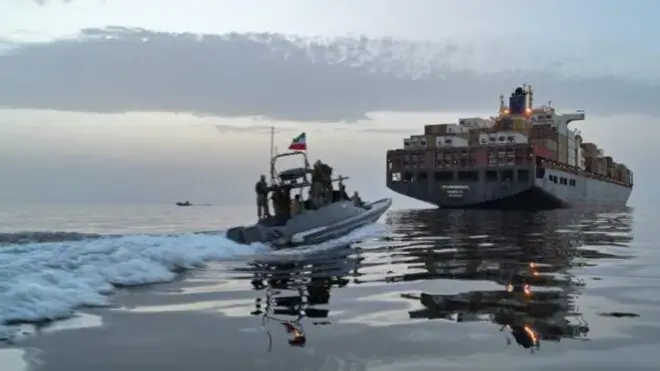
The United States has signalled its willingness to maintain a naval blockade of Iran for an extended duration, thereby increasing the economic pressure on Tehran as diplomatic efforts to achieve a lasting ceasefire reportedly stall. During a visit to Panama, US Defence Secretary Pete Hegseth stated that the US Navy could sustain this blockade indefinitely by rotating vessels in and out of the region.

Hegseth’s remarks highlight Washington’s firm stance towards Iran despite rising concerns about the broader economic ramifications of the ongoing conflict. The blockade is acknowledged as a crucial component of US strategy, targeting Iran’s shipping and port operations and curtailing a vital source of foreign currency earnings for the nation.

In June, some restrictions were temporarily lifted, but these were reinstated after diplomatic discussions failed to produce significant outcomes. The decision to reimpose the blockade reflects a strategic response to the evolving situation in the region.

Renewed Tensions in the Strait of Hormuz

The latest US statements come in the context of escalating tensions around the Strait of Hormuz, one of the world’s most critical maritime routes for energy supplies. Prior to the onset of conflict in February, nearly one-fifth of global oil and liquefied natural gas trade transited this waterway.

Iran has consistently asserted that the strait will remain partially closed until its demands are met, which include the lifting of economic sanctions and access to frozen assets. US President Donald Trump has reiterated that the US will maintain control over the security of this strategic passage.

Recent developments have further complicated the situation, with reports indicating that two vessels operated by the Abu Dhabi National Oil Company (ADNOC) were allegedly attacked while navigating through the Strait of Hormuz. The United Arab Emirates condemned this incident and attributed the attack to Iran, labelling it a violation of commercial shipping rights and freedom of navigation.

Impact on Global Oil Markets and Trade

The ongoing stand-off has resulted in a notable decline in maritime traffic through the strait, significantly disrupting global trade and energy flows. Recent assessments reveal that shipping volumes have decreased substantially compared to pre-conflict levels, raising concerns about the stability of the oil market.

The International Energy Agency (IEA) recently updated its forecasts, now predicting a reduction in global oil supply this year of 4.3 million barrels per day, up from a previous estimate of 3.7 million barrels per day. This adjustment underscores the growing impact of the conflict on oil production capabilities.

Although oil prices saw a decline on Thursday due to concerns about decreasing demand and increasing US crude inventories, the markets continue to react sensitively to developments in the Middle East. Reports of Yemen’s Iran-backed Houthi movement targeting a Saudi Aramco refinery with drones have further escalated fears of wider regional conflicts.

Meanwhile, economists are expressing concern that an extended conflict and ongoing disruptions to energy supplies could hinder global economic growth and elevate recession risks in numerous economies. With ceasefire negotiations yielding little progress, the uncertainty surrounding the Strait of Hormuz and its implications for global oil markets remains a pressing issue for investors and governments. The situation continues to evolve, leaving many stakeholders apprehensive about the future.

Long or Short, get news the way you like. No ads. No redirections. Download Newspin and Stay Alert, The CSR Journal Mobile app, for fast, crisp, clean updates!

App Store –  https://apps.apple.com/in/app/newspin/id6746449540 

Google Play Store – https://play.google.com/store/apps/details?id=com.inventifweb.newspin&pcampaignid=web_share

Latest News

Popular Videos
