


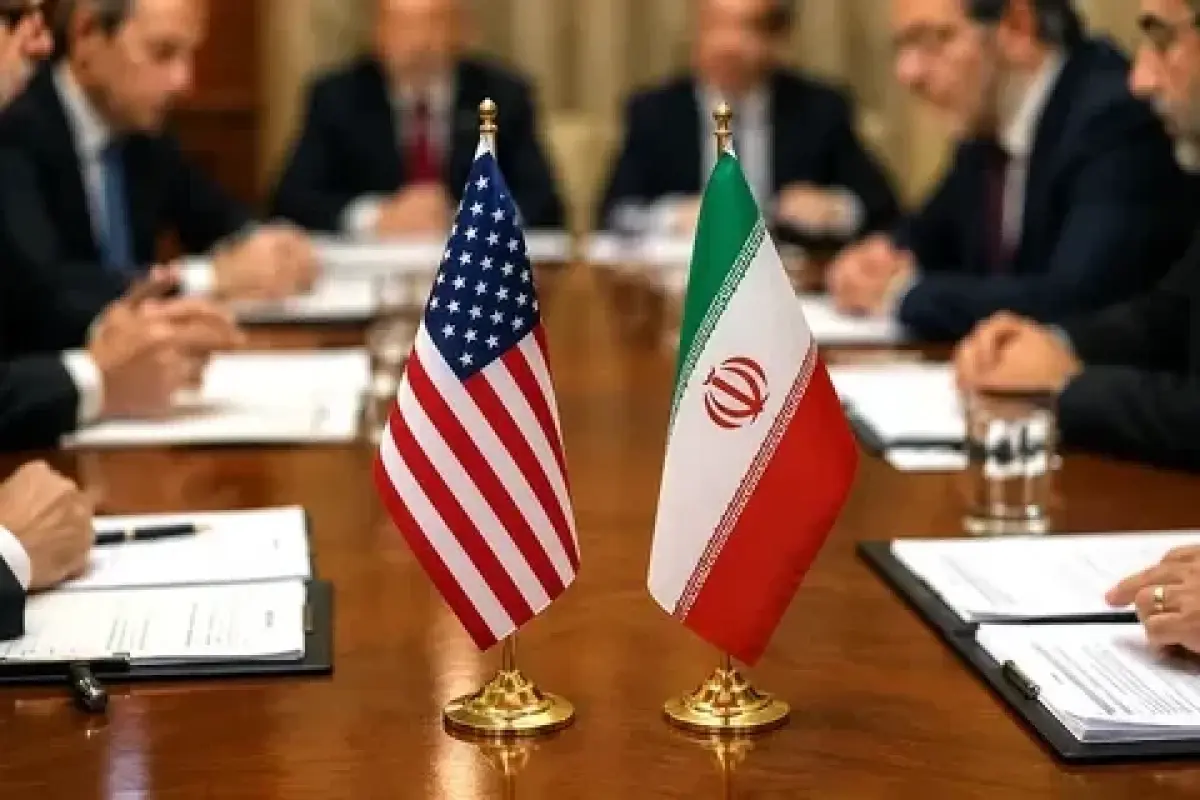

The United States and Iran have agreed to halt military hostilities and are preparing for a fresh round of talks in Doha on Tuesday aimed at resolving differences over the Strait of Hormuz, according to senior US officials.
The planned discussions come amid a fragile ceasefire that has held for just 11 days following a period of escalating tensions and military exchanges. While both sides have agreed to pause attacks for now, disagreements remain over control and navigation rights in one of the world’s most strategically important waterways.
US Officials Confirm Pause In Military Activity
Speaking to Axios, a senior US official said Washington and Tehran had agreed to end active military operations as part of efforts to stabilise the situation.
“We decided to stop all the kinetic activity,” the official told the publication, using the military term for strikes and other attacks.
Another US official said both countries had agreed to stand down temporarily and that maritime traffic would continue without disruption while technical discussions move forward.
“For now” both sides would refrain from further escalation, the official said, adding that “vessels can move freely”. Two US officials and a third source familiar with the matter confirmed that talks are scheduled to take place in Doha on Tuesday.
Ceasefire Remains Under Pressure
Despite the diplomatic engagement, the ceasefire remains uncertain. The truce, now in its second week, has faced pressure following remarks by US President Donald Trump, who warned that military action could resume if Iran failed to comply with the terms of the agreement.
The pause in hostilities followed a series of military exchanges between the two countries, raising concerns about wider instability in the Gulf region and the security of global energy supplies.
The Strait of Hormuz, through which a significant share of the world’s oil shipments passes, has remained at the centre of the dispute.
Disagreement Over Control Of Key Waterway
Iran’s Foreign Minister Abbas Araghchi said on Sunday that Tehran has the exclusive right to manage traffic through the Strait of Hormuz under the preliminary peace agreement, according to a report by The Wall Street Journal.
His remarks contrast with the US position that the deal does not grant Iran control over the waterway and that international navigation must remain unrestricted.
The disagreement follows days of tit-for-tat strikes that began after Iran attacked a vessel attempting to transit the strait along a route close to Oman’s coastline. Tehran had objected to ships using that path and instead sought to direct traffic along a separate course nearer to Iranian territory.
According to The Wall Street Journal, the agreement signed earlier this month assigns responsibility for reopening the strait to Iran. The document states that “the Islamic Republic of Iran will make arrangements using its best efforts for the safe passage of commercial vessels”.
The agreement further says that Iran, in consultation with regional stakeholders, will determine future arrangements governing the administration and maritime services of the strategic waterway.
Tuesday’s meeting in Doha is expected to focus on technical aspects of navigation and implementation of the preliminary agreement as both sides seek to prevent a return to open conflict.
Long or Short, get news the way you like. No ads. No redirections. Download Newspin and Stay Alert, The CSR Journal Mobile app, for fast, crisp, clean updates!
App Store – https://apps.apple.com/in/app/newspin/id6746449540
Google Play Store – https://play.google.com/store/apps/details?id=com.inventifweb.newspin&pcampaignid=web_share