


Trump Issues Warning to Iran Over Strait of Hormuz Attacks
The CSR Journal Magazine

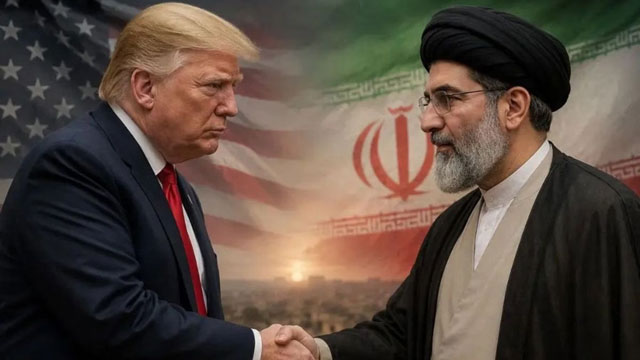
US President Donald Trump has conveyed a stern warning to Iran, stating that the United States will retaliate by targeting critical infrastructure such as bridges or power plants if Tehran continues its attacks on vessels in the Strait of Hormuz. This statement comes amid rising tensions following a series of retaliatory strikes and missile launches by Iran.

The heightened conflict recently saw air defence operations over Tehran, while Iran launched missiles towards Aqaba, Jordan, near Israel. Alerts were raised in both Bahrain and Saudi Arabia as the situation escalated. Diplomatic efforts aimed at resolving the standoff have not yielded significant results, and the ongoing closure of the Strait of Hormuz has disrupted global energy supplies.

In a recent social media post, Trump reiterated his stance, stating, “From this point forward, any time the Islamic Republic of Iran shoots at a ship in the Strait of Hormuz… the United States will bomb and destroy ONE BRIDGE OR POWER PLANT.” This announcement signals a return to earlier threats concerning attacks on civilian infrastructure in light of the ongoing hostilities.

Military Exchanges Continue in the Region

The conflict has now entered its 11th day, with both the United States and Iran maintaining firm positions regarding the strategic Strait of Hormuz, a vital waterway for global energy transport. Iranian forces have avoided direct attacks on Israel since tensions escalated last month, likely in an attempt to prevent wider involvement in the conflict. However, missile and drone strikes near Aqaba have raised concerns about an expansion of hostilities.

Reports indicate that Jordan’s military successfully intercepted four Iranian missiles while two others landed in unpopulated areas. Additionally, there have been multiple alerts in Gulf regions, specifically Bahrain and Saudi Arabia, prompting precautionary measures among residents.

The US military confirmed it had carried out a series of airstrikes targeting Iranian military installations. Iran’s state media reported explosions in various provinces, while official health figures suggest that the US strikes have resulted in at least 53 fatalities and nearly 600 injuries, including women and children.

Impact on Global Energy Markets

The continued closure of the Strait of Hormuz has significant implications for the global economy, given that this passage is essential for the transport of a substantial portion of the world’s oil and gas. Following the escalating conflict, oil prices have reportedly surged, with benchmark Brent crude reaching around $94 per barrel.

Adding another layer of complexity, Iran-aligned Houthi rebels in Yemen have threatened to target Saudi shipping in the Red Sea, jeopardising another major maritime trade route. Prior to the latest military exchanges, Iranian Interior Minister Eskandar Momeni had engaged in diplomatic discussions with Pakistan, aiming to ease tensions, though it remains unclear what concrete proposals could emerge from these talks.

At a regional summit in the Philippines, US Secretary of State Marco Rubio denounced Iran’s actions, warning against allowing a “precedent” where a nation can control international waters and threaten shipping. In response to the escalating attacks, the US has reinstated a blockade on Iranian ports, intensifying the strain on diplomatic efforts.

Long or Short, get news the way you like. No ads. No redirections. Download Newspin and Stay Alert, The CSR Journal Mobile app, for fast, crisp, clean updates!

App Store –  https://apps.apple.com/in/app/newspin/id6746449540 

Google Play Store – https://play.google.com/store/apps/details?id=com.inventifweb.newspin&pcampaignid=web_share

Latest News

Popular Videos
