


Supreme Court Seeks CBSE Clarification on Three-Language Rule for Class 9
The CSR Journal Magazine

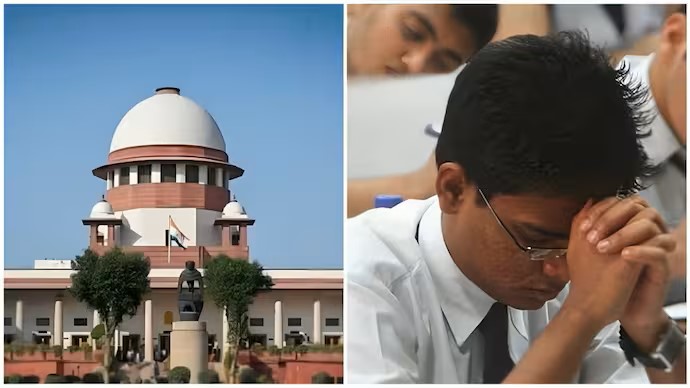
The Supreme Court has directed the Central Board of Secondary Education (CBSE) and the Union government to provide clarity regarding the board’s new three-language policy for Class 9 students. This development follows petitions challenging the policy, which is part of the National Education Policy (NEP) 2020. The bench, consisting of Chief Justice of India, Justice Surya Kant, Justice Joymalya Bagchi, and Justice Vipul M Pancholi, has mandated that both the CBSE and the government submit their responses within four weeks.

Scheduled for hearings on July 15 and 16, the petitions contest CBSE’s recent decision to enforce the compulsory study of three languages from July 1, 2026, for Class 9 students. The matter has generated substantial attention and concern regarding its implications on students and their academic responsibilities.

Details of the New Language Rule

The updated language rule requires students to study three languages, denoted as R1, R2, and R3. At least two of the languages must be Indian. The provision allows for a foreign language option only if the remaining two languages are of Indian origin. This policy has been introduced in accordance with the implementation of the NEP 2020 and aims to foster multilingual learning while reinforcing the importance of Indian languages within educational institutions.

Despite the board’s claims that this policy is designed to enhance language skills, it has raised concerns among parents, teachers, and students, especially those preparing for the Class 10 board examinations in the upcoming year. Currently, there is a lack of clarification from CBSE regarding whether this three-language mandate will also affect the existing Class 10 students.

Critics argue that the sudden introduction of these language requirements could place additional academic pressure on students who are already in the thick of their preparations. The implications of this policy are being scrutinised as many stakeholders feel it has not undergone adequate consultation prior to its announcement.

Reactions to the Policy and Legal Proceedings

During hearings, the Supreme Court acknowledged the need for careful consideration of the issue at hand. However, the court has not issued a stay on the implementation of the three-language policy as of now. This indicates that the policy may still proceed while the legal discourse continues.

The court’s impending decision is highly anticipated, as it has reopened discussions about the NEP 2020’s broader implementation strategies. Many parents and educators express concerns regarding the abrupt nature of the curriculum changes, questioning whether such significant reforms ought to be executed gradually, particularly in the middle of secondary education.

Future Implications of the Case

The upcoming court hearings will likely shape the landscape of language education in India, and schools, students, and parents are expected to closely monitor the developments. With the Supreme Court’s response to this contentious policy being watched nationwide, the outcomes may have lasting effects on educational policies and frameworks across the country.

The case not only underscores the various perspectives on educational reform but also highlights the pressing need for transparent dialogue between educational authorities, stakeholders, and the community. As the legal proceedings unfold, the education sector will brace for significant implications based on the Supreme Court’s final ruling.

Long or Short, get news the way you like. No ads. No redirections. Download Newspin and Stay Alert, The CSR Journal Mobile app, for fast, crisp, clean updates!

App Store –  https://apps.apple.com/in/app/newspin/id6746449540 

Google Play Store – https://play.google.com/store/apps/details?id=com.inventifweb.newspin&pcampaignid=web_share

Latest News

Popular Videos
