


Supreme Court Examines CBSE’s Three-Language Policy and English’s Status
The CSR Journal Magazine

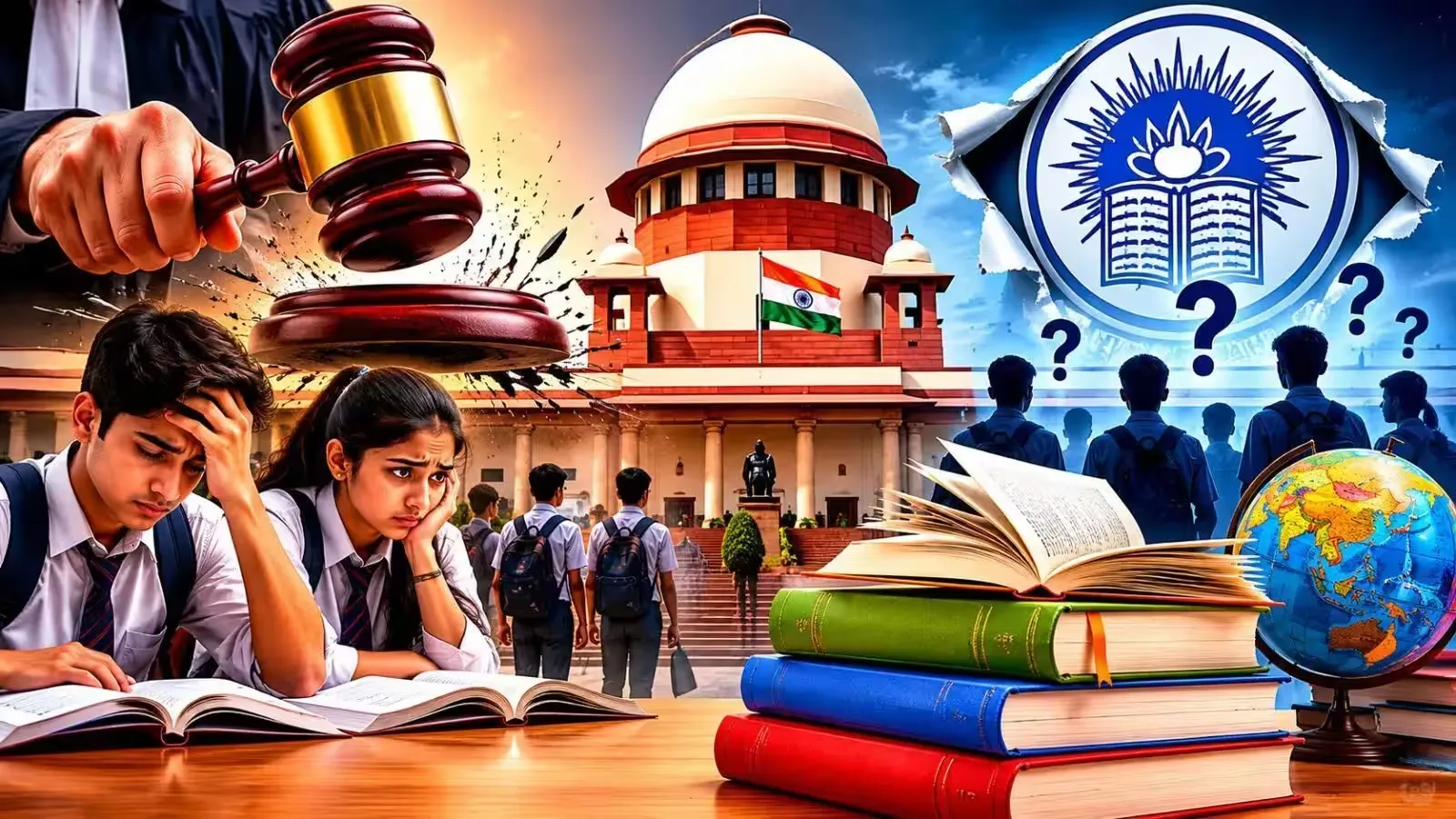
The Supreme Court of India has initiated a critical examination of the Central Board of Secondary Education’s (CBSE) three-language policy during a hearing on July 14, 2026. This policy, established nearly sixty years ago, has traditionally operated under the assumption that English is not an indigenous language of India. Over the decades, educational policies have maintained this perspective, recognising English as a useful and necessary subject but not as a native language.

The Chief Justice of India, Surya Kant, posed a pivotal question about whether Indians can consider English an indigenous language. He suggested that the current nomenclature may need reconsideration, highlighting that historical languages like Persian were once prominent in Indian courts but are currently absent from the Eighth Schedule list of officially recognised languages.

This raises a significant issue: there is neither a statutory nor a constitutional definition that stipulates what constitutes an “indigenous” language in India. The ambiguity surrounding this concept has come to light as the court reviewed the recent petitions against the three-language policy rollout.

Implications for Students

The implications of defining English as a non-native language are considerable, especially for students in classes 6 to 9. According to CBSE regulations, if English is excluded from the list of native languages, students cannot use it to fulfil the mandatory requirement of learning two Indian languages. Consequently, this leaves no room for students to choose other languages, such as French or Spanish, as their third language.

The National Education Policy 2020 advocates for mother-tongue instruction for younger students, believing it enhances learning. In contrast, English-medium students may struggle to achieve proficiency in two additional Indian languages, as the demands of the three-language policy may not align with their existing curriculum or teacher availability.

Legal Challenges and Judicial Response

The petitions brought before the Supreme Court challenged the CBSE’s May 15 circular aligning its language policy with the National Education Policy 2020. This circular mandates that students of classes 6 to 9 study three languages, two of which must be Indian, beginning in the 2026-27 academic year. The complaints addressed procedural issues, including the lack of available textbooks and untrained teachers for various recognised languages.

Senior Advocate Gopal Sankaranarayanan argued that treating English as a non-native language while mandating Indian languages was inequitable. Although the Supreme Court declined to issue an interim stay on the policy, it acknowledged that the language initiative aims to promote Hindi and regional languages, signalling that the matter would require further examination. The case has been adjourned for a hearing on July 22, 2026, allowing the Centre and CBSE time to respond to the court’s inquiries.

Historically, the three-language formula was intended as a political compromise to address linguistic diversity in India, without favouring any single language. Since its inception, various educational policies have reiterated this formula without addressing the status of English, which remains an unresolved topic by Indian law.

Long or Short, get news the way you like. No ads. No redirections. Download Newspin and Stay Alert, The CSR Journal Mobile app, for fast, crisp, clean updates!

App Store –  https://apps.apple.com/in/app/newspin/id6746449540 

Google Play Store – https://play.google.com/store/apps/details?id=com.inventifweb.newspin&pcampaignid=web_share

Latest News

Popular Videos
