


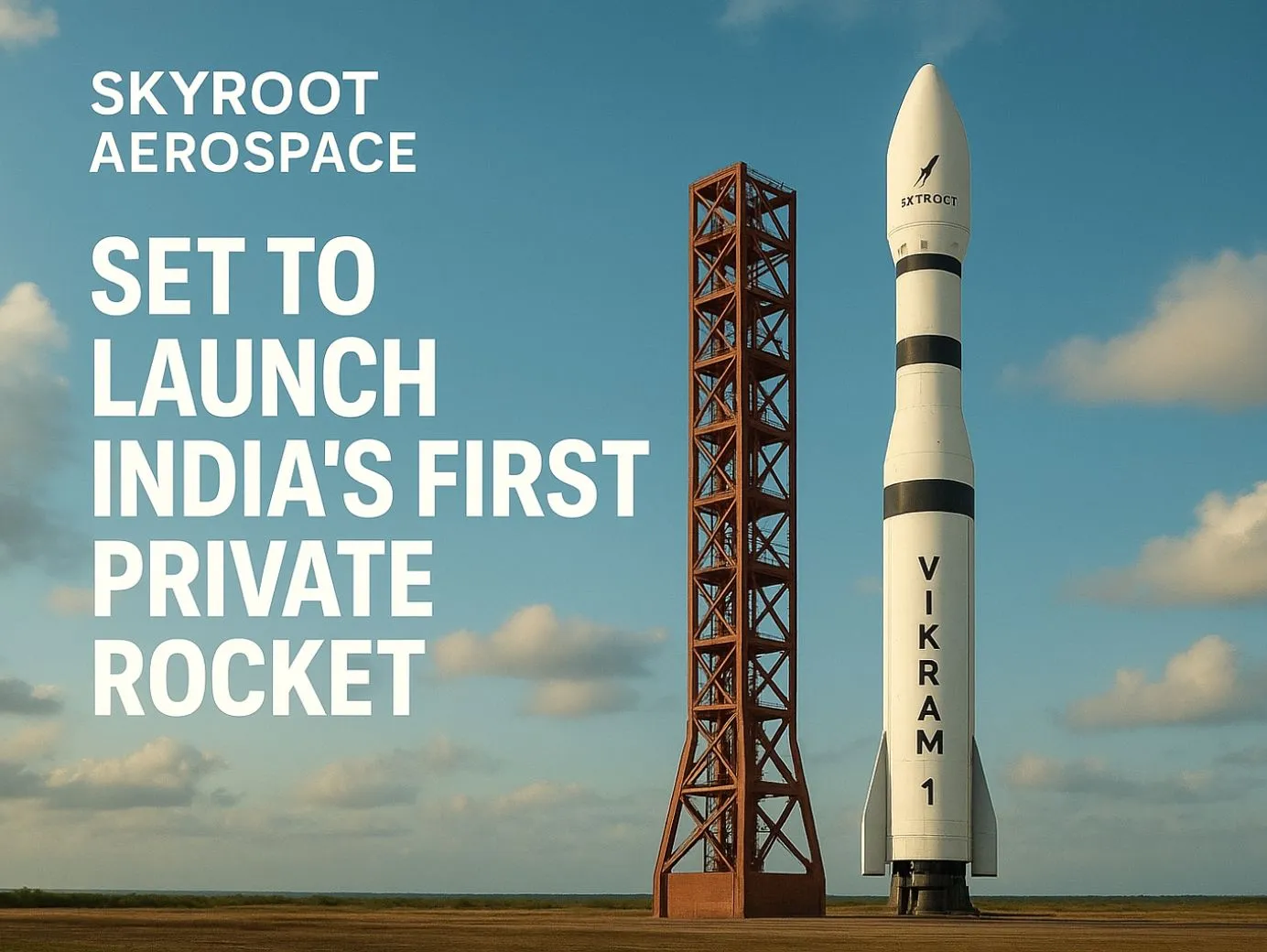
Skyroot Prepares To Launch India’s First Private Rocket Vikram-I from Sriharikota
The CSR Journal Magazine

The upcoming launch of Vikram-I marks a significant achievement for India’s private space industry as Skyroot Aerospace prepares for this historic event at the Satish Dhawan Space Centre in Sriharikota. This event, known as the maiden mission ‘Aagaman’—which translates to ‘Arrival’ in Sanskrit—will take place within a launch window scheduled from July 12 to August 4. The company has confirmed that the rocket is fully integrated and stacked at the First Launch Pad, with final preparations currently in progress.

Significance of the Aagaman Mission

The Aagaman mission is noteworthy not just for its novelty but also for the implications it carries for India’s commercial space ambitions. It will place India among a select group of nations equipped with the capability to develop and launch orbital vehicles privately. This launch comes less than four years after Skyroot made history with Vikram-S, the nation’s first privately developed rocket that completed a suborbital mission. Unlike that earlier flight, Vikram-I is specifically designed to deploy satellites into orbit, thereby marking its status as the first genuine orbital mission by an Indian private entity.

Skyroot has emphasised that the primary aim of the Aagaman mission is to collect critical data on in-flight performance. This will involve assessing the rocket’s design, propulsion systems, guidance and control technologies, and the process of stage separation. The insights gained will not only contribute to future enhancements of the launch vehicle but will also facilitate a high-frequency, on-demand launch service tailored to the expanding global market for small satellites.

The successful execution of this mission would represent another key milestone within the framework of India’s ongoing space sector reforms. These reforms have been pivotal in opening India’s launch ecosystem to private enterprises, primarily through the establishment of the Indian National Space Promotion and Authorization Centre (IN-SPACe). Following these developments, numerous startups have advanced their competencies in various domains, including satellite manufacturing and launch vehicle technology.

Future Prospects and Market Aim

Vikram-I has been designed as a cost-efficient launch vehicle with capabilities focused on deploying small satellites into low-Earth orbit. This aligns with an increasing need in the international market for dedicated launch services, moving away from traditional rideshare options. The fully assembled state of the rocket at Sriharikota positions it for the anticipated launch, with significant attention directed towards the opening of the launch window on July 12.

Should the Aagaman mission prove successful, it will not only validate the technology developed by Skyroot but signal a new era in India’s commercial space landscape. The successful integration of private companies into this sector is expected to meet the surging global demand for frequent and economical access to space.

This launch is poised to strengthen India’s standing in the global space arena, showcasing the potential of private entities to innovate and lead in the field, enhancing the nation’s overall space capabilities.

Long or Short, get news the way you like. No ads. No redirections. Download Newspin and Stay Alert, The CSR Journal Mobile app, for fast, crisp, clean updates!

App Store –  https://apps.apple.com/in/app/newspin/id6746449540 

Google Play Store – https://play.google.com/store/apps/details?id=com.inventifweb.newspin&pcampaignid=web_share

Latest News

Popular Videos
