


Skyroot Prepares for First Launch of Private Rocket Vikram-1 on July 18
The CSR Journal Magazine

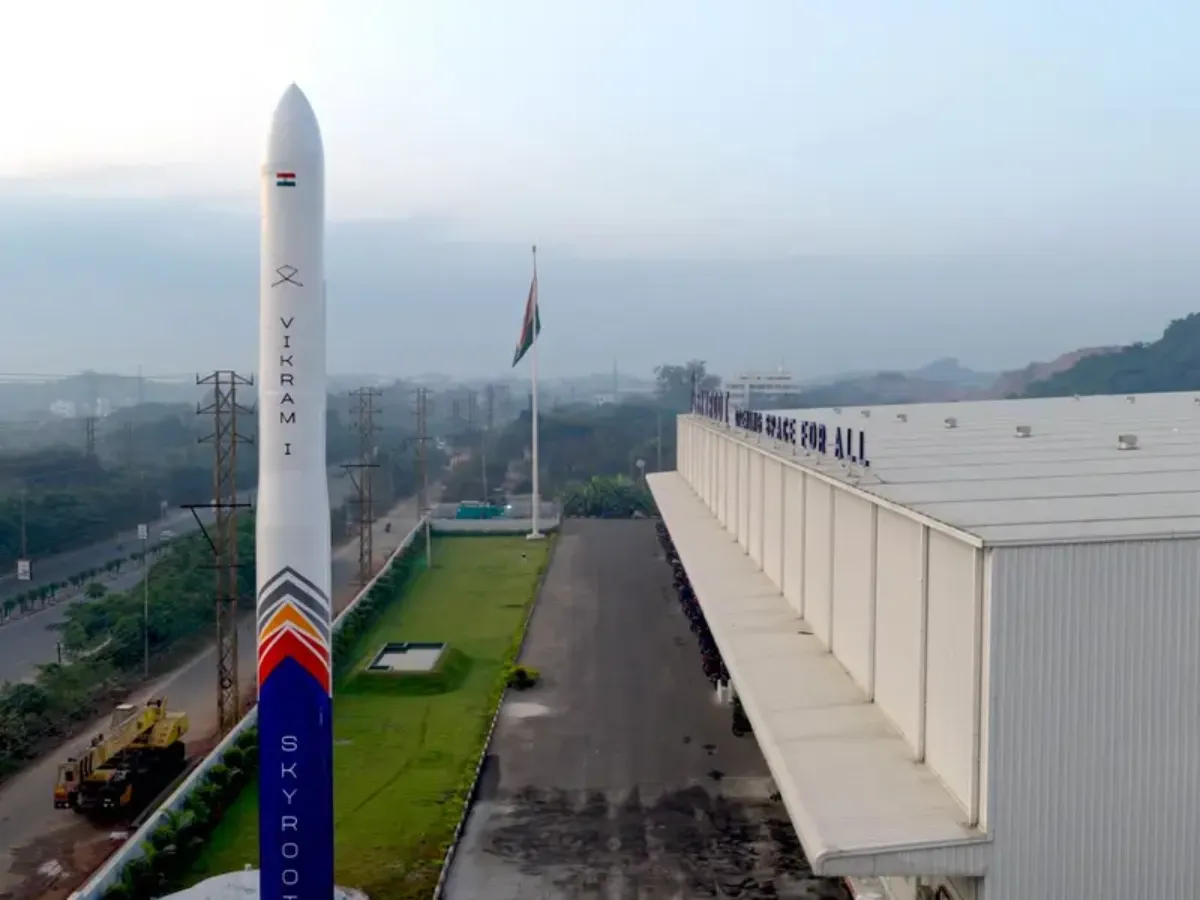
Skyroot Aerospace is poised to make a significant stride in India’s private space sector with the inaugural launch of Vikram-1 on July 18. Scheduled for liftoff at 11:30 am IST, this mission will take place at the First Launch Pad of the Satish Dhawan Space Centre (SDSC-SHAR) in Sriharikota. This event marks a pivotal moment, as it will be the first instance of a fully designed and developed Indian private rocket attempting to reach orbit from domestic soil.

To ensure public safety during the launch, aviation and maritime authorities have issued necessary airspace and navigational warnings. Restricted zones have been established along the rocket’s ascent and descent corridors, emphasising the commitment to a secure launch environment. This mission, named “Mission Aagaman,” signifies not only the launch of the vehicle but also the entry of India’s private sector into the competitive global satellite launch market.

Pawan Kumar Chandana, Co-founder and CEO of Skyroot Aerospace, expressed anticipation for the mission, noting its importance in collecting essential data to assess the rocket’s performance. He remarked that the test flight would contribute significantly to their objectives of establishing a routine launch service.

Technical Specifications of Vikram-1

Vikram-1, designed as a multi-stage orbital launch vehicle, is almost seven storeys in height and constructed using an all-carbon composite structure. The rocket is powered by in-house developed propulsion systems, featuring both 3D-printed rocket engines and high-thrust solid rocket motors. This design allows the vehicle to lift payloads weighing up to 350 kilograms into Low Earth Orbit.

During its inaugural mission, Vikram-1 aims to achieve a 450-kilometre orbit at a 60-degree inclination. The rocket will carry multiple technology demonstration payloads from various companies including Grahaa Space and Cosmoserve, alongside Skyroot’s own payload named SCOPE. The mission also includes an artistic component, “Cosmic Bloom,” created by Cosmos Diamonds, as well as a micro-art payload.

The increasing global demand for small satellite launches is considered a major opportunity for Indian launch providers. Chandana highlighted the constraints on supply despite growing demand for satellite-enabled services, characterising the successful clearance of Vikram-1 for flight as a significant milestone for India’s space journey.

Implications of the Mission

Mission Aagaman follows Skyroot’s earlier milestone achievement, which was the successful suborbital mission of Vikram-S in November 2022, the first privately developed Indian rocket to reach space. However, Vikram-1 is seen as a far more substantial milestone, representing extensive collaboration and hard work.

Naga Bharath Daka, Co-founder and COO of Skyroot Aerospace, remarked that the mission reflects the dedication of approximately 1,000 individuals and the contributions of more than 400 suppliers over nearly 3,000 days. The goal is not only to reach orbit but to validate every subsystem developed over the previous years, thereby informing future developments.

In preparation for the launch, engineers have successfully integrated and stacked all three stages of Vikram-1 on the launch pad. Final integrated health checks have been completed, alongside testing of interfaces among the vehicle, telemetry stations, and tracking radars. Should the mission succeed, it will be a landmark moment for India’s commercial space industry and will affirm the potential of private companies to build and launch orbital-class rockets domestically.

Long or Short, get news the way you like. No ads. No redirections. Download Newspin and Stay Alert, The CSR Journal Mobile app, for fast, crisp, clean updates!

App Store –  https://apps.apple.com/in/app/newspin/id6746449540 

Google Play Store – https://play.google.com/store/apps/details?id=com.inventifweb.newspin&pcampaignid=web_share

Latest News

Popular Videos
