


Rahul Gandhi Challenges Centre on Women’s Reservation Bill Implementation
The CSR Journal Magazine

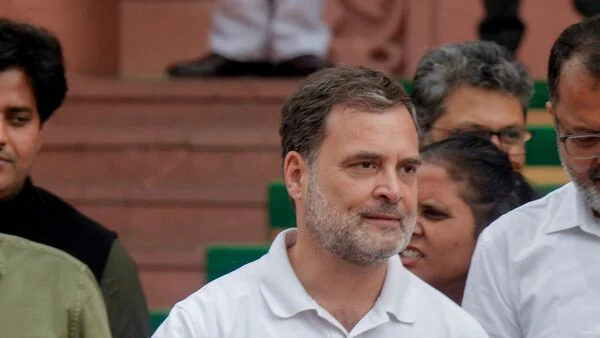
Congress Member of Parliament Rahul Gandhi recently addressed the challenge posed by Union Parliamentary Affairs Minister Kiren Rijiju regarding the party’s support for the Women’s Reservation Bill. Gandhi questioned the government’s decision to link the implementation of this legislation to the delimitation of constituencies in the Lok Sabha. He insisted that the Nari Shakti Vandan Adhiniyam, should be enacted without any preconditions.

In a post on X, Gandhi reminded Rijiju of the unanimous passing of the Women’s Reservation Bill 2023, which received full backing from Congress. He pointed out the delay in its implementation, asking, “Why has it still not been implemented even after three years?” This sentence reflected his frustrations about the ongoing legislative process, particularly the linkage to delimitation.

Gandhi’s statements came after Rijiju challenged Congress to provide unconditional support for the Women’s Reservation Bill, triggering further dialogue surrounding the matter. Earlier, Rahul Gandhi highlighted the necessity of women’s political expression for the completeness of the country’s democracy, emphasising the importance of addressing women’s rights within the political framework.

Rijiju Acknowledges Changing Attitude in Congress

Rijiju responded positively to Gandhi’s remarks, suggesting a shift in the Congress Party’s stance towards women. He expressed hope that this change would lead to their unconditional support for the Women’s Reservation Bill, publicly applauding Gandhi for acknowledging the significance of women in politics. Rijiju’s remarks made on X were perceived as an encouragement for the Congress to align more closely with government initiatives.

Despite the expressed support for women’s reservations, the Congress and several opposition parties remain opposed to the delimitation process, which aims to modify the distribution of parliamentary seats. They have voiced concerns over the integration of women’s reservation with this exercise, requesting that the two be considered separately.

Officials from the opposition have been vocal about delinking the reservation from the delimitation process, arguing that it could hinder the progress of women’s political representation. This controversy has positioned the Congress Party at the forefront of advocating for women’s rights, amidst ongoing debates in the Parliament.

Legislative Background and Current Status

The Nari Shakti Vandan Adhiniyam, 2023, which seeks to reserve 33 per cent of seats for women in legislatures, has faced legislative hurdles. While the bill secured approval from both Houses of Parliament, it has stalled in implementation. This was primarily due to the failure of the Constitution (131st Amendment) Bill on April 17, which could not achieve the mandated two-thirds approval in the Lok Sabha.

As the debate unfolds, the implications of the legislation remain significant for women’s political representation in India. The government’s approach towards the delimitation process will likely influence the pace of legislative action on women’s reservations. The Congress Party’s response will also play a crucial role in shaping future discussions on this critical issue.

Both Gandhi and Rijiju’s statements reflect a growing focus on women’s empowerment within Indian politics. As parties engage with the complexities of electoral reforms and reservation policies, the outcome of these discussions remains to be seen, particularly in light of upcoming legislative sessions.

Long or Short, get news the way you like. No ads. No redirections. Download Newspin and Stay Alert, The CSR Journal Mobile app, for fast, crisp, clean updates!

App Store –  https://apps.apple.com/in/app/newspin/id6746449540 

Google Play Store – https://play.google.com/store/apps/details?id=com.inventifweb.newspin&pcampaignid=web_share

Latest News

Popular Videos
