


Pete Hegseth Announces Six-Month Review of US Troops in Europe
The CSR Journal Magazine

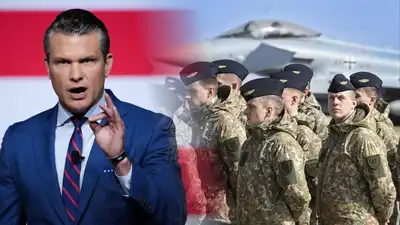
US Defence Secretary Pete Hegseth sharply condemned NATO allies during a recent meeting in Brussels, announcing a six-month Pentagon review of American military presence in Europe. He indicated that the results of this review would heavily rely on how quickly European nations assume primary responsibility for their own security.

Hegseth asserted that the review would lay the groundwork for the alliance to transition towards a model where Europe leads in its defence obligations. He allegedly stated that European countries must step up their efforts in safeguarding the continent, emphasising the urgency for NATO to adapt.

His comments extended beyond military matters, as he also expressed discontent with European policies relating to migration and gender equality. Hegseth reiterated the Trump administration’s vision for a reformed NATO, which he referred to as “NATO 3.0,” aimed at deterring emerging threats.

Concerns Over Access to Military Bases

During his appearance, Hegseth raised concerns regarding certain European allies reportedly denying US forces access to bases for potential military actions against Iran. He described this refusal as “shameful,” arguing that it jeopardised the safety of American personnel.

He emphasised that these decisions put the lives of US military members at risk by questioning such necessary access. Hegseth highlighted a worrying trend among European nations, suggesting that their focus has shifted away from military readiness to issues like gender equity and climate change.

His remarks are reminiscent of statements made by US Vice President JD Vance in February 2025, which had received backlash from various European leaders. Hegseth’s criticism coincides with a period during which European allies and Canada have reportedly increased their defence spending and military capabilities significantly.

Shifts in NATO’s Strategic Direction

The announcement also comes in the wake of a notable shift in NATO’s strategic positioning. European allies and Canada managed to raise defence spending by $90 billion in the past year, marking a 20 per cent increase over 2024. This financial boost has been a response to evolving geopolitical tensions and security challenges.

Furthermore, the review follows a US directive indicating a reduction in the provision of certain military assets, including aircraft carriers and support ships, in the event of an ally’s attack. This shift underscores the changing dynamics within NATO as the US aims to allocate resources more effectively amid a potential conflict with China.

Under Article 5 of the NATO agreement, an attack on one member is viewed as an attack on all, although the treaty does not compel military assistance. This implies that the US is re-evaluating the extent of its military support should a member invoke this provision. Nevertheless, the US will maintain its nuclear weapons in Europe, vital to NATO’s deterrent strategy.

To enhance this narrative, NATO’s Nuclear Planning Group issued its first statement in nearly two decades after the meeting on Thursday. They acknowledged the strategic nuclear forces as essential to collective Allied security and signalled plans to modernise NATO’s nuclear capabilities to meet current and future security interests.

Overall, Hegseth’s statements at the NATO meeting reflect a call for Europe to become more proactive in its defence responsibilities, coinciding with the US reassessing its military support commitments on the continent.

Long or Short, get news the way you like. No ads. No redirections. Download Newspin and Stay Alert, The CSR Journal Mobile app, for fast, crisp, clean updates!

App Store –  https://apps.apple.com/in/app/newspin/id6746449540 

Google Play Store – https://play.google.com/store/apps/details?id=com.inventifweb.newspin&pcampaignid=web_share

Latest News

Popular Videos
