


New Spider Species Named Pikelinia Floydmuraria Discovered in South America
The CSR Journal Magazine

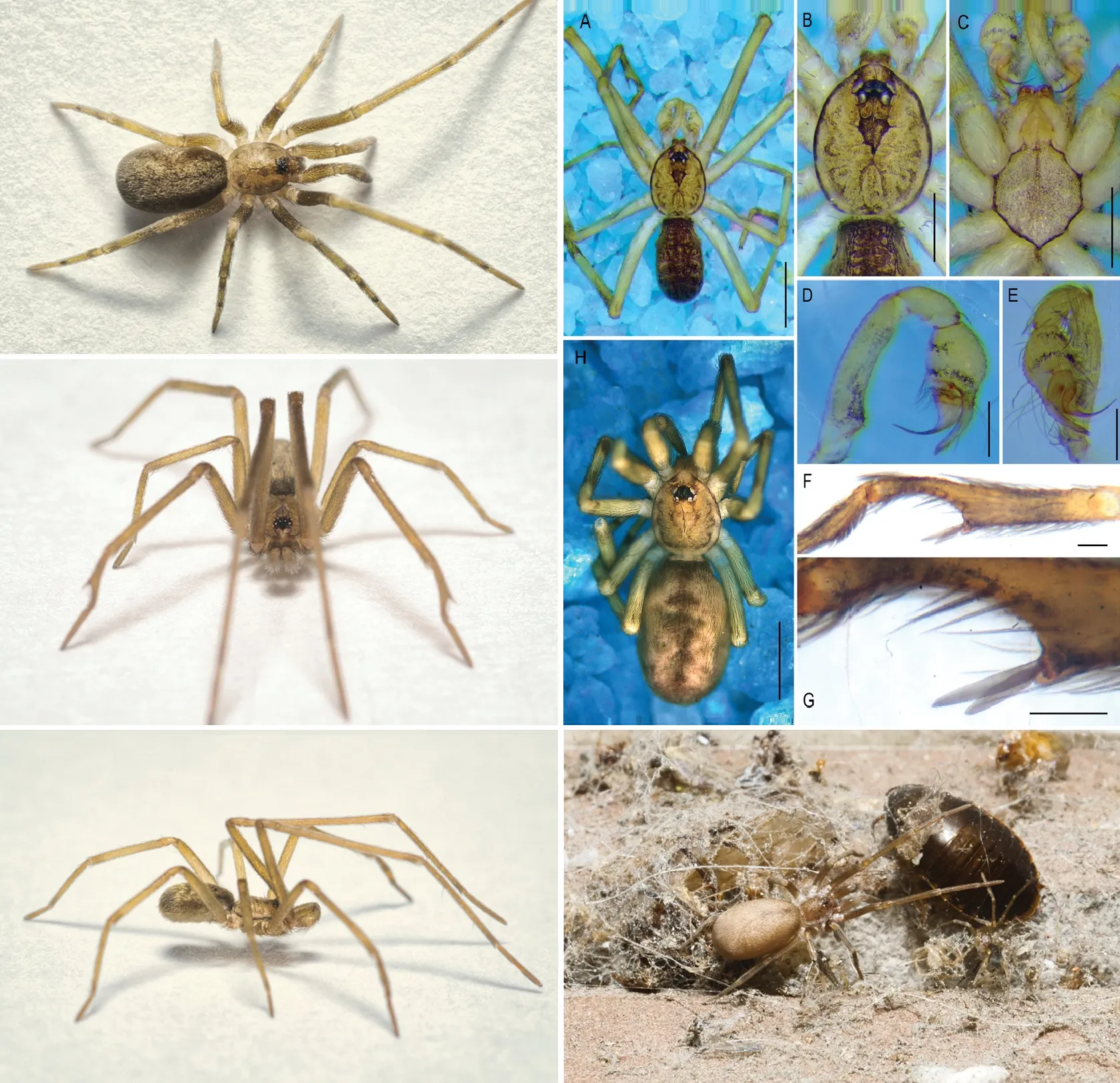
A recently uncovered species of crevice-weaving spider, named Pikelinia floydmuraria, has been identified by a team of researchers from various South American nations. This discovery, documented in the open-access journal Zoosystematics and Evolution, enhances the scientific community’s understanding of the rather obscure Pikelinia genus. Named in a creative homage to the legendary rock band Pink Floyd, the spider’s name reflects both cultural and environmental elements.

The new species, ranging from 3 to 4 millimetres in body length, derives its second name ‘muraria’ from the Latin term for “wall.” This nomenclature is indicative of the spider’s preferred habitat, which consists of cracks within building walls. Moreover, the name pays respect to Pink Floyd’s renowned album The Wall, linking music to the natural world.

Pikelinia floydmuraria is anticipated to have significant implications for urban environments. Reports indicate that these spiders flourish in human-modified habitats and prey on common urban pests, such as ants, flies, mosquitoes, and beetles, many of which can be sources of inconvenience or disease.

Unique Hunting Abilities of Pikelinia Floydmuraria

Research findings have highlighted remarkable hunting strategies employed by Pikelinia floydmuraria. Scientists observed that this species is capable of capturing ants up to six times its own size. This extraordinary adaptation allows them to thrive in urban areas, where they construct webs near artificial lighting, attracting numerous insects.

This intelligent hunting technique not only optimises their chances of capturing prey but may also serve a purpose in controlling urban pest populations. Thus, Pikelinia floydmuraria demonstrates a complex interaction with its environment, leading to the enhancement of urban ecosystems.

Beyond the new species, the study also addressed a longstanding enigma regarding a related species from the Galapagos Islands. For the first time, scientists have comprehensively described the female anatomy of Pikelinia fasciata, a species initially identified in 1902. Notably, a comparative examination between the Galapagos spider and the newly identified Colombian species revealed striking similarities, particularly concerning male reproductive structures.

Significance and Future Research Directions

The identification of Pikelinia floydmuraria is only the second known instance of this genus in Colombia, spotlighting the considerable gaps in knowledge surrounding small, urban-dwelling organisms. This finding calls attention to the need for further research to elucidate the origins, evolutionary pathways, and ecological roles of these creatures.

Researchers are advocating for additional studies, particularly those focusing on DNA analysis, in order to gain deeper insight into the evolutionary relationships and environmental adaptations of Pikelinia floydmuraria and related species. As investigations advance, this unique spider may prove to be more than a mere scientific curiosity, potentially acting as a natural ally in safeguarding urban environments against pest proliferation.

The scientific exploration of this newly discovered species will continue to enrich the understanding of biodiversity in urban settings, reinforcing the idea that even the smallest creatures can play essential roles in their ecosystems.

Long or Short, get news the way you like. No ads. No redirections. Download Newspin and Stay Alert, The CSR Journal Mobile app, for fast, crisp, clean updates!

App Store –  https://apps.apple.com/in/app/newspin/id6746449540 

Google Play Store – https://play.google.com/store/apps/details?id=com.inventifweb.newspin&pcampaignid=web_share

Latest News

Popular Videos
