


India Calls For Urgent UN Security Council Reforms To Reflect New Global Realities
The CSR Journal Magazine

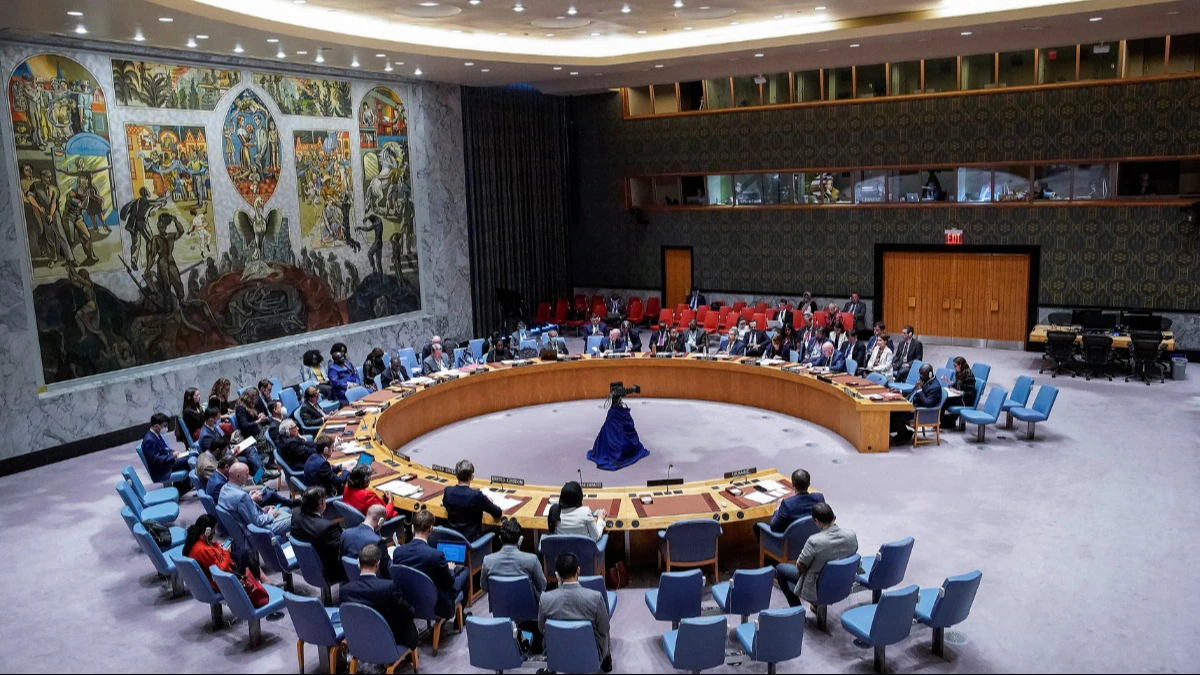
India has reiterated its call for crucial reforms at the United Nations, emphasising that the organisation must evolve to remain effective in addressing contemporary global challenges. This assertion was made by Ambassador Harish Parvathaneni during the UN Security Council Open Debate on ‘Upholding the Purposes and Principles of the UN Charter and Strengthening the UN-centered International System’.

Ambassador Parvathaneni articulated India’s proposals aimed at reinforcing a UN-centric international framework. His suggestions included enhancing the General Assembly’s role, pursuing substantive reforms, and expanding the Security Council (UNSC) to better reflect current geopolitical realities. He advocated for increased transparency and accountability in the UNSC’s operations.

Challenges to Transparency and Accountability

The Ambassador contended that the broader UN membership should be included in discussions concerning Security Council matters. He criticized the current practices that restrict access to both historical and contemporary documents and deemed the provisional status of procedural rules unacceptable in today’s context. Parvathaneni asserted that the methods of operation need reformation to align with contemporary standards.

In his speech, he expressed that the UN Security Council must be a dynamic entity, rather than a relic of the past. He placed particular importance on the role of permanent members in this dialogue. According to Parvathaneni, the evolving geopolitical landscape has placed significant pressure on multilateralism, leading to concerns regarding the legitimacy and relevance of the United Nations.

Despite the UN Charter mandating a review conference in 1955, such a meeting has never materialised, leaving the UNSC’s core power structure largely unchanged for nearly eight decades. The Ambassador described the current system as outdated, equating it to “operating advanced AI technologies on a computer from 1945,” and argued that an institution engineered for mid-20th-century realities is ill-equipped to handle the complexities of the 21st century.

Concerns Over Double Standards

India brought attention to the ongoing issue of “double standards” within the international community. The Ambassador noted that global institutions are afflicted not only by inconsistent application of principles but also by an increasing gap between declared intentions and actual actions. He asserted that strengthening multilateralism cannot rely solely on the exercise of power politics but must also stem from cooperation, compromise, and a sincere commitment to collective global welfare.

Parvathaneni was clear in stating that reliance on brute force and power is insufficient for achieving robust multilateralism or serving the global public good. He urged that cooperation and a willingness to compromise for the overarching benefit of humanity must be actively demonstrated. His remarks underscored the necessity for a genuine shift in approach to build a more effective and trustworthy international system.

The emphasis on reforming the UNSC indicates India’s desire to play a more significant role in global governance and reflect the realities of today’s world. As the conversation surrounding UN reform continues, India’s position may catalyse further discussions on how to ensure the organisation remains relevant and capable in the ever-evolving international landscape.

Long or Short, get news the way you like. No ads. No redirections. Download Newspin and Stay Alert, The CSR Journal Mobile app, for fast, crisp, clean updates!

App Store –  https://apps.apple.com/in/app/newspin/id6746449540 

Google Play Store – https://play.google.com/store/apps/details?id=com.inventifweb.newspin&pcampaignid=web_share

Latest News

Popular Videos
