


NCERT Kannada Textbook Initiates Controversy Over Religious Themes and Dietary Representation
The CSR Journal Magazine

The NCERT Class six Kannada textbook, titled Krishna, has generated significant controversy in Karnataka as educationists, writers, and activists accuse it of promoting a religious agenda. The group known as the People’s Alliance for the Fundamental Right to Education has voiced objections to the naming of educational materials after Hindu deities. They argue that such practices introduce an unwarranted religious context into the school curriculum.

Educationist Niranjanaradhya VP has remarked that the focus on Indian Knowledge Heritage constitutes an instance of saffronisation, suggesting that Karnataka’s educational identity should encompass the contributions of historical figures such as Pampa, Kuvempu, Karanth, and Basavanna instead. This shift, they contend, reflects a broader ideological change in the curriculum linked to the National Education Policy (NEP).

Dietary Practices Under Scrutiny

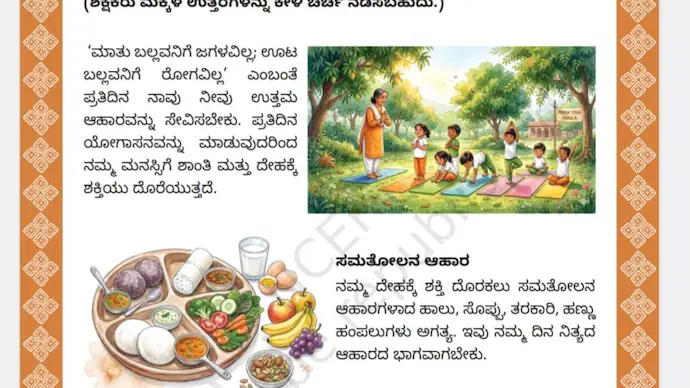
Another focal point of the controversy is a chapter titled ‘Health is Wealth,’ which portrays a balanced diet as comprising milk, greens, fruits, vegetables, and nuts. Critics assert that the exclusion of eggs, fish, and meat portrays a vegetarian-centric viewpoint that neglects the dietary habits of various communities in Karnataka. They argue this representation does not reflect the reality of the diverse dietary practices prevalent in the state.

This issue has surfaced concurrently with the implementation of the three-language policy as part of the NEP 2020 and the National Curriculum Framework for School Education (NCF-SE) 2023. The same textbook is scheduled for use among Class 6 CBSE students in the academic year 2026–27 and is also expected to be adopted for Class 9 students.

Activists have further alleged that the textbook fails to account for Karnataka’s regional diversity, lacking representations of folklore, literature, and cultural contexts from different parts of the state, including coastal Karnataka, north Karnataka, Malnad, and old Mysore. They claim the materials lack age-appropriate content for Class 6 students in terms of stories, activities, and illustrations.

Demands for Textbook Revisions

The coalition has put forth several demands, including the withdrawal of the textbook in question and its replacement with existing Kannada texts such as Savi Kannada, Siri Kannada, and Tili Kannada. They have also called for a revision of the dietary chapter to incorporate non-vegetarian options, emphasising a more holistic view of nutrition.

The group has additionally requested that the textbook’s title be modified to ensure it more accurately reflects Karnataka’s diverse cultural identity. Writer SG Siddaramaiah has echoed these sentiments, demanding the withdrawal of the lesson and claiming that the textbook serves to impose a specific political narrative through its curriculum content.

Activists maintain that educational materials should represent pluralism and the wide-ranging cultural diversity of Karnataka rather than conforming to a singular ideological framework. The textbook forms part of the phased rollout of the NEP-linked curriculum in CBSE schools, anticipated to begin in the academic year 2026–27.

Long or Short, get news the way you like. No ads. No redirections. Download Newspin and Stay Alert, The CSR Journal Mobile app, for fast, crisp, clean updates!

App Store –  https://apps.apple.com/in/app/newspin/id6746449540 

Google Play Store – https://play.google.com/store/apps/details?id=com.inventifweb.newspin&pcampaignid=web_share

Latest News

Popular Videos
