


Mumbai Faces Delayed Monsoon, Records One of Driest Junes in Nearly Two Decades
The CSR Journal Magazine

The arrival of the southwest monsoon in India has faced substantial delays, raising concerns about potential rainfall shortages and water security. After an initially promising start, the monsoon has lost momentum, with satellite imagery indicating diminished cloud cover across large portions of the country. Rainfall activity has drastically declined since the seasonal rains penetrated into southern and central India.

According to the India Meteorological Department (IMD), from June 4 to June 15, India recorded only 19.2 mm of rainfall against a normal figure of 53.7 mm. This leaves the country with a deficit of nearly 64 per cent for this period. The slowdown has been especially evident along the west coast, with Mumbai still awaiting the monsoon’s arrival amid the latter half of June.

Typically, the monsoon reaches Mumbai between June 9 and June 11, but this year it has been delayed by over a week. Meteorologists predict that it could take another four to five days before the system progresses further across Maharashtra and the central Arabian Sea. Weather predictions indicate that while some improvement is expected post-June 20, significant rainfall may not materialise until the end of June.

Impact on Rainfall Across the Country

The insufficient rainfall has resulted in numerous regions across India remaining dry. Data compiled from 723 districts reflects that only 103 have experienced near-normal monsoon conditions thus far, while 236 districts have recorded weak rainfall and another 202 districts have faced very weak rainfall.

This irregularity in rainfall is a worrying trend for several states, particularly as monsoon conditions over Maharashtra and Gujarat have notably weakened. Reports suggest that many areas are deeply impacted, with agricultural activities and water supplies at risk due to the prevailing dryness.

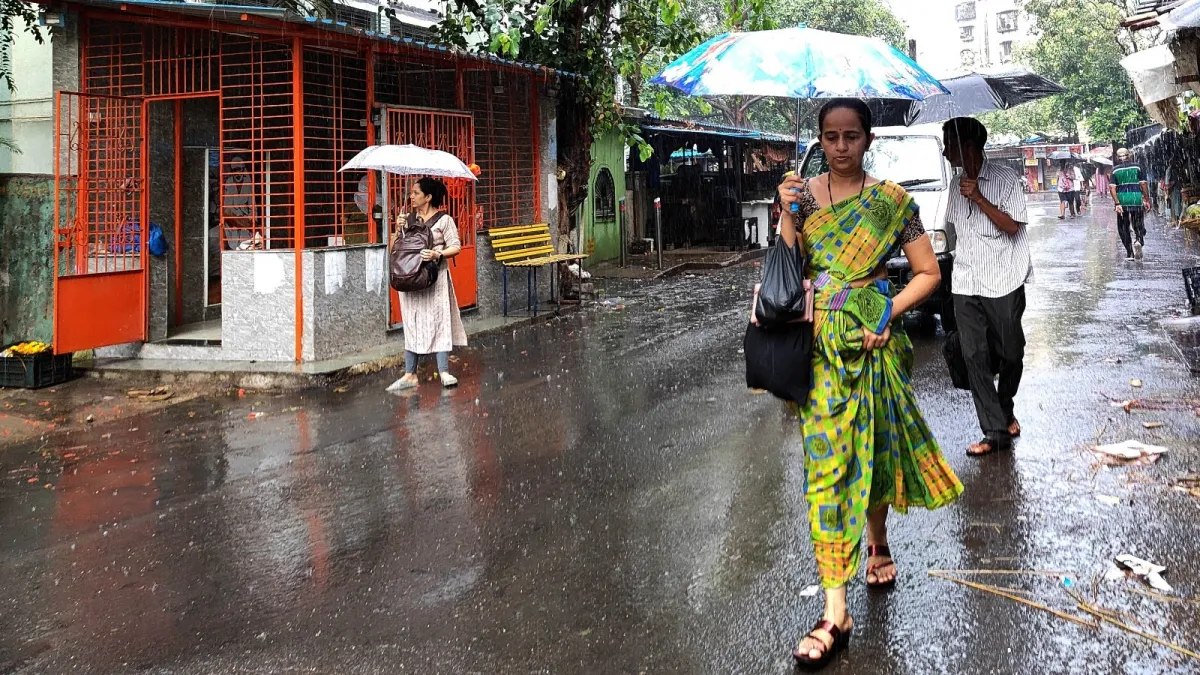
Mumbai is poised to experience one of its driest Junes in nearly 20 years. The Santacruz observatory has noted merely 13.1 mm of rainfall in June, while Colaba has a scant 5 mm. Given that the average rainfall for Mumbai in June typically stands at 526.3 mm, if this trend persists, this month could potentially match June 2014, which had recorded only 87.3 mm of rain, among the lowest amounts in the city’s history.

Concerns Over Water Resources and El Nino Effects

The delayed monsoon’s impact is becoming increasingly apparent on water resources in Maharashtra, where reservoirs currently hold only about 24.5 per cent of their total storage capacity. Several reservoirs in Gujarat are similarly reporting significant drops in water levels, with the Sardar Sarovar reservoir facing a considerable storage deficit.

Experts attribute the slowdown in monsoon activity to a lack of robust weather systems forming over the Bay of Bengal and the Arabian Sea, which are critical for monsoon progression. Concurrently, global climate organisations have confirmed the advent of El Nino conditions in the Pacific Ocean. Historically, El Nino events correlate with weakened monsoon seasons in India, with 16 such years recorded since 1950, many linked to droughts and considerable rainfall deficits.

As temperatures in the Pacific continue to rise, forecasters caution that the influence of El Nino may intensify by September, further complicating the ongoing monsoon season in India. These weather patterns could present substantial challenges for water security, agriculture, and overall climate stability in the region moving forward.

Long or Short, get news the way you like. No ads. No redirections. Download Newspin and Stay Alert, The CSR Journal Mobile app, for fast, crisp, clean updates!

App Store –  https://apps.apple.com/in/app/newspin/id6746449540 

Google Play Store – https://play.google.com/store/apps/details?id=com.inventifweb.newspin&pcampaignid=web_share

Latest News

Popular Videos
