


Pakistan Under Fire! Ex-Indian Envoy Exposes Islamabad Over PoJK Crackdown
The CSR Journal Magazine

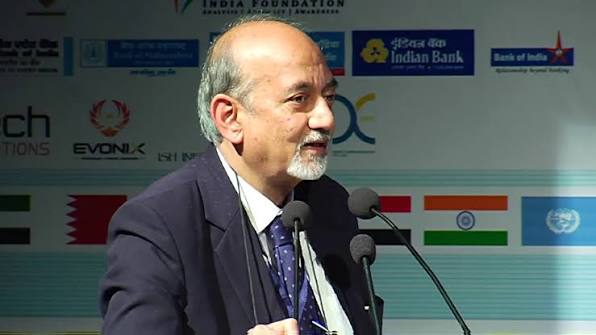
Former Indian Ambassador to Iran Dinkar P Srivastava has sharply condemned Pakistan’s approach to the civil unrest in Pakistan-occupied Jammu and Kashmir (POJK). On August 3, 2026, he delineated criticisms of Islamabad’s military response and its shifting rhetoric towards local demonstrators amid ongoing assembly elections.

Srivastava pointed out a notable shift in Pakistan’s official stance regarding protests in areas like Mirpur and Rawalakot. Initially, Pakistani authorities appeared to distance themselves from the demonstrators when protests erupted, driven by grievances related to living conditions. He noted that the Defence Minister described the local populace as not being Kashmiris when initial protests emerged.

This contradiction, according to Srivastava, showcases a significant mismatch between Pakistan’s past endorsement of its diaspora community and its current dismissal of the local protestors. As concerns grew among residents about the conditions of their families within POJK, Islamabad’s narrative evolved.

Escalation of Violence and Casualties

In his remarks, Srivastava provided details regarding the escalating violence surrounding the protests, referencing statistics from the Human Rights Commission of Pakistan. The former ambassador indicated that initial incidents in June resulted in 15 fatalities, but by July 22, this number had drastically increased to 57, with subsequent reports suggesting over 80 deaths.

He remarked on the impact of such violence in a region with a population of about 3 million. Srivastava underscored that the proportion of fatalities emphasises the severity of the unrest, which has witnessed increasing military force against peaceful demonstrators.

When discussing the underlying motivations behind the civilian protests, Srivastava attributed them to long-standing economic neglect and allegations of electoral manipulation by Pakistan’s central government. The ambassador highlighted public dissatisfaction resulting from economic conditions, including essential shortages like flour in 2022 and significant disparities in pricing for services such as water and electricity.

Constitutional Manipulations and Electoral Disparities

Further elaborating on the political dynamics affecting Kashmiris, Srivastava referenced the constitutional manipulations surrounding reserved electoral seats for non-resident Kashmiris in POJK. According to him, this strategy allows Islamabad to control local governance by ensuring that a minority residing outside the region holds a disproportionate number of seats in the legislature.

With 20 out of 53 seats reserved for a smaller population spread across Pakistan, Srivastava argued that this allocation undermines local representation, effectively marginalising regional parties in favour of the party of Islamabad’s choice. He contrasted this with the political scenario in Indian-administered Kashmir, where local parties have maintained governance for over fifty years.

Srivastava concluded that the ongoing sense of marginalisation felt by the local population in POJK is a crucial factor that has led to direct confrontations with military forces, despite the risk of violent crackdowns, restrictions on groups like the Joint Awami Action Committee, and widespread electoral boycotts that have diminished the local administration’s legitimacy.

Long or Short, get news the way you like. No ads. No redirections. Download Newspin and Stay Alert, The CSR Journal Mobile app, for fast, crisp, clean updates!

App Store –  https://apps.apple.com/in/app/newspin/id6746449540 

Google Play Store – https://play.google.com/store/apps/details?id=com.inventifweb.newspin&pcampaignid=web_share

Latest News

Popular Videos
