


Indian Parents Explore Alternatives to CBSE for Education
The CSR Journal Magazine

The current discourse surrounding the Central Board of Secondary Education’s On-Screen Marking system has led many Indian parents and students to reassess their school board options. Historically, CBSE has been the prevailing choice due to its widespread presence throughout India and its alignment with national entrance exams like the JEE and NEET, making it appealing for countless families. However, recent issues concerning answer-sheet evaluations and technical problems have prompted individuals to consider alternatives.

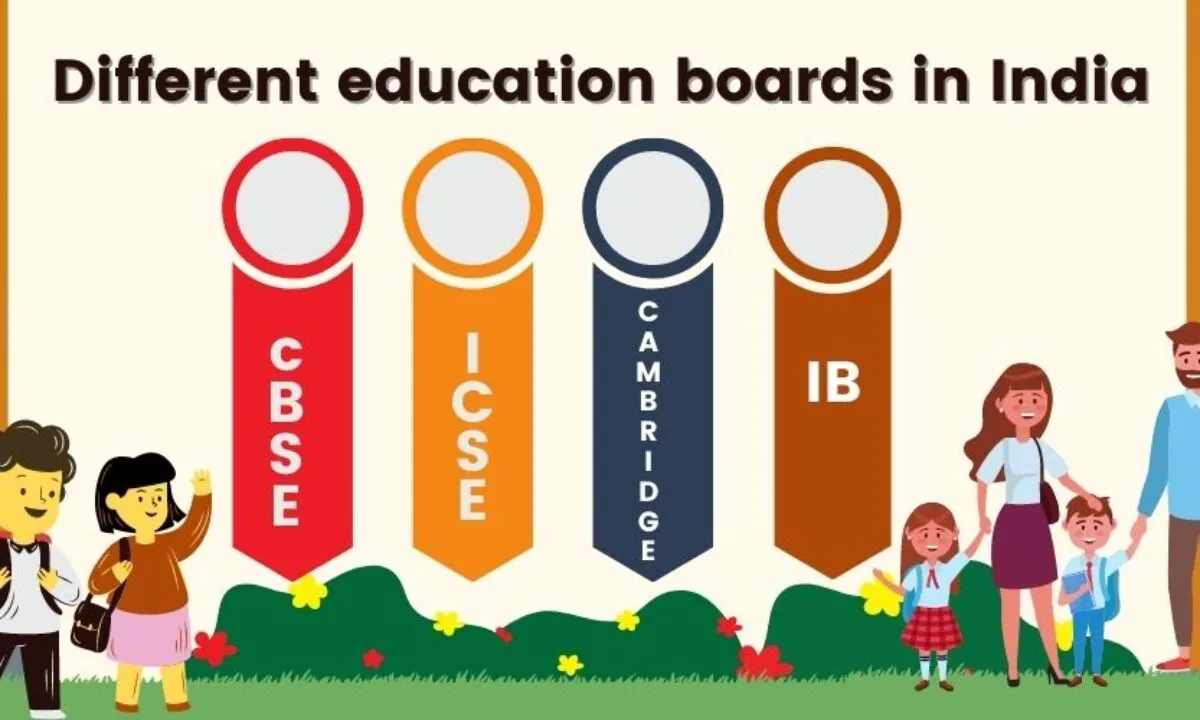
An array of national and international school boards are now available, including the Council for the Indian School Certificate Examinations (CISCE), the International Baccalaureate (IB), and Cambridge International. This evolution in India’s educational framework presents a diverse range of choices for students and parents alike.

School boards in India can generally be classified into three categories: national boards, international boards, and state boards. CBSE and CISCE dominate the national category, while the international boards comprise IB and Cambridge International, each offering distinct educational philosophies and curricula.

CISCE: A Closer Look at ICSE and ISC

The CISCE administers two primary examinations: the ICSE for Class 10 and the ISC for Class 12. As a private educational board, it operates under government recognition, in contrast to CBSE, which is managed by the Union government. CISCE is often characterised by its balanced focus on languages, humanities, sciences, and the arts.

In ICSE schools, students typically engage with English language intensively while subjects such as history, geography, and literature receive significant attention. Assessment methodologies include a combination of project work, practical tasks, and written examinations, providing a holistic educational experience.

The ICSE system is particularly noted for its emphasis on language proficiency, offering a comprehensive syllabus in humanities, and featuring internal assessments alongside project work, thus presenting students with considerable subject choice at advanced levels.

International Education with IB and Cambridge

The IB programme has rapidly gained traction in Indian education since its inception in Switzerland in 1968, now operating in over 150 countries. It offers a unique approach, prioritising research, inquiry-based learning, and independence over traditional rote memorisation. The IB encompasses four distinct programmes, notably the Diploma Programme, which is widely recognised by universities globally.

IB’s educational framework revolves around critical thinking, inquiry, and a curriculum structured to encourage research and extended projects. While the curriculum can be demanding and tuition fees are typically higher than other boards, the focus on an international curriculum adds substantial value to the learning experience.

Cambridge International Education, affiliated with the University of Cambridge, offers qualifications such as IGCSE and A Levels. The IGCSE is akin to Class 10, while A Levels are pursued in the later stages of education. Students can select subjects tailored to their academic goals, benefiting from a system known for flexibility and international recognition.

Choosing the Right Education Path

The emergence of various school boards prompts an essential dialogue regarding educational choices. Education experts caution that no single board is superior; rather, the suitability of a board should align with a student’s aspirations. For instance, students preparing for JEE or NEET may find CBSE’s content more advantageous, while those interested in humanities might gravitate towards CISCE.

International pathways, such as IB or Cambridge, are often preferred by students aiming for admissions abroad. State boards, meanwhile, play a critical role in offering accessible education to many across the country. Recent scrutiny surrounding CBSE’s evaluation methods has revitalised long-standing discussions about educational quality beyond mere examination results.

As parents seek clarity on educational assessments, project involvement, and learning methodologies, the conversation is shifting towards understanding each board’s unique contributions rather than merely selecting between CBSE, ICSE, IB, or Cambridge. This ongoing inquiry into educational approaches reflects a broader aspiration for quality and relevance in student learning experiences.

Long or Short, get news the way you like. No ads. No redirections. Download Newspin and Stay Alert, The CSR Journal Mobile app, for fast, crisp, clean updates!

App Store –  https://apps.apple.com/in/app/newspin/id6746449540 

Google Play Store – https://play.google.com/store/apps/details?id=com.inventifweb.newspin&pcampaignid=web_share

Latest News

Popular Videos
