


India Likely To Have 5-8 More Semiconductor Plants In 7-8 Years, Says PM Modi
The CSR Journal Magazine

Prime Minister Narendra Modi on Friday said India is expected to have another five to eight semiconductor plants operational over the next seven to eight years as the country accelerates efforts to establish a self-reliant chip manufacturing ecosystem.

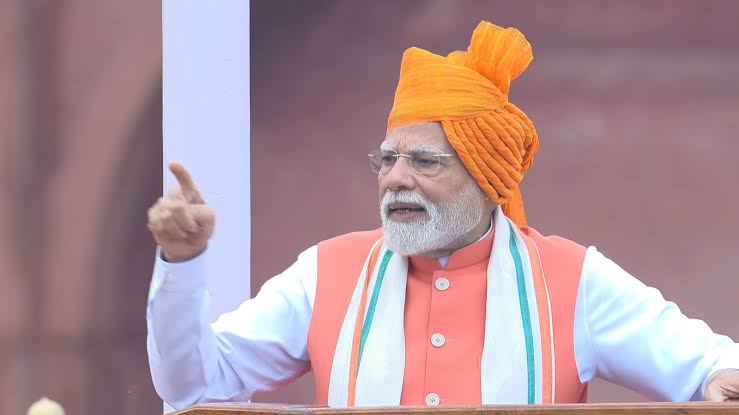
Addressing the nation from the Red Fort on Independence Day, Modi said three major semiconductor plants had already started operations and that chips manufactured in India would also be exported. He said strengthening domestic semiconductor production was essential for building an Atmanirbhar Bharat and advancing towards Viksit Bharat.

India Expands Domestic Semiconductor Manufacturing

Highlighting the growing importance of semiconductors, Modi said chips have become indispensable across sectors ranging from electronics and medical equipment to transportation systems.

“In today’s digital world and the age of technology, we understand the importance of chips. Whether it is electronic goods, medical equipment or transportation systems, chips are indispensable to all of them. Without chips, the entire world could come to a standstill,” he said.

Modi said India had consequently taken significant steps towards achieving self-reliance in semiconductor manufacturing. He said the three plants already operational would contribute to domestic production as well as exports.

The Prime Minister said another five to eight plants were expected to become operational over the next seven to eight years, signalling a further expansion of India’s semiconductor manufacturing capacity.

Modi Highlights Growth In Manufacturing And Defence

The Prime Minister also used his Independence Day address to highlight the expansion of India’s manufacturing and industrial capabilities over the past 12 years.

He said defence production had increased nearly fourfold during this period, while production in the khadi and village industries sector had risen nearly fivefold.

Electronic manufacturing has grown nearly sevenfold, according to Modi, while modern railway coach production has increased 21-fold and mobile phone production has risen 33-fold.

Modi said India had acquired a “new pace” over the past 12 years and was progressing rapidly. He recalled that the country had gained independence with numerous aspirations but had struggled to accelerate its development for decades.

He said India had remained constrained by an attitude of “it will happen, let’s see” and noted that the country had been counted among the world’s “Fragile Five” in 2014.

Modi attributed the subsequent acceleration in India’s progress to the determination and strength of its 1.4 billion citizens.

Energy Security Gets Major Focus

Energy security was another major focus of the Prime Minister’s address, with Modi outlining developments and targets in nuclear, solar and gas-based energy.

He said India had set a target of 200 GW of nuclear energy and was establishing five new nuclear reactors. He also highlighted the country’s progress in fast breeder nuclear technology, calling the milestone achieved this year an important step towards self-reliance in nuclear fuel.

Modi said piped gas had reached 1.75 crore households, while more than 50 lakh households were being served through solar energy.

The Prime Minister argued that a country could be held back not only by a shortage of resources but also by limitations in its thinking. He said expanding the country’s outlook would help India identify and make better use of its own capabilities.

Chips And Nuclear Power Part Of Self-Reliance Push

Modi’s emphasis on semiconductor manufacturing and nuclear technology forms part of a broader push to reduce India’s dependence on external sources and strengthen domestic capabilities in strategically important sectors.

Semiconductors are increasingly central to electronics, healthcare equipment and transportation, while nuclear power is being positioned as an important component of India’s long-term energy security strategy.

Modi said India’s progress in digital technology and innovation had already enabled the country to establish a global presence. Expanding domestic semiconductor manufacturing, he said, would further strengthen India’s technological capabilities.

He linked the developments across manufacturing, technology and energy to the larger objective of building an Atmanirbhar Bharat and ultimately achieving the goal of Viksit Bharat.

Long or Short, get news the way you like. No ads. No redirections. Download Newspin and Stay Alert, The CSR Journal Mobile app, for fast, crisp, clean updates!

App Store –  https://apps.apple.com/in/app/newspin/id6746449540 

Google Play Store – https://play.google.com/store/apps/details?id=com.inventifweb.newspin&pcampaignid=web_share

Latest News

Popular Videos
