


G7 Leaders Target Supply Chain Vulnerabilities With New Critical Minerals Pact
The CSR Journal Magazine

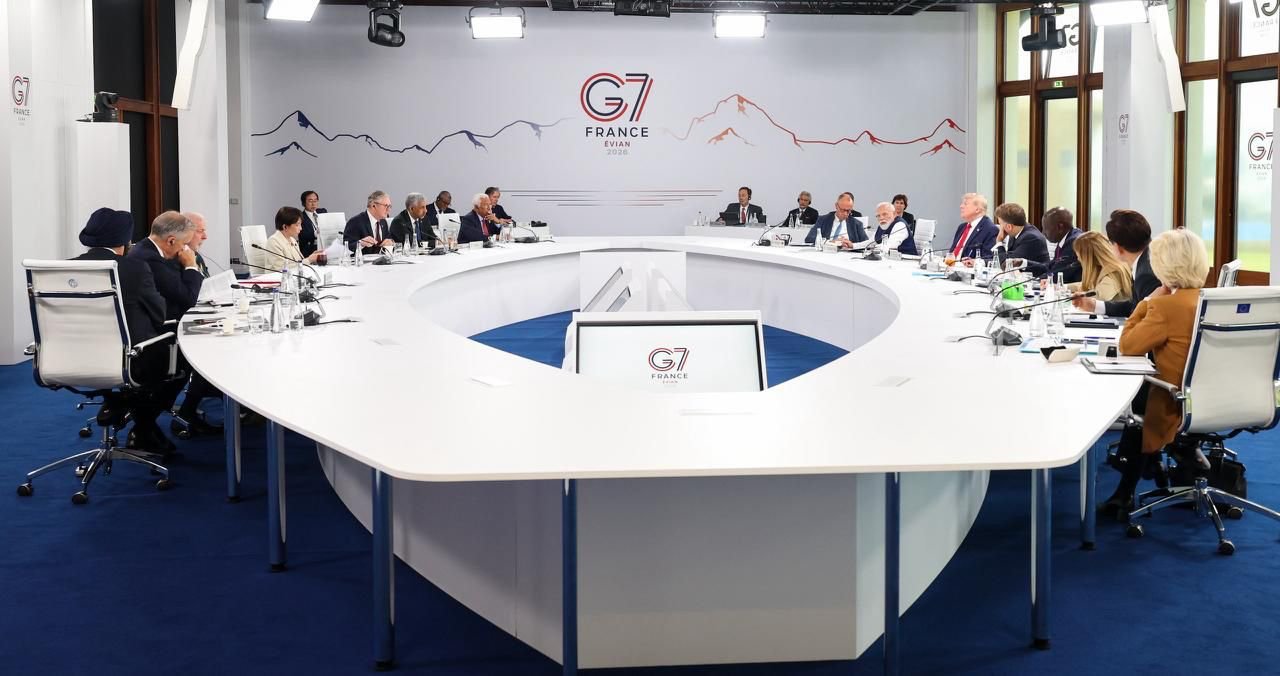
G7 leaders on Wednesday announced a new framework aimed at strengthening the resilience of global critical minerals supply chains, expressing concern over economic coercion and trade practices that threaten the security of essential resources.

In a joint declaration issued during the summit in Évian, France, the leaders pledged to diversify supply chains, expand production and recycling capacities, and reduce vulnerabilities arising from concentrated sources of supply and arbitrary trade restrictions.

G7 Expresses Concern Over Economic Coercion

The leaders said they were concerned by the growing use of non-market policies and retaliatory measures involving critical minerals and related products, warning that such practices could undermine economic security.

“We express our grave concerns regarding the use of non-market policies and practices and economic coercion, including arbitrary export restrictions and retaliatory measures on critical minerals and their related dual-use items, all of which undermine economic security and resilience,” the declaration stated.

“We will work together with partners to reduce critical dependencies and ensure that attempts or threats to weaponise economic dependencies fail,” it added.

The G7 reaffirmed its commitment to reducing reliance on concentrated supply chains and strengthening domestic and allied capabilities for the production, processing and recycling of minerals vital to clean energy technologies, digital infrastructure and industrial manufacturing.

Building on the Critical Minerals Production Alliance launched under Canada’s 2025 G7 presidency, the countries said they would coordinate investments and industrial projects across the entire supply chain.

Target Set to Reduce Dependence on Single Suppliers

The leaders set a goal of lowering dependence on any single supplier outside the G7 and partner countries for rare earth elements and permanent magnets to below 60 per cent by 2030, with an ambition to bring the figure down to 50 per cent as early as possible.

“We, together with partner countries, will cooperate closely to advance production, processing and recycling projects across the entire supply chain,” the leaders said.

According to the declaration, 195 projects announced since the beginning of 2026 have already attracted investments worth 64 billion euros.

The G7 also called for closer coordination among multilateral development banks, development finance institutions and export credit agencies to mobilise additional public and private capital for critical minerals projects and related infrastructure.

The leaders said they would continue exploring tools such as diversification requirements, joint procurement mechanisms, revenue stabilisation measures and trade-related instruments to enhance supply chain resilience.

Focus on Transparency, Recycling and Crisis Preparedness

The declaration outlined plans to develop harmonised and interoperable systems to improve traceability and transparency in the sourcing of critical minerals.

“We are committed to working towards establishing harmonized, interoperable mechanisms aligned with our interests that ensure traceability and transparency regarding the origin of critical minerals,” the declaration said.

The initiative will initially focus on lithium and nickel before being expanded to additional minerals on an annual basis.

The leaders also highlighted concerns over forced labour and illegal trafficking within mineral supply chains and pledged to align practices with internationally recognised labour standards while strengthening enforcement mechanisms.

To prepare for potential market disruptions, the G7 agreed to expand stockpiling capacities and establish a cooperation mechanism, supported by the International Energy Agency, to share information and provide early warnings on supply shortages and market stress.

The countries also committed to promoting recycling and circular economy measures by expanding collection and recovery capabilities and setting recycling targets for selected minerals by the end of the year.

As part of these efforts, the G7 formally established the non-binding G7 Critical Minerals Resilience and Production Alliance, which will remain open to like-minded partners and serve as a platform for cooperation on diversification, financing, transparency, stockpiling and crisis response.

“To achieve these objectives and ensure long-term coordination of our efforts, we establish a non-binding G7 Critical Minerals Resilience and Production Alliance,” the leaders announced, describing the initiative as a mechanism to strengthen and diversify global critical minerals value chains.

Long or Short, get news the way you like. No ads. No redirections. Download Newspin and Stay Alert, The CSR Journal Mobile app, for fast, crisp, clean updates!

App Store –  https://apps.apple.com/in/app/newspin/id6746449540 

Google Play Store – https://play.google.com/store/apps/details?id=com.inventifweb.newspin&pcampaignid=web_share

Latest News

Popular Videos
