


China Advances Towards Building Artificial Sun With Completion of World’s Largest Magnet
The CSR Journal Magazine

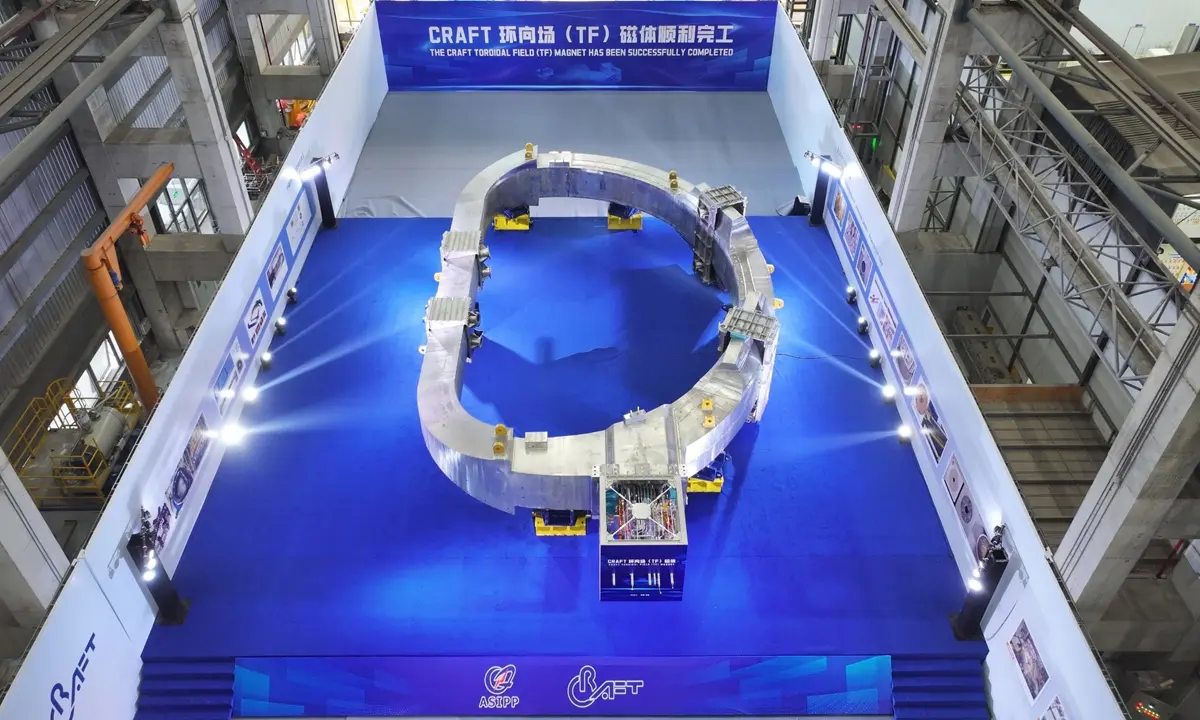
China has achieved a significant milestone by completing the world’s largest superconducting fusion magnet, an important component in the quest to generate clean nuclear fusion energy. This advancement represents a step towards realising China’s objective of producing electricity from fusion power by the year 2030, positioning the nation among the leaders in the global effort to harness carbon-free energy sources.

The superconducting magnet, developed by the Institute of Plasma Physics under the Chinese Academy of Sciences, has a D-shaped structure that measures 21 metres in length and 12 metres in width, weighing a substantial 582 tonnes. This impressive engineering feat indicates China’s growing capabilities in the field of fusion technology.

Understanding the Concept of an Artificial Sun

An artificial Sun refers to a nuclear fusion reactor that simulates the processes occurring in the actual Sun. This technology facilitates the fusion of hydrogen atoms at temperatures exceeding 100 million degrees Celsius, generating vast amounts of energy while producing no carbon dioxide emissions. Researchers are optimistic that this method will provide an abundant, clean, and sustainable source of electricity for future generations.

The significance of this project lies in its potential to address the global energy crisis by offering a nearly limitless supply of power, alongside the promise of clean energy utilisation. Scientists are currently working on advancing the operational capabilities of this technology to make it viable in the commercial sector.

Construction and Technological Developments

According to researchers, this magnet represents the largest fusion reactor superconducting magnet ever constructed, boasting 1.3 times the volume and three times the stored energy of similar magnets developed for the International Thermonuclear Experimental Reactor. The device is designed to produce an extremely powerful magnetic field capable of confining superheated plasma, which is essential for sustaining the nuclear fusion process.

In conjunction with the magnet, researchers have also tested a high-temperature superconducting central solenoid coil, regarded as the “heart” of the fusion reactor. This component is critical for igniting and maintaining the plasma necessary for fusion reactions, acting similarly to a spark plug in an engine.

China’s endeavour to build the China Fusion Engineering Demonstration Reactor is noteworthy, as the technologies employed have been developed using entirely domestic resources, thereby reducing dependency on international suppliers for essential components. This initiative highlights China’s commitment to advancing its own capabilities in fusion technology.

The six-year programme surrounding this project has resulted in the issuance of 47 patents and the establishment of 25 industry standards, emphasising the significant progress being made in this field. For the magnet to function effectively over its projected lifespan of 60 years, engineers have meticulously designed it to endure extremely low temperatures, high electrical currents, and substantial mechanical stresses.

Future Aspirations and Ongoing Challenges

China has outlined a comprehensive three-stage roadmap for achieving commercial fusion power. The Burning Plasma Experimental Superconducting Tokamak is expected to be operational by the end of 2027, paving the way for the initial fusion power generation anticipated around 2030. Ultimately, the nation aims to establish the China Fusion Engineering Demonstration Reactor, which could potentially become the first fusion demonstration power station globally.

Despite these advancements, experts caution that considerable challenges still lie ahead. Key tasks such as assembling the complete reactor, conducting long-term testing, and proving the technology’s capability to generate more energy than it consumes are yet to be addressed. Nevertheless, scientists affirm that each breakthrough represents a step closer to the goal of providing unlimited, zero-carbon energy, which may revolutionise future electricity generation.

Long or Short, get news the way you like. No ads. No redirections. Download Newspin and Stay Alert, The CSR Journal Mobile app, for fast, crisp, clean updates!

App Store –  https://apps.apple.com/in/app/newspin/id6746449540 

Google Play Store – https://play.google.com/store/apps/details?id=com.inventifweb.newspin&pcampaignid=web_share

Latest News

Popular Videos
