


FAA Restores Boeing’s Power to Self-Certify 737 Max and 787 Jets
The CSR Journal Magazine

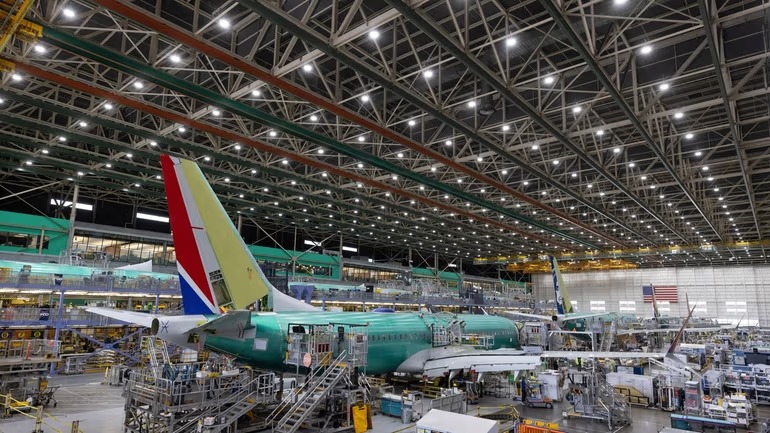
The US Federal Aviation Administration (FAA) has announced that Boeing will regain responsibility for certifying its 737 Max and 787 aircraft starting next week. This decision follows a comprehensive review lasting several months, during which the FAA assessed Boeing’s final safety checks. The agency deemed these checks sufficiently robust to ensure the airworthiness of the aircraft.

This development represents a significant reduction in the restrictions imposed on Boeing, previously designed to address various safety and production issues. Since September, Boeing and the FAA had been alternating weekly oversight for the necessary inspections before aircraft could be approved for delivery and labelled as safe for flight.

According to the FAA, inspectors from both Boeing and the government have been arriving at similar conclusions while issuing airworthiness certificates. The FAA had taken complete control over 737 Max approvals in 2019, a response to two fatal crashes attributed to a new software system created by Boeing. Additionally, in 2022, the agency revoked Boeing’s authority to self-certify 787 Dreamliners due to persistent production quality problems.

Focus on Safety in Manufacturing Processes

FAA Administrator Bryan Bedford stated that safety remains the top priority in all operational aspects related to aviation. He emphasised that the renewed certification authority for Boeing is grounded in confidence that the aircraft can be certified safely. Moving forward, government inspectors will continue to supervise Boeing’s manufacturing facilities while focusing on identifying and rectifying potential defects earlier in the production cycle.

Moreover, this decision comes as the FAA has been incrementally lifting the monthly cap imposed on the production of Boeing’s 737 Max jets. The limit was originally set following an incident in January 2024, when a panel detached from an Alaska Airlines flight mid-flight. The production ceiling, which had restricted Boeing to 38 aircraft per month, has now been raised to 47 aircraft monthly, reflecting the FAA’s trust in the company’s improved operational capacity.

Boeing has not yet provided a comment in response to the FAA’s latest announcement, indicating a period of adjustment for the company amidst changing regulatory conditions. This alteration in Boeing’s certification processes is a notable shift in the agency’s approach following a challenging period for the manufacturer, marked by scrutiny and significant operational changes.

Continued Oversight Amidst Regulatory Changes

While the FAA’s decision allows Boeing to oversee the certification of its new aircraft, it does not imply a complete withdrawal of government oversight. Federal inspectors will maintain their roles in monitoring Boeing’s facilities to ensure continued compliance with safety standards. This framework seeks to balance efficiency in certification with rigorous safety oversight.

The evolving regulatory landscape reflects ongoing dialogue between Boeing and the FAA, and could signify a shift towards more collaborative practices in the aerospace industry. Enhanced cooperation may further streamline certification processes without compromising safety, an essential consideration in aviation manufacturing.

Overall, the FAA’s decision to permit Boeing to self-certify certain jet models reflects increasing trust in the company’s safety protocols and production capabilities. The forthcoming changes will likely shape Boeing’s operations as it adapts to the renewed responsibilities bestowed upon it by federal regulators.

Long or Short, get news the way you like. No ads. No redirections. Download Newspin and Stay Alert, The CSR Journal Mobile app, for fast, crisp, clean updates!

App Store –  https://apps.apple.com/in/app/newspin/id6746449540 

Google Play Store – https://play.google.com/store/apps/details?id=com.inventifweb.newspin&pcampaignid=web_share

Latest News

Popular Videos
