


Extreme Heat Across Europe Linked to 40 Drowning Deaths in France
The CSR Journal Magazine

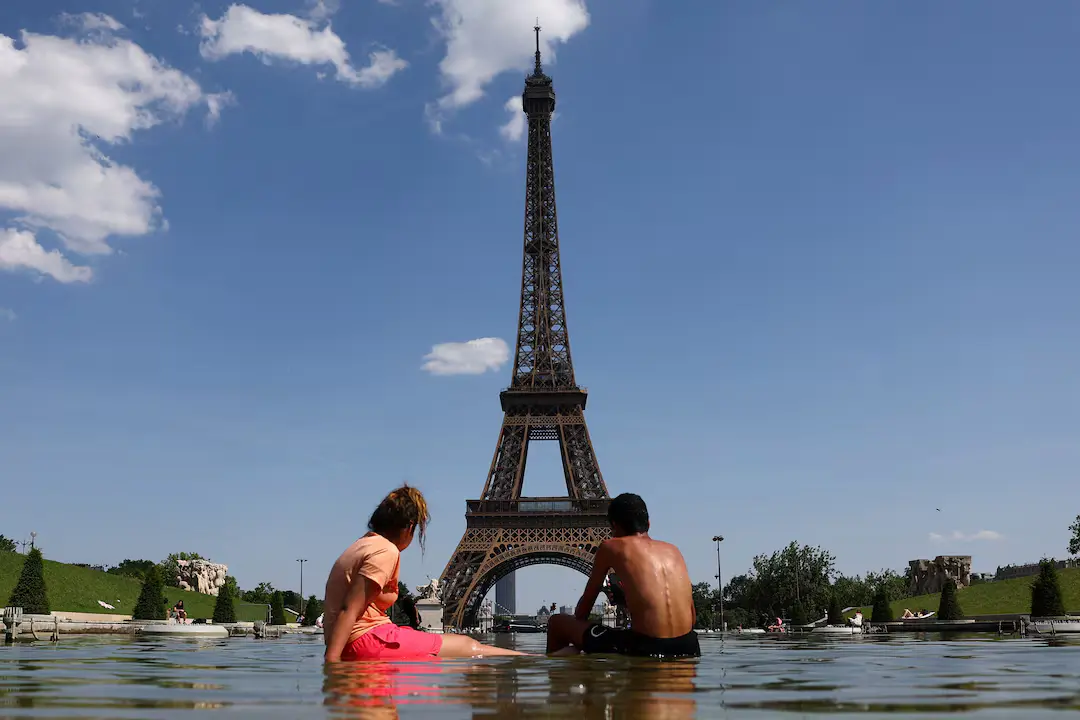
France has reported 40 drowning deaths in less than a week as people sought relief from an intense heatwave that has engulfed large parts of Europe, prompting emergency warnings and disrupting transport, schools and tourist attractions across several countries.

French Prime Minister Sebastien Lecornu said the deaths had occurred since June 18, with many of the victims being young people. The fatalities come as temperatures across France and other parts of Europe continue to soar amid one of the most severe heat episodes in recent years.

Record Temperatures and Widespread Alerts

France recorded its hottest day on record on Tuesday, according to Meteo France, with temperatures reaching 44.3 degrees Celsius in a town in the south-west of the country.

The national weather agency placed 54 departments under red alert, describing the situation as unprecedented. The number of departments under the highest warning level is expected to rise to 58 on Wednesday.

As temperatures climbed, many people turned to rivers, canals and other water bodies to cool down. Sports Minister Marina Ferrari acknowledged the temptation to escape the heat but urged people to avoid swimming in unauthorised or hazardous locations.

Ahead of an emergency government meeting on the crisis, Lecornu described the drownings as “a sad scourge” and said authorities were closely monitoring the situation.

The heatwave has also been linked to other tragedies. In southeastern France, two children aged two and four were found unconscious in a family car outside their home on Monday. A prosecutor in Carpentras said emergency responders were unable to revive them.

Heat Dome Fuelling Extreme Conditions

Meteorologists said the prolonged heat is being driven by an atmospheric phenomenon known as an Omega block, a weather pattern in which a mass of hot air becomes trapped between cooler systems, allowing temperatures to build over several days.

Experts have warned that climate change is increasing the frequency and intensity of heatwaves and severe weather events.

Meteo France said current conditions bear similarities to the devastating August 2003 heatwave, which lasted 16 days and is estimated to have caused around 80,000 excess deaths across Europe.

While forecasters expect temperatures to remain extremely high on Thursday, a gradual cooling trend could begin from France’s Atlantic coast on Friday.

The weather agency said it remains uncertain how long the current heatwave will persist.

Italy, Britain and Spain Also Affected

Extreme temperatures have extended well beyond France, with several European countries issuing heat alerts and emergency advisories.

In Italy, the health ministry issued its highest-level heat warning for 15 cities. Authorities also introduced restrictions on certain outdoor work activities, while meteorologists warned of storms, heavy rain, strong winds and hail in Alpine and Apennine regions.

Britain is also experiencing unusually high temperatures. The Met Office forecast temperatures of up to 37 degrees Celsius in southern England, potentially setting a new June record. Some schools planned to close early as a precaution.

Spain’s meteorological agency issued red alerts in several areas, warning that temperatures could climb to 44 degrees Celsius. Authorities in dozens of municipalities across northern Spain cancelled traditional bonfires because of heightened wildfire risks.

In Madrid, climate shelters have been opened for homeless residents and other vulnerable groups to provide protection from the extreme heat.

Communities Adapt to Rising Temperatures

The heatwave has strained infrastructure and disrupted daily life across the continent. Rail services in several countries have been delayed, cancelled or forced to operate at reduced speeds because of the high temperatures.

In Belgium, a primary school near Brussels moved its final examinations to a nearby church to escape the heat.

Switzerland’s northeastern canton of St. Gallen introduced restrictions on water withdrawals from rivers and lakes due to low water levels and unusually high temperatures.

Demand for cooling equipment has also surged. In Paris, filmmaker Victoria Yakubov said she rushed to purchase one of the last remaining electric fans in a store.

“I came quick, I haven’t even had my coffee this morning, I ran here to buy an electric fan,” she said. “Everything was gone in less than 30 minutes.”

Similar scenes were reported in London, where retailers said fans were rapidly selling out as residents sought relief from the heat.

As southern Europe continues to endure extreme temperatures, some travellers are opting for cooler destinations. German tourist Katharina Rexing said she chose Sweden over Croatia for her holiday because of the milder weather.

“We were thinking about travelling to Croatia, but we came to Sweden because it’s cooler here,” she said while visiting Stockholm, where temperatures were around 22 degrees Celsius compared with 30 degrees Celsius in Zagreb.

Long or Short, get news the way you like. No ads. No redirections. Download Newspin and Stay Alert, The CSR Journal Mobile app, for fast, crisp, clean updates!

App Store –  https://apps.apple.com/in/app/newspin/id6746449540 

Google Play Store – https://play.google.com/store/apps/details?id=com.inventifweb.newspin&pcampaignid=web_share

Latest News

Popular Videos
